Mark 3:27 – Who binds the strong man? (Rev. 20:1-3)

POST OVERVIEW. In Mark 3:27 (also Matt. 12:29), Jesus tells of first binding the strong man in order to plunder his house. In Rev. 20:1-3, we see a vision of an “angel” binding the dragon (the devil, the serpent of old, Satan – 20:2) in the abyss for the thousand years. This study compares these two and shows these are talking about the same thing.

In Mark 3:27, in response to the accusations of the scribes that He is casting out demons by the power of Satan, our Lord tells a parable about how to plunder the strong man’s house.

But no one can enter the strong man’s house and plunder his property unless he first binds the strong man, and then he will plunder his house. – Mark 3:27

THE MEANING OF THE PARABLE

As a reminder, we know that a parable is a story from everyday life that pictures a spiritual reality. Thus parables need to be interpreted to understand their real meaning.

In the context, the meaning of this parable is quite clear. The “strong man” is Satan, “his house” represents those who are currently in the kingdom of darkness, the one who will plunder the strong man’s house (“he”) is the Lord Jesus, and “plundering his house” means “rescuing us from the domain of darkness and transferring us into the kingdom of His beloved Son, in whom we have redemption, the forgiveness of sins” (Col. 1:13-14). In other words, Jesus is declaring that, rather than using the power of Satan (Mark 3:22), His mission is to ruin Satan and to plunder from Satan’s house all those who belong to Him. (See 1 John 3:8b.)

Now the question I want to ask is, “What does Jesus do just before He plunders Satan’s house?” The answer is apparent – He first binds Satan. Jesus first neutralizes Satan and effectively takes him off the playing field. Then Satan must watch helplessly as those who were in his camp are plundered away and joyfully swear allegiance to Jesus. This is what Jesus is here describing in this parable.

Having understood the meaning of this parable, we will now turn our attention to another passage that is similar to Mark 3:27. In Revelation 20:1-3, we read of an angel who binds Satan in the abyss for the thousand years.

1 Then I saw an angel coming down from heaven, holding the key of the abyss and a great chain in his hand. And he laid hold of the dragon, the serpent of old, who is the devil and Satan, and bound him for a thousand years; and he threw him into the abyss, and shut it and sealed it over him, so that he would not deceive the nations any longer, until the thousand years were completed; after these things he must be released for a short time. – Revelation 20:1-3

As a reminder, we know that Revelation is a book of the genre of biblical prophecy, where the elements of the visions have figurative and symbolic meaning. As a result, the visions must be interpreted carefully to understand their real meaning.

SIMILARITIES AND INTERPRETATION

Before we begin to interpret this vision, we should notice the obvious similarity between this vision in Revelation 20 and the parable in Mark 3. In both cases, we see Satan (“the dragon” and “the strong man”) being bound. It is significant that, in both cases, the original Greek for bind/bound is a form of the Greek verb δέω. This is a strong clue.

In Mark 3:27, we see Jesus binding Satan (“he” binds “the strong man”), while in Rev. 20:2, we see an angel binding Satan. This seems to be a dissimilarity until we realize that “the angel” in Rev. 20 represents the risen Lord Jesus. (Elsewhere I have shown that the “angel” in Rev. 20:1-3 is certainly the risen Lord Jesus. See Post #567, 9/9/2022.) So, at this point in our interpretation, we see that both the parable and the vision picture Jesus binding Satan.

THE PURPOSE OF BINDING SATAN

We will now explore the purpose for which Jesus binds Satan in each case. In Mark 3:27, Jesus binds Satan in order to rescue His own from the kingdom of darkness (see above). In other words, Jesus binds Satan so that He can save His chosen ones. We should note that this parable does not indicate when this will take place, it simply indicates that it will take place. Jesus will bind “the strong man” Satan, then He will plunder his house.

In Rev. 20:3 we read that Satan is bound in the abyss for the thousand years “so that (Greek ἵνα) he would not deceive the nations any longer, until the thousand years were completed.” To understand the purpose of this binding of Satan, we need to interpret what is meant by “not deceive the nations any longer.”

NOT DECEIVE THE NATIONS ANY LONGER (REV. 20:3). The first thing we note is that “the nations” (τὰ ἔθνη) in Rev. 20:3 refers to the Gentile nations. In Matthew 28:19, the crucified and resurrected Lord Jesus commands His church to make disciples of all “the nations” (τὰ ἔθνη). This speaks of the same group. Now that Christ has come and has died and has been raised, the gospel is to be proclaimed to all “the nations” (τὰ ἔθνη).

The next thing we note is that Jesus bound Satan “so that he would not deceive the nations any longer.” This “any longer” must mean that, up until a certain point in time, Satan had been successfully “deceiving the nations.” But now that Jesus has bound him in the abyss, Satan can no longer “deceive” them. We suggest that, in this context, “deceive the nations” means “prevents them from coming to Jesus to be saved.”

Before Jesus was crucified and resurrected, there was no gospel to proclaim. With no powerful, saving gospel (Romans 1:16) to proclaim, it was easy for Satan to deceive the nations and keep them in darkness. Then Jesus was made flesh in Bethlehem. Then in Matthew 16:18, Jesus declared, “I will build My church and the gates of Hades will not overpower it.” Then Jesus willingly went to the cross to die for sinners. And then He was raised on the third day to prove that His work had been perfectly accomplished and was fully acceptable to the Father. Then the Lord Jesus commissioned His church to go and proclaim the gospel to the nations.

But what is to be done about the great deceiver, the one who deceived Eve, the one who has been deceiving the nations since the Garden, the one who is a liar and the father of lies? How will the devil be prevented from continuing to deceive the nations while the gospel is being proclaimed? Remember in the parable in Mark 3:27 (above), Jesus had taught that he was going to bind Satan and then plunder his house. This parable in Mark 3:27 anticipates the binding of Satan that we see described in Rev. 20:3 when the risen Lord Jesus binds Satan in the abyss for the thousand years so that the nations will not be hindered as they come to faith in Jesus through the gospel. Thus this “binding of the dragon” in Rev. 20:2-3 is figuratively describing when Jesus neutralizes Satan and effectively takes him off the playing field for the thousand years of the gospel age. Being bound in the abyss, Satan must watch helplessly as those who were in his camp are plundered away and joyfully swear allegiance to Jesus. This is the meaning of the vision that John saw in Rev. 20:1-3.

SUMMARY

In the end, we see that Mark 3:27 and Revelation 20:1-3 describe the same event. Both Scriptures are telling of the time when the victorious Lord Jesus binds Satan in “the abyss” to prevent him from hindering the spread of the gospel and the growth of the church during the thousand years.

Soli Deo gloria            rmb                 2/2/2024                     #691
The thousand years: Part 3 – When is Jesus coming?

POST OVERVIEW. The third in a series of studies of Revelation 20:1-3 seeking to determine when “the thousand years” occur. This specific study seeks to determine when Jesus binds Satan in the abyss by determining from the Scriptures when Jesus’ coming (παρουσία) occurs. (See also post #668, 9/10/2023, post #669, 9/11/2023.)

REVIEW THE PROGRESS OF OUR STUDY

This article is the third in a series of studies focused on Revelation 20:1-3 whose objective is to determine when, in human history, “the thousand years” (“the MILL”) occurs. In our two previous studies (Post #668, #669), we established the following:

  • “The dragon” represents Satan (20:2).
  • “The angel” (20:1) represents the Lord Jesus.
  • The MILL begins when the Lord Jesus binds Satan and throws him into the abyss.
  • At the end of the MILL, Satan is released from the abyss for a short time.
  • Jesus is seated at the Father’s right hand from the time He ascended to heaven (ca. AD 30) until He returns to earth for the Judgment.
  • There are only two times when Jesus could bind Satan in the abyss, either after His coming (παρουσία) or while He is ascending to heaven between Acts 1:9 and Rev. 5:6ff.

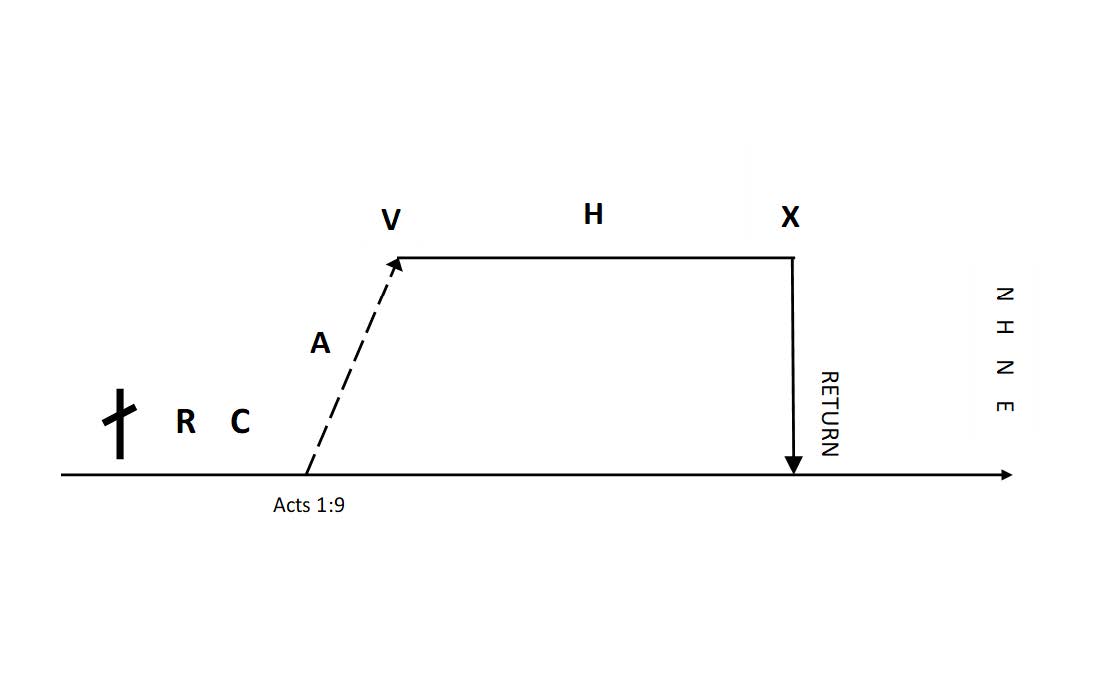
The chart below illustrates the progress we have made up to this point in our study.

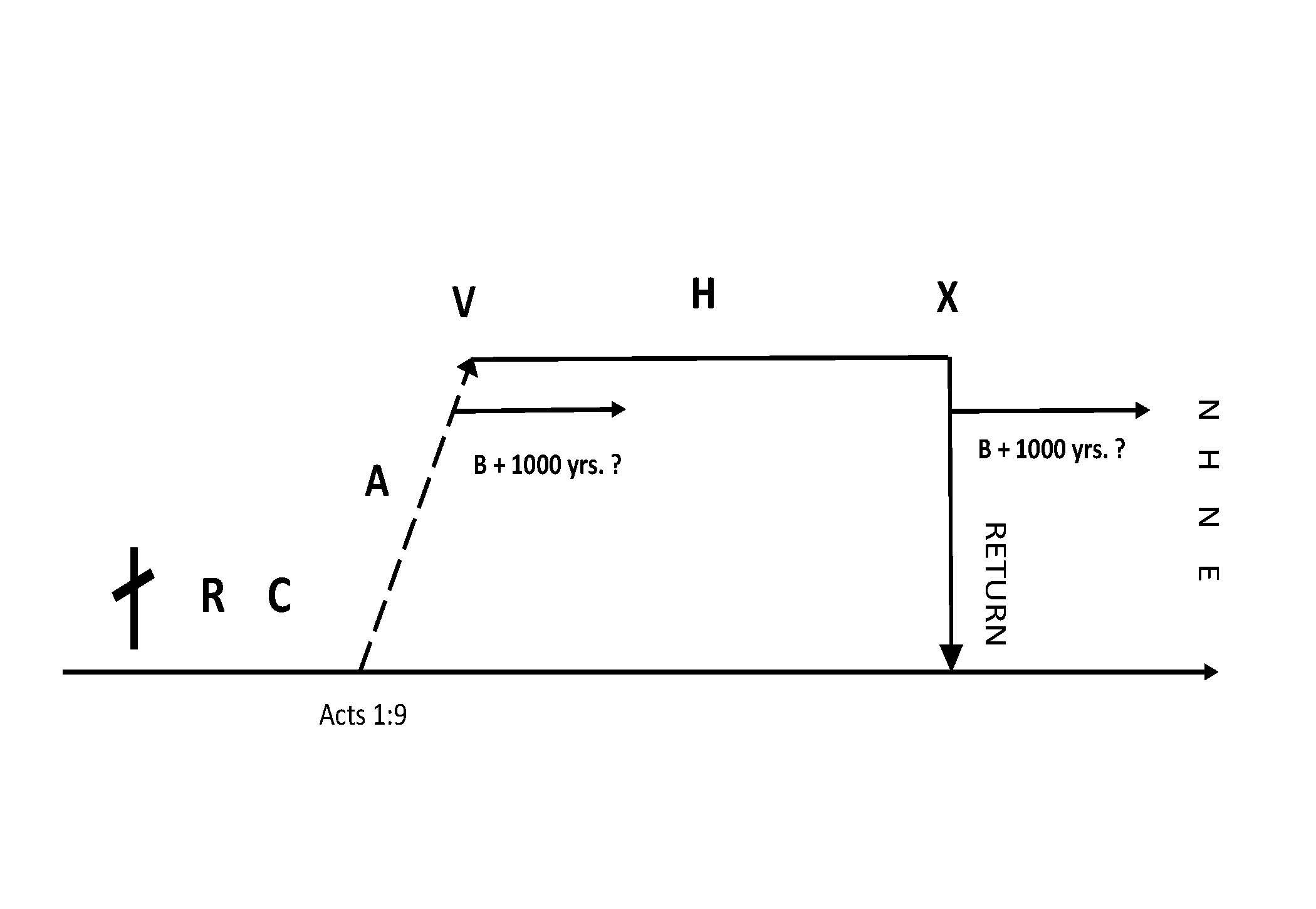
Our first two studies left us here, knowing that the binding of Satan (B) and the MILL that follows must be located in one of these two places. (See post #669 for how we reached this conclusion.) The question is, “How do we decide between these two possibilities?” Answering that question will be the subject of this study. 

OUR APPROACH. Our approach for deciding between these two options is pretty simple, at least in concept. We have two alternative scenarios, but only one of them is correct. If we can eliminate one of the alternatives or show, by the Scriptures, that one of them is not possible, then we would be left with the correct one. So, we are going to seek to show from Scriptures that one of these two options is not possible.

STEP ONE. Referring to our chart above, we will focus on the coming (“the return”) of Jesus and ask another crucial question: “WHEN does the coming (παρουσία) of Jesus take place?” For this portion of our study, we will once again leave Revelation and explore 1 Thess. 4:15-17.

As we read 1 Thess. 4:15, it is obvious that we are reading a passage about the coming (παρουσία) of the Lord. The next verse, 4:16, removes all ambiguity when Paul writes, “For the Lord Himself will descend from heaven with a shout.” It is certain that these verses describe Jesus coming to earth.

But also notice what is going on at the same time. While Christ is descending from heaven, “the dead in Christ will rise” (4:16) and then “we who are alive and remain will be caught up together with them to meet the Lord in the air” (4:17). Paul is writing about the resurrection when all those who are in Christ, whether living or dead, will receive their glorified bodies. It is the same topic that Paul teaches in 1 Cor. 15:52: “In a moment, in the twinkling of an eye, at the last trumpet; for the trumpet will sound, and the dead will be raised imperishable, and we will be changed.” Again, we see that all the saints, whether living or dead, will receive their resurrection bodies at the same time. And the resurrection will occur when Christ returns, for 1 Cor. 15:22-23 says, “For as in Adam all die, so also in Christ shall all be made alive. But each in his own order: Christ the first fruits, after that those who are Christ’s at His coming.” Thus, the Scriptures declare that all those who are Christ’s will be resurrected (glorified) at the time of His coming.

  • Our conclusion is that the coming (παρουσία) of Jesus and the resurrection of the saints occur at the same time.

We will now add the resurrection (“S”) to our chart. (See below.)

STEP TWO. Now we ask another crucial question: “WHEN does the resurrection of the saints take place?” Because Jesus’ coming and our resurrection occur at the same time, if we can determine from the Scriptures when the resurrection occurs, then we will also know when Christ’s coming takes place.

For this answer, we turn to the gospel of John and listen to the teaching of Jesus. In John 6:39, our Lord says:

“This is the will of Him who sent Me, that of all that He has given Me I lose nothing but raise it up on the last day.”

Here Christ clearly teaches that the resurrection occurs on the last day. But this is not the only time Jesus says this.

John 6:40: “I Myself will raise him up on the last day.”

John 6:44: “I will raise him up on the last day.”

John 6:54: “I will raise him up on the last day.”

Four times from the lips of Jesus we are told that the resurrection occurs on the last day. There is another instance of this in John 11:24 when Martha said to Jesus, “I know that he (Lazarus) will rise again in the resurrection on the last day.” Martha knows that the resurrection will occur on the last day. Also, notice that Jesus does not correct her, but rather affirms her theology with the words. “I am the resurrection and the life; he who believes in Me will live even if he dies” (11:25). The point is that five times in the gospel of John the Scriptures declare that the resurrection occurs on the last day.

  • Therefore, we must conclude that the resurrection of the saints occurs on the last day.

So now we will add “the last day” to our chart. (See below.) (Note that the last day is followed immediately by the new heaven and the new earth.)

STEP THREE. Previously we demonstrated that the resurrection of the saints and Christ’s coming (παρουσία) occur at the same time, so we must conclude that Christ’s coming also occurs on the last day.

  • Christ’s coming (παρουσία) occurs on the last day.

STEP FOUR. Now we will make a very interesting observation. Since Christ’s coming occurs on the last day, it is not possible for Christ to inaugurate “the thousand years” by binding Satan in the abyss after His coming. In other words, “the thousand years” cannot occur after Jesus’ coming for the simple reason that Jesus’ coming is on the last day. Here, then, is our conclusion:

  • “The thousand years” cannot occur after Jesus’ coming for the simple reason that Jesus’ coming is on the last day.

Thus, by examining the Scriptures carefully, we have shown that this scenario (or any scenario) that includes “the thousand years” occurring after Christ’s return is not possible and must be rejected. Therefore, we will remove that possibility from our chart.

This leads to another conclusion and to the answer to our original question.

  • We conclude that Christ bound Satan in the abyss (Rev. 20:2-3) and thus began “the thousand years” in about AD 30 when He was ascending to heaven (A).
  • Our answer to the original question, “When does the ‘thousand years’ (MILL) occur?” is that “the thousand years” began ca. AD 30 when Jesus bound Satan in the abyss and will continue for a very long time until “the thousand years” are completed. Then Satan “must be released for a short time” (Rev. 20:3).

Our final chart is shown below.

               BASIC TIMELINE: CHRIST TO NEW HEAVENS NEW EARTH                                                                                                                                                                                   

  • R = resurrection of Christ
  • C = Christ commissions His church (Matt. 28:18-20)
  • A = Christ’s ascension from earth (Acts 1:9)
  • B = binding of Satan (the dragon) in the abyss (Rev. 20:2-3)
  • V = Christ’s arrival in heaven (Rev. 5:6)
  • H = Christ’s reign at the Father’s right hand (Psalm 110:1; Heb. 10:12-13)
  • X = Christ’s coming (παρουσία) (1 Thess. 4:15-17; Rev. 19:11-21)
  • S = resurrection of the saints (1 Th. 4:15-17; 1 Cor. 15:23, 52)
  • NHNE = new heaven and new earth (Rev. 21-22)

CONCLUSION

QUESTION: When does “the thousand years” occur?

ANSWER: “The thousand years” began ca. AD 30 when Jesus bound Satan in the abyss and will continue until Satan is released for a short time.

Soli Deo gloria            rmb                 9/12/2023                   #670

The thousand years: Part 2 – When does Jesus bind Satan?

POST OVERVIEW. The second in a series of studies of Revelation 20:1-3 seeking to determine when “the thousand years” occur. This specific study attempts to determine when Jesus binds Satan in the abyss (Rev. 20:2-3). (See also post #668, 9/10/2023.)

REVIEW

This article is the second in a series of studies focused on Revelation 20:1-3 whose objective is to determine when, in human history, “the thousand years” (“the MILL”) occurs. In our first study (Post #668, 9/10/2023), we discovered the following:

  • “The dragon” represents Satan (20:2). (Thus, whenever we encounter “the dragon” in Revelation, we know that we have encountered Satan.)
  • “The angel” (20:1) represents the Lord Jesus.
  • The MILL begins when the Lord Jesus binds Satan and throws him into the abyss.
  • At the end of the MILL, Satan is released from the abyss for a short time.

This second study is intended to begin to answer the crucial question, “WHEN does Jesus bind Satan in the abyss?”

As we consider this question and review the passage in Revelation 20:1-3, it may at first appear that we have reached a cul-de-sac. It may seem that there is no way to figure out when Jesus binds Satan in the abyss at the beginning of the MILL. Where do we go from here?

JESUS BINDS SATAN. First, there is significance in the fact that it is Jesus who binds Satan in the abyss. Jesus is King of kings and Lord of lords and He reigns over heaven and earth, but He, as the God-Man, can only be in one place at a time. This fact will help us as we explore the question of when Jesus binds Satan.

Thinking broadly, one thing we can say for certain is that Jesus’ binding of Satan takes place after His resurrection and subsequent ascension to heaven (Acts 1:9) and before the inauguration of the new heaven and the new earth (Rev. 21:1). We also know with certainty that, at some point in time, Jesus is coming from heaven to judge the earth. Those realities are illustrated in the figure below.

  BASIC TIMELINE: CHRIST TO NEW HEAVENS NEW EARTH

  • R = resurrection of Christ
  • C = Christ commissions His church (Matt. 28:18-20)
  • A = Christ’s ascension (Acts 1:9)
  • V = Christ’s arrival in heaven (Revelation 5:6)
  • X = Christ’s coming (παρουσία) (Revelation 19:11-21)
  • NHNE = new heavens and the new earth (Rev. 21-22)

Next, recalling that Jesus as God-Man can only be in one place at a time (see above), we will refine our crucial question and ask, “WHEN could Jesus bind Satan in the abyss?” Our study of the Scriptures will reveal that there are only two times when it is possible for Jesus to bind Satan in the abyss.

As we prepare to expand our study to the books outside of Revelation, it is appropriate to remind ourselves of the nature of this amazing Bible that we hold in our hands.

THE POWER AND BEAUTY OF THE SCRIPTURES

The beauty of the Bible is that each of its 66 books has been inspired by the same Author, the Holy Spirit. Because all Scripture is God-breathed (2 Tim. 3:16), the Bible is both interconnected and consistent.

It is interconnected in that each book of the Bible fits together with the other books to form a cohesive whole. Just as each piece of a jigsaw puzzle is necessary to complete the whole puzzle, so the books of the Bible connect with each other to form the whole message of God to man. Because this is the case, we can allow Scripture to interpret Scripture as one portion of the Word illumines and informs another portion.

And the Bible is consistent in that there is no contradiction between the individual books, but instead there is a God-breathed harmony. Despite including writings of poetry and prophecy, narrative history and Mosaic Law, gospels and epistles and apocalypse, the themes and doctrines pictured throughout the Bible do not contradict or conflict with one another but rather reinforce and complement one another. This means that the better we know our Bibles, the more confident we become about its power to guide us into all truth.

In 2 Tim. 2:15, Paul exhorts Timothy, “Be diligent to present yourself approved to God as a workman who does not need to be ashamed, accurately handling the word of truth.” Confident of the power of the Scriptures, we are now going to accurately handle the word of truth and go to other Scriptures outside of Revelation to answer these crucial questions.

FROM REVELATION 20 TO PSALM 110

For this part of our study we will leave Revelation 20 and turn to Psalm 110. This psalm is both Messianic and eschatological and will teach us about Christ’s reign after His ascension to heaven. We will focus our attention on Psalm 110:1.

The Lord says to my Lord:
“Sit at My right hand
Until I make Your enemies a footstool for Your feet.” – Psalm 110:1

Here in Psalm 110:1 we see one Person of the Godhead (the LORD) speaking to another Person of the Godhead (the Lord). The conversation is between God the Father and God the Son, and the nature of the conversation reveals the occasion of this verse. This verse takes place after Jesus has accomplished His work of atonement on the cross (John 19:30, etc.), has been raised from the dead, and has ascended back to heaven. Now (ca. AD 30) the Father welcomes the victorious Son back to heaven and seats Jesus in the place of honor at the Father’s right hand until the time comes for Jesus to return to earth for the Judgment (“make Your enemies a footstool”). So, according to Psalm 110:1, from the time of Jesus’ return to heaven until His coming to earth in judgment, He is seated at the Father’s right hand in heaven.

Other verses in Scripture confirm this reality. In Ephesians 1:20, Paul tells us that “the Father raised Him (Jesus) from the dead and seated Him at His right hand in the heavenly places.” Hebrews 1:3 says, “When He had made purification of sins (the cross), He sat down at the right hand of the Majesty on high.” The same point is made in Hebrews 8:1 and 12:2, but the clearest expression of this is in Hebrews 10:12-13:

12 but He, having offered one sacrifice for sins for all time, sat down at the right hand of God, 13 waiting from that time onward until His enemies be made a footstool for His feet.

The time when “His enemies (will) be made a footstool for His feet” refers to the time when Christ will rise from His seat at the Father’s right hand and will come back to earth to judge the unrighteous. These Scriptures teach us that:

  • Jesus is seated at the Father’s right hand from the time He ascended to heaven (ca. AD 30) until He returns to earth for the Judgment.

We are going to add this new discovery to our chart. (See below.)

BASIC TIMELINE: CHRIST TO NEW HEAVENS NEW EARTH

  • R = resurrection of Christ
  • C = Christ commissions His church (Matt. 28:18-20)
  • A = Christ’s ascension (Acts 1:9)
  • V = Christ’s arrival in heaven (Revelation 5:6)
  • H = Christ’s reign at Father’s right hand (Ps. 110:1; Heb. 10:12-13)
  • X = Christ’s coming (παρουσία) (Rev. 19:11-21)
  • NHNE = new heavens and the new earth (Rev. 21-22)

Thus we can logically say that, while Jesus is seated at the Father’s right hand (H) in heaven, He cannot at the same time bind Satan in the abyss. In other words, the event of Jesus binding Satan in the abyss cannot take place between the time of Jesus’ arrival in heaven (V – Rev. 5:6) and His coming to earth as Judge (X – Rev. 19:11-21; etc.) because He is seated at the Father’s right hand.

Since that is the case, we can see from our chart that there are only two times when Jesus could bind Satan in the abyss. The first possibility would be after His return (His παρουσία), and the second possibility would be for Him to bind Satan while He is ascending to heaven between Acts 1:9 and Rev. 5:6ff. And this is the answer to the crucial question we asked above about WHEN Jesus could bind Satan in the abyss. These possibilities are illustrated in the figure below. (“B” stands for “binding.”)

The question is, “How do we decide between these two possibilities?” That will be the subject of our next study.

Soli Deo gloria            rmb                 9/11/2023                   #669

When does “the thousand years” occur? Part 1 – Who is the angel?

POST OVERVIEW. The first in a series of studies of Revelation 20:1-3 seeking to determine when “the thousand years” occur. This specific study seeks to determine the identity of the angel in Revelation 20:1.

INTRODUCTION

Some of the most controversial questions concerning the book of Revelation revolve around the subject of “the thousand years” in Rev. 20:1-7. The purpose of this series of studies is to determine when “the thousand years” occurs in human history. The outcome that we seek is a graphical representation of where “the thousand years” fits on the timeline between the crucifixion and resurrection of Jesus Christ (ca. AD 30) on the one end and the inauguration of the new heaven and the new earth (Rev. 21:1) on the other.

PRELIMINARIES

PASSAGE FOR STUDY. Despite the immense attention and emphasis that accrues to “the thousand years,” the only explicit mention of this time period in the Bible is in the six verses of Rev. 20:2-7. But because we are seeking the answer to a very specific question (“When do the thousand years occur?”), we will further limit the focus of these studies to Revelation 20:1-3 when the angel throws the dragon into the abyss for “the thousand years.”

In any of these studies in Revelation 5-20, it is assumed that the reader has previously read my article, “Basic interpretive principles for Rev. 5-20.” [APOLOGIES: As of the publishing of this blog post, this article was still in progress.] This article explains the basis for the two key interpretive principles for Rev. 5-20 and also presents two crucial questions which are very useful for understanding these difficult passages.

TWO KEY PRINCIPLES AND TWO CRUCIAL QUESTIONS. Stated briefly, the two key principles are 1) Rev. 5-20 is not written in chronological order, and 2) our default assumption is that the characters and events of Rev. 5-20 are to be understood figuratively or symbolically, not literally. Since Revelation is not written chronologically, we must persistently ask the crucial question, “WHEN does this event occur?” And because Revelation is characterized by symbolism, we must often ask the crucial question, “WHO OR WHAT does this symbol represent?” As we progress through this study in Revelation 20, we will see the power and the usefulness of skillfully asking and answering these two crucial questions.

DEFINITION OF THE “THOUSAND YEARS.” In these studies, we are treating “the thousand years” as a label for a long period of time rather than as a literal thousand years. In the book of Revelation, certain numbers have symbolic meaning. “One thousand” is one of those symbolic numbers. When John wrote Revelation, “one thousand” simply meant a very large number, and so “a thousand years” should be understood simply as a very long period of time.

SUBSTITUTE “THE MILL” FOR “THE THOUSAND YEARS.” Since we are treating “the thousand years” as a single block of time, I am inventing the singular noun “the MILL” to represent “the thousand years.” This substitution is done to avoid confusion about whether “the thousand years” is singular or plural.

Finally, unless otherwise noted, my text is the New American Standard Bible (1995).

THE STUDY: WHEN DOES ‘THE THOUSAND YEARS’ OCCUR?

Part 1: Who is the angel in Rev. 20:1?

Then I saw an angel coming down from heaven, holding the key of the abyss and a great chain in his hand. And he laid hold of the dragon, the serpent of old, who is the devil and Satan, and bound him for a thousand years; and he threw him into the abyss, and shut it and sealed it over him, so that he would not deceive the nations any longer, until the thousand years were completed; after these things he must be released for a short time. – Revelation 20:1-3

While the overall objective of this series of studies is to determine from the Scriptures when “the MILL” occurs on the timeline of end-times events, this first study is aimed at determining the identity of the angel mentioned in this passage.

We will begin by surveying the text to see what information these verses provide. First, we see two characters, an angel and the dragon. The dragon is clearly identified as Satan (20:2). Then we see the angel “laid hold of the dragon (Satan) and bound him for a MILL; and he threw him into the abyss and shut it and sealed it over him until the MILL was completed; after these things he (Satan) must be released for a short time.” From this we can say that the MILL begins when an angel grabs Satan and throws him into the abyss for the duration of the MILL. We also see that, at the end of the MILL, Satan must be released for a short time. So far, we know that:

  • The dragon represents Satan. (Thus, whenever we encounter “the dragon” in Revelation, we know that we have encountered Satan.)
  • The MILL begins when an angel binds Satan and throws him into the abyss.
  • At the end of the MILL, Satan is released from the abyss for a short time.

So now we know who the dragon represents, but we do not yet know who the angel represents. Therefore, we ask a crucial question. “WHO does this angel represent?”

THE ANGEL. Let’s examine what we know about this angel.

The angel is “coming down from heaven.” This is the identical phrase that we read in Rev. 10:1 (“another angel coming down out of heaven”) and “the angel” of Rev. 10 is certainly the glorious Lord Jesus. Thus, this may be a clue that this angel is also Jesus.

We also read that this “angel” has the key of the abyss in his hand. In Revelation, the one who controls all the keys is Jesus, for we read in Rev. 1:18, “I (Jesus) have the keys of death and Hades.” Just so, Jesus is the one who controls the key of the abyss. And here this “angel” has the key of the abyss. Another clue!

Thirdly, we see that the angel “laid hold of Satan and threw him into the abyss” (20:2-3). This cannot be an ordinary angel, because Satan is “the anointed cherub” of Ezekiel 28:14 and is the most powerful of all the angels. In Jude 9, even Michael the archangel did not dare pronounce a judgment against the devil, but said, “The Lord rebuke you.” But if Satan is more powerful than even archangels, we must ask the question, “Who, then, is this ‘angel’ who grabs Satan like a ragdoll and then throws him and shuts him and seals him in the abyss?” The answer is obvious: The “angel” of Rev. 20:1-3 can only be the glorious Lord Jesus Himself. He is the One who descends from heaven to deal with Satan and He is the One who holds the key to the abyss and He is the only one with the authority to completely overwhelm and subdue Satan. We conclude, then, that “the angel” of Rev. 20:1-3 is a symbol for the Lord Jesus.

  • The “angel” of Rev. 20:1-3 is Jesus and the event that begins the MILL is when Jesus binds Satan in the abyss for the duration of the MILL.

CONCLUSION. In this first study of Rev. 20:1-3, we have gathered these facts.

  • “The dragon” represents Satan. (Thus, whenever we encounter “the dragon” in Revelation, we know that we have encountered Satan.)
  • “The angel” in verse 1 represents the Lord Jesus.
  • The MILL begins when the Lord Jesus binds Satan and throws him into the abyss.
  • At the end of the MILL, Satan is released from the abyss for a short time.

Knowing that the MILL begins with Jesus binding Satan in the abyss, our next study will attempt to answer another crucial question, “WHEN does Jesus bind Satan in the abyss?”

Soli Deo gloria            rmb                 9/10/2023                   #668

Satan will be cast out (John 12:31-32; Rev. 20:2-3)

POST OVERVIEW. A study of John 12:31-32 (“Satan will be cast out”) and the relation of those verses to Satan being thrown into the abyss for the thousand years in Revelation 20:2-3.

Recently, during my preparation for a Bible study of the gospel of John, I observed that Jesus declared, “The ruler of this world will be cast out” (John 12:31). As I considered this section of Scripture, I began to see a connection between these verses and Revelation 20:1-3, when Satan is thrown into the abyss by “the angel” (Jesus) at the start of the thousand years. This post is a study of those connections.

REVIEW OF THE INTERPRETATION OF REVELATION 20:1-3

In other posts on this site and in my book, The Last Act of the Drama, I have presented my interpretation of Revelation 20:1-3, a passage about the binding of Satan and the inauguration of the thousand years. In this passage, Christ (“the angel”) “bound Satan for a thousand years and he threw him into the abyss, so that he would not deceive the nations any longer.” I maintain that this binding of Satan occurs during Christ’s ascension to heaven (Acts 1:9; Rev. 5:6ff) at the very beginning of the gospel age so that the church can accomplish its commission to make disciples of all nations (Matt. 28:19-20) without Satan’s interference. Satan is thrown into the abyss so that he cannot hinder the gospel advance and the church then rides out into the world (Rev. 6:1-2) proclaiming the gospel of Christ.

The passage in Rev. 20, therefore, presents Christ restraining Satan during the thousand years (church age) so that the gospel can be proclaimed to the Gentiles (“the nations”) without Satan’s hindrance.

A PARALLEL TEXT IN JOHN 12:31-32

Now we turn our attention to our study text in John 12:31-32. In John 12:31, Jesus says that Satan “will be cast out.” Clearly implied here is that Satan will be cast out of this world, since “of this world” appears twice in John 12:31. Also apparent in this verse is that Jesus will be the one who will cast Satan out.

Now, as we consider what Jesus says here in John 12:31, we must ask some questions. First, what does it mean for Satan to be “cast out?” Does it mean that he is completely eliminated or does it mean something less absolute? And second, we must ask, “When did this happen?” When did Jesus cast Satan out of this world? Or was Jesus just speaking figuratively about casting Satan out?

Before we answer these questions, however, we should also notice that the results of John 12:32 are connected to the events of John 12:31. That is, the “lifting up” of Jesus and the “drawing all men to Myself” in 12:32 are dependent upon or derived from the “ruler of this world being cast out” in 12:31. A closer examination of these two verses reveals that the casting out of the ruler of this world (Satan) enables or facilitates the drawing of all men to Jesus. In other words, Christ casts Satan out (12:31) so that the preaching of the gospel (“Jesus is lifted up”) will draw men to Jesus from every tribe and tongue and people and nation (12:32) without Satan’s interference.

“CAST OUT.” In this context, then, “cast out” (John 12:31) should be understood to mean “taken off the playing field” or “removed from being an obstacle to the gospel and to the salvation of the nations.” “Cast out” does not mean complete elimination or destruction but is better understood as “limiting or restraining his activity.” If this understanding of “cast out” is accurate, then “cast out” in John 12:31 is virtually identical in meaning to binding Satan and throwing him into the abyss we see in Rev. 20:2-3. In fact, at this point we can say that binding Satan and throwing him in the abyss (Rev. 20:2-3) was the means that the Lord Jesus used to cast Satan out (John 12:31).

SUMMARY

In John 12:31-32 Jesus is speaking prophetically and His prophecy spoken there is fulfilled in Rev. 20:1-3. Both these passages are teaching that Christ restrains Satan’s activities and abilities during the thousand years so that Satan cannot hinder (“deceive”) the nations (Gentiles) from being drawn to Jesus.

Christ has declared, “I will build My church” (Matt. 16:18) and He has also commissioned His church as those who will be His witnesses to the ends of the earth (Acts 1:8). By restraining Satan for the thousand years, Christ makes certain that His church will accomplish their task.

Soli Deo gloria            rmb                 3/22/2023                   #634

Two “last day” doctrinal truths – implications for Revelation

POST OVERVIEW. Exploring the implications of the two doctrinal truth we discovered in Post #626 (2/22/2023). Doctrinal Truth 1: The Resurrection of the saints occurs on the last day. Doctrinal Truth 2: The coming of the Lord Jesus occurs on the last day. This post will explore the implications for Revelation.

In a recent post (#626, 2/22/2023), our exegesis of verses from John 6 along with careful study of 1 Thess. 4:15-17 (and other verses) had revealed two significant doctrinal truths. First, the Resurrection of the saints occurs on the last day and second, the coming of the Lord Jesus also occurs on the last day. These two truths have profound implications for our understanding of many of the eschatological passages in the Bible, because now when we see a passage involving the coming of the Lord, we know that this occurs on the last day. Likewise for passages displaying the resurrection of the saints, we know that these events are occurring on the last day. This post will examine passages from the book of Revelation in light of these “last day” truths and will demonstrate how being able to identify when these events occur helps us better interpret Revelation.

THE REVELATION PASSAGES CONSIDERED

REVELATION 20:1-7 AND THE THOUSAND YEARS. The first passage we will consider is Revelation 20:1-7 and the matter of the thousand years. Our OBJECTIVE in this mini-study of these verses is to determine when the thousand years occurs or at least when the thousand years definitely does not occur in light of one or both of these two doctrinal truths.

By way of background, there are many believers who hold to a view of the end of the age which places the thousand years of Revelation 20 after the coming of Christ. But we have discovered the doctrinal truth that the coming of Jesus is on the last day. Therefore, it is impossible for the thousand years to occur after the coming of Jesus.

This leads to the following conclusion:

Any view of the end times that sees the thousand years of Revelation 20 as occurring after the coming (παρουσία) of Christ is incorrect, because that view is in conflict with an established doctrinal truth.

REVELATION 6:12-17. This is the great day of the wrath of the Lamb, which, of course, is a picture of the coming of Jesus on the last day. So, this occurs on the last day.

REVELATION 11:11-13. In a scene reminiscent of Ezekiel 37, we see the saints rising to their feet and ascending heavenward. This is a figurative picture of the Resurrection, which occurs on the last day.

REVELATION 14:19-20. Although this text does not explicitly mention the coming of Jesus, we know from Rev. 19:15 that, in His coming, Jesus is the One who “treads the wine press of the fierce wrath of God, the Almighty,” and here in Rev. 14 we see the same “great wine press of the wrath of God” (14:19). It is certain that these two texts (Rev. 14:19 and Rev. 19:15) describe the same event and that, although not mentioned in Rev. 14:19, Jesus is the one who produces the blood from the wine press. This event occurs on the last day.

REVELATION 19:11-21. The Rider on the white horse! This is the climactic scene in the book of Revelation as Jesus comes to strike down the nations that oppose Him and to throw the beast and the false prophet (and Satan, 20:10) into the lake of fire. Again, the last day.

SUMMARY OF REVELATION PASSAGES – TWO FOUNDATIONAL PRINCIPLES

Before we leave Revelation to see other last-day passages in the Scriptures, we should consider the significance of what we have discovered. Answering the “when does this occur?” question is one of the most challenging features of a study of Revelation, but by establishing doctrinal truths and then interpreting the text on the basis of those truths, we have been able to answer the “when” question for some very important passages and thus to develop two foundational principles for interpreting Revelation.

  1. The period of time called THE THOUSAND YEARS in Revelation 20 does not occur AFTER the coming of the Lord (as proven above). and
  2. Because events of the last day appear in at least four different chapters throughout the book, we know that Revelation is not to be interpreted in chronological order. Instead of reading these visions as sequentially arranged, the student must examine the content and the context of each vision to determine when it occurs and where it fits with the other visions.

In the next post, we will continue to explore the implications of these two “last-day” doctrinal truths in other eschatological passages of Scripture.

Soli Deo gloria            rmb                 2/24/2023                   #627

The binding of Satan, Part 2 (Revelation 20:1-3)

POST OVERVIEW. There are two places in the Bible that teach about the binding of Satan, in Matthew 12:29 and in Revelation 20:1-3. In post #566, we looked at Matthew 12:29. This post will be a study of Revelation 20:1-3.  

Our purpose in these two posts is to discover what the Scripture teaches us about the binding of Satan, implicit in Matthew 12:29 and explicit in Revelation 20:1-3. In post #566, we looked at Matthew 12:29 and discovered that this verse teaches us that Jesus is going to bind Satan so that Satan’s kingdom can be plundered, and that “plundering” will be accomplished through the church’s proclamation of the gospel. But Matthew 12:29 also left us with questions. Exactly when will Jesus bind Satan? And how will this binding take place? What does that actually look like? To answer these questions, we now turn to our second “binding” passage, Revelation 20:1-3.

Then I saw an angel coming down from heaven, holding the key of the abyss and a great chain in his hand. And he laid hold of the dragon, the serpent of old, who is the devil and Satan, and bound him for a thousand years; and he threw him into the abyss, and shut it and sealed it over him, so that he would not deceive the nations any longer, until the thousand years were completed; after these things he must be released for a short time.

We will start our study by identifying the characters involved. In Rev. 20:2 we see the dragon, and we know that the dragon is Satan. There is also “an angel coming down from heaven.” Although John uses “angel” to describe this being, this “angel” is none other than the resurrected Lord Jesus. Why do I say that this “angel” is Jesus?

  • First, we observe that the angel is holding the key to the abyss in his hand. In Revelation, the only one who has keys is Jesus. He has “the keys of death and of Hades” (1:18), and here he also has the key to the abyss where he is going to put Satan for a thousand years.
  • But also notice the power and authority of this unnamed “angel.” Whereas Michael the archangel did not dare pronounce a judgment against the devil (Jude 9), this angel has the power to throw Satan around like a ragdoll. He “laid hold of the dragon (Satan) and bound him for a thousand years; and he threw him into the abyss and shut it and sealed it over him so that he would not deceive the nations any longer” (20:2-3). During all of this, the dragon (Satan) is powerless to resist. The only one who can throw Satan around like this is the Lord Jesus. This angel, then, is Jesus.

Thus, the characters in this scene in Rev. 20:1-3 are Satan and the Lord Jesus, and the action performed is that Jesus binds Satan. Notice this is the exact same situation that we encountered in our study of Matthew 12:29, where we had the strong man (Satan) and Jesus as the characters and the action was that Jesus bound the strong man. We remember from Matt. 12:29 that Jesus binds the strong man so that He can plunder his kingdom. Thus, by logical deduction, we can say that Jesus will bind Satan in the abyss so that He can plunder his kingdom.

WHEN IS SATAN BOUND?

But can we also determine when Jesus is going to bind Satan? I think we can.

First, from Rev. 20:2 we observe that the dragon (Satan) is bound at the beginning of the thousand years.

Also, from Matt. 12:29, we know that someone (in this case, Jesus) “first binds the strong man (Satan), and then he will plunder his house.” So the sequence goes, “First we bind him, then we plunder him.” From this verse and from ordinary reasoning, we can conclude that, immediately after the strong man (Satan) is bound, the plundering of the strong man’s house (Satan’s kingdom) begins.

Since, from Rev. 20:2 we know that Satan is bound at the beginning of the thousand years, and from Matt. 12:29 we know that, when Satan is bound, the plundering of his kingdom begins, we can logically conclude that the plundering of Satan’s kingdom begins at the beginning of the thousand years.

Now the question is, “When does Satan’s kingdom begin to be plundered?” If we can answer this question, we will have discovered both when Satan is bound and when the thousand years begins. But the answer to this question is obvious: Satan’s kingdom began to be plundered the moment the commissioned church (Matthew 28:19-20) began to proclaim the gospel of salvation so that lost sinners could be saved. Thus, we now know that Satan was bound at the very beginning of the gospel age (~AD 32) and, since, from Rev. 20:2, Satan was bound to begin the thousand years, we know that “the thousand years” began in ~AD 32.

DOES THIS FIT THE BIBLICAL RECORD?

So far, so good. But could this have actually occurred? That is, does the Scripture allow the possibility that the resurrected Jesus bound Satan in the abyss in ~AD 32? Yes, the Scripture does allow for this occurrence.

Recall that the resurrected Lord Jesus ascended to heaven in Acts 1:9. Then in Rev. 5:6ff, the victorious Lamb arrives in heaven to the praises of the four living creatures and the twenty-four elders and to the praises of myriads of angels. He begins to break the seven seals of the book, and from that point until His glorious return (Rev. 19:11-16) He is seated in heaven at the Father’s right hand (Psalm 110:1). So, when would there be a time when Jesus could bind Satan in the abyss?

After the resurrected Lord leaves His disciples on earth (Acts 1:9), but before He arrives in heaven as the victorious Lamb (Rev. 5:6), He is seen “coming down from heaven, holding the key to the abyss” (Rev. 20:1). It is at this time, while He is ascending to heaven, that He binds Satan in the abyss for the thousand years. After binding Satan, Jesus ascends to heaven.

This scenario agrees with the biblical text and provides a reasonable explanation for the events surrounding the binding of Satan.

SDG                 rmb                 9/9/2022                     #567

The binding of Satan, Part 1 (Matthew 12:29)

INTRODUCTION. There are two places in the Bible that teach about the binding of Satan, in Matthew 12:29 and in Revelation 20:1-3. This post will be a study of Matthew 12:29, seeking to discover what Jesus teaches us about this subject.

Our purpose in these two posts is to discover what the Scripture teaches us about the binding of Satan, implicit in Matthew 12:29 and explicit in Revelation 20:1-3. First, Matt. 12:29.

Our study verse is at the end of a passage (Matt. 12:22-29) in which Jesus teaches about casting out demons. Satan does not cast out Satan (12:26) and Jesus does not cast out demons by Beelzebul (12:27). Rather, Jesus casts out demons by the Spirit of God, thus proving that He has more power than Satan. Then He says,

“Or how can anyone enter the strong man’s house and carry off his property, unless he first binds the strong man? And then he will plunder his house.” – Matthew 12:29

Let’s examine and interpret this verse.

First, who is “the strong man?” From the context, it is clear that the strong man refers to Satan. Satan is the one who deceives and captures the unrighteous (2 Tim. 2:26). Satan blinds the minds of the unbelievers (2 Cor. 4:4). Satan has his schemes (Eph. 6:11) and he is the one who hinders us from proclaiming the gospel (1 Thess. 2:18).

And “the strong man’s house” speaks of Satan’s kingdom (12:26), consisting of his demons and his deceptions, his temptations and his tricks. Satan’s kingdom also contains his most valuable property, namely all the unrighteous whom he desires to keep trapped in their ignorance of the gospel. It is the unrighteous who are considered his property, and these Satan will guard with all his might. Satan is “the strong man, fully armed” of Luke 11:21. He is a formidable foe, and it seems unlikely that anyone has the power to “carry off his property” and to “plunder his house.”

But there is One who is able and who has the power. Jesus, the Son of Man, is the one who “first binds the strong man, and then He will plunder his house.” Although this is in figurative language, we know exactly what Jesus is saying here. The Son of God came “to destroy the works of the devil” (1 John 3:8). Jesus was sent “to proclaim release to the captives” (Luke 4:18), to render the devil powerless and “free those who through fear of death were subject to slavery all their lives” (Hebrews 2:14-15). “The Son of Man came to seek and to save that which was lost” (Luke 19:10), and Jesus will certainly accomplish His mission. Thus Jesus BINDS Satan so that He can plunder his house. When Satan is bound, he is unable to guard his house.

How does this look in biblical, redemptive terms? Now, Satan has been bound, and as the church proclaims the gospel among the nations, Satan can only watch helplessly as his house is plundered. Through His church, Jesus is now plundering Satan’s house and is drawing all men to Himself (John 12:32).

In summary, then, Matthew 12:29 teaches us that Jesus is going to BIND Satan so that Satan’s kingdom can be plundered. So far, so good.

But this still leaves us with key questions unanswered. For example, when is Satan going to be bound? That is, at what point in history does Jesus bind Satan so that Satan’s house can be plundered? Also, exactly how is Satan bound? For these questions we must ask, “Is there any other place in Scripture that might tell us more about this binding of Satan?” Glad you asked. As a matter of fact, there is. It turns out that Revelation 20:1-3 is another passage that explicitly mentions the binding of Satan, and a careful reading of these verses will reveal both when Satan is bound and how this binding takes place so that his kingdom can be plundered.

And that study will be the subject of our next post.

SDG                 rmb                 9/7/2022                     #566