Three resurrection passages in the Old Testament

POST OVERVIEW. A study of three Old Testament prophetic passages which present the resurrection of the saints. This will be a chapter in my book, “The Resurrection: when the church is glorified.”

While the resurrection of the saints is not a prominent theme in the Old Testament, there are three passages from the major prophets that speak about this event and give us a clear foreshadow of it. We will look at Isaiah 26:19, Ezekiel 37:1-14 and Daniel 12:2 to see the resurrection in the Old Testament.

ISAIAH 26:19 – DEAD WILL LIVE, CORPSES WILL RISE

19 Your dead will live;
Their corpses will rise.
You who lie in the dust, awake and shout for joy,
For your dew is as the dew of the dawn,
And the earth will give birth to the departed spirits.

In this verse, Isaiah gives a clear prophecy of the general resurrection of the saints. Why do we say that this is such a prophecy? First, this is certainly a prophecy of some resurrection, for the word-pictures in the text require it: “your dead will live; their corpses will rise. Those “who lie in the dust” (Genesis 3:19) are commanded to “awake and shout for joy, and the earth will give birth to the departed spirits.” These words can only be resurrection words. It is also clear that this is not a prophecy of Jesus’ resurrection, for Isaiah speaks of these people in the plural. Finally, knowing from biblical theology that there will be a resurrection of the saints on the last day, we conclude that the prophet is making a prophecy about the general resurrection of all the redeemed at the παρουσία. In that day, the tomb will become a womb, “many of those who sleep in the dust of the ground will awake” (Dan. 12:2), “and the dead will be raised imperishable” (1 Cor. 15:52).

EZEKIEL 37:1-14 – THE VALLEY OF DRY BONES

One of the most dramatic and powerful passages in the prophecy of Ezekiel appears in Ezekiel 37:1-14, when the prophet describes his vision of the valley of dry bones. This vision pictures the great resurrection of the saints on the last day.

THE VISION ITSELF – 37:1-10

A suggested outline of this short passage in Ezekiel 37:1-10 follows:

  • 37:1-2 – The Spirit of the LORD brings the prophet out to the middle of a valley, and the valley is full of dry bones. Before the resurrection, the tombs of the departed saints are full of dry bones.
  • 37:3-6 – By means of a question to Ezekiel, the LORD foretells what He is about to do to these dry bones. “I will cause breath (or “spirit,” ruah in Hebrew) to enter you that you may come to life. I will put sinews on you, make flesh grow back on you, cover you with skin and put breath in you that you may come alive” (37:5-6). The LORD describes resurrection as flesh and skin put on dry bones.
  • 37:7-10 – Ezekiel prophesies over the bones, and there is a rattling and then the bones come together, and sinews and flesh and skin grow on them, but there is no breath (or “spirit”). Then, at the command of the LORD, the prophet prophesied again, “and the breath came into them, and they came to life and stood on their feet, an exceedingly great army” (37:10; see the parallel in Revelation 11:11). What was foretold now comes to pass as the glorified saints stand on their feet. Notice that the picture is of an army prepared for battle. This is a foreshadow of the army of the resurrected saints that will return with the LORD to vanquish the nations (Psalm 149:5-9; Rev. 19:14).

(6/27/2024) Ezekiel’s vision is of a mighty army raised to its feet. But now we must ask some questions.

For what purpose is a mighty army raised? To fight a great battle.

For whom is a mighty army raised? For a mighty King.

Just so, this mighty resurrection army will be raised up in resurrection power on the last day to follow her mighty King into the great final battle (Rev. 19:14). We see, then, that Ezekiel 37:10 agrees completely with Rev. 19:14 when King Jesus returns on His white horse. Then the armies of His saints, “clothed in fine linen, white and clean, will be following Him on white horses.” The mighty army of Ezekiel 37:10 is none other than the armies on white horses of Rev. 19:14.

Ezekiel’s vision presents for us a prophetic picture of the resurrection of the saints as their dry bones are brought together and clothed with flesh and given breath to become an exceedingly great army.

THE EXPLANATION OF THE VISION – 37:11-14

Then in 37:11-14, the LORD explains the vision to Ezekiel. While the explanation of the vision does introduce some difficulties in interpretation, it also confirms that this is indeed a vision about resurrection. “Thus says the LORD God, ‘Behold, I will open your graves and cause you to come up out of your graves’ (37:12; see also John 5:28-29). ‘Then you will know that I am the LORD, when I have opened your graves and caused you to come up out of your graves’” (37:13). Then, to remove all ambiguity, He says, “I will put My Spirit within you and you will come to life” (37:14). In this study of the resurrection, we can be confident that the LORD has given Ezekiel a vision of the resurrection of the saints. They will come up out of their graves and come to life.  

DANIEL 12:2 – THOSE IN THE DUST WILL AWAKE

Before we look at the resurrection in Daniel 12:2, we first need to understand the verse’s context. Daniel 11:21-45 has chronicled the activities of a “despicable person” (11:21) who comes to power “at the end time” (11:40; also 11:27, 36), which means that the events of Daniel 12:1-3 also occur at the end of time. Since this is an end-time passage, we expect to see end-times and last-day events, like the activity of antichrist (the “despicable person,” 11:21ff), the great tribulation (12:1), and the resurrection of the saints (12:2). What should be noted is that Daniel’s prophecy of these events is in complete harmony with the more detailed New Testament accounts of these same events. The resurrection described in Daniel 12:2 is unmistakably the same resurrection we see described in 1 Thess. 4 and in 1 Cor. 15, etc. The resurrection veiled in the Old Testament is the resurrection revealed in the New Testament.  And so, in Daniel 12:2, we read of the resurrection of the saints.

Many of those who sleep in the dust of the ground will awake, these to everlasting life, but the others to disgrace and everlasting contempt.

Resurrection is certainly in view, for we read of “those who sleep in the dust of the ground will awake.” Daniel’s vision sees the resurrection of both the righteous and the unrighteous. The verse is very similar to what Jesus says in John 5:28-29, where our Lord speaks of “those who did good deeds” and “those who committed evil deeds.”

The next verse speaks of the righteous as “those who will shine brightly like the brightness of the expanse of heaven” (Dan. 12:3). These are the saints who have been glorified in the resurrection. Jesus says the same thing in Matthew 13:43: “The righteous will shine forth as the sun in the kingdom of their Father.”

CONCLUSION

An examination of these three Old Testament passages has shown that the resurrection of the saints at the end of the age was part of God’s redemptive plan from the beginning.

Soli Deo gloria            rmb                 6/27/2024                   #706
Summary of 1 Thessalonians – doctrine and imperative

POST OVERVIEW. A summary of the first epistle of Paul to the Thessalonians giving the letter’s  doctrinal teaching and its imperatives (instructions and commands). This emphasis on doctrine and imperative is a feature of the Discipleship Bible Study (DBS) method for epistles, which I explain in greater detail in my upcoming book on discipleship (in late 2024).

INTRODUCTION. Recently some brothers and I completed a study of 1 Thessalonians. In our study, we employed the Discipleship Bible Study (DBS) method for epistles. The “DBS method for epistles” emphasizes the doctrinal teaching in the epistle and the epistle’s behavioral imperatives (commands, exhortations, instructions). Awareness of the doctrinal teaching of the epistles develops theological convictions and study of the behavioral imperatives yields conscious repentance and obedience.

DOCTRINAL TEACHING OF THE EPISTLE > > > THEOLOGICAL CONVICTIONS

BEHAVIORAL IMPERATIVES OF THE EPISTLE > > > REPENTANCE AND OBEDIENCE

The following are the key doctrines and imperatives from 1 Thessalonians.

KEY DOCTRINES FROM 1 THESSALONIANS

1:4. “your election.” DOCTRINE OF ELECTION states that, before the foundation of the world (Eph. 1:4), in eternity past, God has chosen / elected all the people that He will, in time and space, call to salvation, that He will justify by faith and that He will glorify in the resurrection on the last day. This election is entirely based on God’s sovereign will and is not conditioned on any merit, quality or action of the chosen (therefore is called “unconditional election”). By the use of His providence, God will certainly bring to justification every one of those He has elected in eternity past and He will raise them up in glory on the last day.

1:5. In Thessalonica, the gospel, which is God’s appointed means of calling sinners to repentance and faith, came to them “in word, but also in power and in the Holy Spirit and with full conviction.” Even Paul was amazed at how powerfully the gospel had worked in Thessalonica.

1:10. In this one verse there are actually four separate doctrinal truths. “wait for His Son from heaven.” The doctrine of the return of Jesus Christ in power and glory. “whom He raised from the dead.” The doctrine of the bodily resurrection of Jesus from the dead. Jesus “rescues us from the wrath to come.” The doctrine of the wrath of God against sin (Rom. 1:18; etc.) and the doctrine that Jesus is our Savior and He rescues us from God’s judgment by His substitutionary death on the cross.

2:19. “in the presence of our Lord Jesus at His coming.” Here we discovery that when Jesus returns, His saints will be present with Him. This means that, at His coming, the saints are not still waiting for the Lord, but are with the Lord.

This is the first of several teaching points that Paul will make in this epistle about the return of Jesus, about the resurrection of the saints and about the day of the Lord. The epistles to the Thessalonians contain much important doctrine on these topics of the end times.

3:3-4. Paul reminds the Thessalonians that persecution for your faith is a normal part of the disciple’s life. (See 1 Peter 1:6-9; 4:12-19; 2 Tim. 3:12; Matt. 5:10-12; etc.)

3:13. Another verse about the saints when Jesus returns. “The coming of our Lord Jesus with all His saints.” Once again, we see that Jesus’ saints will be with Him when He comes.

5:2-10. Paul’s teaching on “the day of the Lord.” In a sense, “the day of the Lord” and the resurrection are two sides of the same coin. Both of these relate to the return of Christ but each one relates to a different group. While the resurrection relates to believers being glorified when Jesus returns, “the day of the Lord” relates to the terror and judgment that comes upon the unrighteous when Jesus comes in judgment. Same event, but two different experiences.

Paul’s teaching on the day of the Lord:

  • The “day of the LORD” is a common theme among the Old Testament prophets. Therefore, Paul is not inventing a new term or a new idea but is building on what the Scripture has already revealed. Paul’s teaching is necessarily consistent with other scriptural teaching about the day of the LORD. (See Joel 1:14-15; 2:1-11, 30-31; Obadiah 15-21; Micah 5:10-15; Zeph. 1:7-18 (very clear!).)
  • 5:2. The day of the Lord will come upon the unrighteous without warning and without mercy. (Matt. 24:37-41)
  • 5:3. Sudden destruction, so there will be no time for rescue or escape. In fact, on the day of the Lord, the time for rescue has forever passed and the time of judgment has come. There is no hope on that day.
  • 5:4-5. Believers are not in darkness but are sons of light and sons of day (Ephesians 5:8-9; Rom. 13:12-13), so we will not be caught unawares when the Lord returns.  
  • 5:9. “God has not destined us (believers) for wrath (1:10), but for obtaining salvation through our Lord Jesus Christ.” The doctrinal truth is that everyone is heading for one of these two destinations. All those outside Christ are “destined for wrath.” All those in Christ are destined for salvation. It is incumbent upon every person to honestly assess which destination is his. If you are currently destined for wrath, then I urge you to immediately repent and bow the knee to the Lord Jesus.
  • 5:10. Our Lord Jesus Christ died for us. Here Paul references the doctrine of substitutionary atonement, that Jesus died on the cross to atone for the sins of His people (2 Cor. 5:21; Romans 14:9).

IMPORTANT IMPERATIVES FROM 1 THESSALONIANS

2:11-12. “Walk in a manner worthy (of the God who call you into His own glory and kingdom).” Paul implicitly exhorts the Thessalonians to live their lives in a way that brings glory and honor to Christ. They have recently turned to God from idols (1:9) and now Paul is instructing them to live a new life consistent with their profession of faith in Christ. This, then, is a general call to obedient, holy living. (Specifics follow.)

4:1. We request and exhort you in the Lord that you excel still more (in your conducting yourselves in a manner that pleases God). (Intro to imperatives.)

4:3. Abstain from sexual immorality. (1 Peter 2:11; 1 Cor. 6:9-10; Col. 3:5; Eph. 5:3-5) It is likely that the Thessalonians lived in a culture of pervasive sexual immorality. They were Gentiles and had been idol-worshippers (1:9) and had been complete strangers to the holy requirements of God’s Law (Eph. 4:17-19). Now Paul tells these new believers to abstain from sexual immorality. Cold turkey. Stop it! NOW! And this command applies to all professing disciples of Jesus today.

4:4. Although it is difficult to know specifically what Paul is saying here, the idea is clear. Exercise strict self-control over the desires of your physical body “in sanctification and honor” (4:4). Before these Gentiles had given themselves over to their lusts, but now in Christ, they must “possess their vessel in honor.” Sexual behavior is now controlled by Christ.

4:5. “Not in lustful passion, like the Gentiles.” Before it was completely acceptable, even expected, to behave in lustful passion, but now, as disciples of Jesus, not so. Also notice that, although these Thessalonians were from the uncircumcised, they are no longer Gentiles. Paul contrasts these uncircumcised Thessalonians with Gentiles. Why? Because now “there is neither Jew nor Greek, for you are all one in Christ Jesus” (Gal. 3:28). Now, since Jesus has come, the primary identifier for all mankind is not Jew or Gentile but it is disciple of the Lord Jesus or perishing sinner. The Thessalonians are no longer Gentiles but they are now uncircumcised disciples of the Lord Jesus. Therefore, they no longer act in “lustful passion.”

4:9-10. Love one another. Love of the brethren. “Excel still more.” Learn what it means to love the brethren and then excel at that activity. Love one another! (John 13:34-35)

4:11-12. “Make it your ambition to lead a quiet life and attend to your own business.” Here we must discover the essence of what Paul is teaching and then bring it into our 21st century context. I think the idea is that the life of the disciple is not ostentatious and extravagant but is simple, orderly, and disciplined. The disciple does not spend his life in dissipation (1 Peter 4:3), indulging the flesh, but lives “a quiet life” of worship, witness, and prayer.

5:6, 8. Do not “sleep,” but be sober and alert. “Sleeping” here is to be understood figuratively, meaning do not wander through life like those who are sluggishly sleepwalking. Rather, live a life of purpose and vigor, staying “alert.” Be alert to sin’s temptations and flee. Be sober about the things that distract you from striving toward the goal of holiness. Do not love sleep (Proverbs 6:10), but rather buffet your body and make it your slave (1 Cor. 9:27). Deny the body’s cravings, especially if it obstructs your will. Your discipline and your will must control your body’s desires or you will be useless as a disciple. The Lord does not recruit sluggards into battle, but instead seeks out obedient soldiers.

5:12-13. “Appreciate those who diligently labor among you and have charge over you in the Lord and esteem them very highly in love.” (Hebrews 13:7, 17; 1 Tim. 5:17; 1 Peter 5:5, 6) Those who labor among the flock as teachers of the Word and shepherds of the flock should know that they are loved and appreciated. Make every effort to love your pastors and elders in tangible ways so that they can labor with joy and be encouraged in their labors.

5:15. “Never repay another with evil for evil, but always seek after that which is good for one another and for all people.” In classic Pauline fashion, the apostle tells us not to do one thing, but rather to do another. The unsaved man, when he is treated unfairly, seeks to fight back with evil. Revenge is the angry response of the pride of the flesh. But the disciple of Jesus seeks to give good for everyone, regardless of how he has been treated. The disciple accepts unjust treatment, whether intentional or unintentional, and continues to seek good for all concerned.

5:16-18. “Rejoice always. Pray without ceasing. In everything give thanks.” These three short verses have served me as “go-to” verses for obedience and as a strong defense against wrongful thinking. Whenever I sense that I am getting discouraged or depressed, I check my thinking and, more often than not, I find that I am discouraged because I am allowing my thoughts to dwell in a negative place. I also find that this “negative place” is a place of disobedience. I am thinking about something the Bible commands me not to think about or I am not thinking about those things that the Bible commands me to consider. Thus, I am being disobedient. To break this spell, I turn my mind to 1 Thess. 5:16-18 and begin to rejoice. I start to obey the command to rejoice. That usually dispatches the depression, but if that does not work, I will begin to fervently “pray without ceasing.” Obeying the Word, I rejoice, I pray and I give thanks for all the Lord has given me. This obedience will drive away the discouragement, which is the side-effect of poor and disobedient thinking.

5:22. “Abstain from every appearance of evil.” (1 Thess. 4:3) Appearances are important! The image that you project to others will determine the credibility of your witness. Matt. 5:16. Your personal holiness testifies to the legitimacy of the gospel. “Does Jesus really change people, or do people just sign up and then try to act nice?” The disciple must ask himself, “Does the life that I live before others attest to Jesus’ power to really save people from their sin?” What gospel does your behavior preach? Because you have come out of the closet as a witness for Jesus, people are evaluating your life and determining whether Jesus is worth following at all. This begins by abstaining from every appearance of evil.

Soli Deo gloria            rmb                 5/15/2024                   #701

The order of the resurrection in 1 Thessalonians 4:13-17

(This post will be a chapter in my upcoming book, “The Resurrection: when the church is glorified,” which will be published in 3Q 2024.)

THE RESURRECTION SO FAR IN 1 THESSALONIANS

Before we dig into our focus passage, which is explicitly about the resurrection of the saints, we will briefly review what Paul has already said implicitly about the resurrection earlier in the letter.

2:19. “For who is our hope or joy or crown of exultation? Is it not even you, in the presence of our Lord Jesus at His coming (παρουσία)?” Paul and the Thessalonians will both be “in the presence of the Lord Jesus at His coming” (παρουσία). “In the presence of the Lord Jesus” must be with the Lord Jesus.

This agrees with 4:16-17, where the dead in Christ and those who are alive and remain will be “caught up together to meet the Lord in the air.” This also agrees with 3:13 (below).

3:13. “He (the Lord) may establish your hearts without blame in holiness before our God and Father at the coming (παρουσία) of our Lord Jesus with all His saints.”

The first key word here is with (μετὰ followed by genitive). Jesus will be coming “with all His saints.” It is important to note that the coming of our Lord Jesus will not be for His saints, which would mean that His saints are still on earth, but His coming will be with His saints, which means that His saints are already in the air (4:17). Since “the Lord Himself will descend from heaven” (4:16), we conclude that the resurrection of the saints occurs immediately before “the coming (παρουσία) of our Lord Jesus,” and then Jesus returns with all His saints.  

The second key word is all (πάντων). Jesus will be coming “with all His saints.” This means that none of the elect will be missing. All the dead in Christ plus all those who are “alive and remain” will be with Jesus at His coming (παρουσία).

KEY POINT: The resurrection of the saints must occur immediately before Jesus’ coming (παρουσία). And this is exactly what we see in Paul’s teaching in 4:13-17.

THE ORDER OF THE RESURRECTION IN 1 THESSALONIANS 4:13-17

13 But we do not want you to be uninformed, brethren, about those who are asleep, so that you will not grieve as do the rest who have no hope.

4:13. Paul is prompted to tell about the resurrection (of the saints) because the Thessalonians are unclear about the events of the last day. Thus Paul begins by talking about “those who are asleep” (i.e., those believers who have already physically died), but he quickly moves to teach about the resurrection of all believers, whether asleep or living.

14 For if we believe that Jesus died and rose again, even so God will bring with Him those who have fallen asleep in Jesus. 15 For this we say to you by the word of the Lord, that we who are alive and remain until the coming (παρουσία) of the Lord, will not precede those who have fallen asleep. 16 For the Lord Himself will descend from heaven with a shout, with the voice of the archangel and with the trumpet of God, and the dead in Christ will rise first. 17 Then we who are alive and remain will be caught up together with them in the clouds to meet the Lord in the air, and so we shall always be with the Lord.

4:14. The first phrase of this verse bears on the fact of Jesus’ bodily resurrection. A paraphrase might be, “Since Jesus was resurrected . . .”

In 1 Cor. 15:1-23, Paul makes a more detailed case for the certainty of Christ’s resurrection from the dead and for how Christ’s resurrection guarantees the resurrection of all those in Christ, but here the apostle makes clear that, as Christ died and rose again, “even so (οὕτως) God will bring with Him (i.e., with Christ; see 3:13) those who have fallen asleep in Jesus.”

Paul’s message to the Thessalonians in this verse is, “Do not be worried or anxious about those who have fallen asleep (i.e., physically died). Know for certain that these will be with the Lord Jesus when He returns.”

Now the apostle will go on to describe the events of the resurrection of the saints and how the resurrection relates to the coming (παρουσία) of the Lord Jesus.

4:15. Paul’s first phrase communicates the idea that what follows is God-breathed doctrine and is, therefore, trustworthy and true (“the word of the Lord”). Then the apostle tells us that, at the coming of the Lord, the saints who are alive and remain will be resurrected after those saints who have fallen asleep (i.e., died). Even at this point in the passage, we can begin to discern the order of the resurrection, but with 4:16-17, Paul will remove all ambiguity.

4:16-17. In these two verses, Paul gives us the most explicit teaching found in Scripture about the order of the resurrection.

The events begin with the announcement of the coming of the King when we will hear a shout (of command), the voice of an archangel and the trumpet of God sounding together (4:16), declaring to the entire world that, “NOW Jesus is coming! The King of kings is coming to judge the earth” (Psalm 96:13; 98:9; 2 Tim. 4:1).

After the announcement of Jesus’ coming, we discover that “the dead in Christ will rise first.” All those in Christ who have physically died will be resurrected first. Immediately after this comes the resurrection of the living, whom Paul describes as those “who are alive and remain.” Finally, as “the Lord Himself descends from heaven,” all the resurrected saints rise up together “to meet the Lord in the air.”

This passage in 1 Thess. 4 answers many questions about the resurrection of the saints, but it also leaves a few questions unanswered.

A COUPLE OF UNANSWERED QUESTIONS

Question: When do these events of the resurrection occur? Even though Paul’s teaching explicitly connects the return of Jesus Christ, which occurs on the last day, with the resurrection of the saints, it is possible that some may still be unclear on when the resurrection occurs.

Answer: According to Jesus in John 6:39, 40, 44 and 54, and according to John 11:24, the resurrection occurs on the last day. Since this is explicitly stated five times in John’s gospel, this answer is unambiguous. THE RESURRECTION OCCURS ON THE LAST DAY.

Question: In this passage (1 Thess. 4:13-17), we have seen that, on the last day, all the dead in Christ are resurrected, then all those believers who were still living (“alive and remain”) are resurrected, then they both rise together to meet the descending Lord Jesus in the air. But Paul does not disclose what happens next other than to say that “so we shall always be with the Lord.” The question that follows is, “What happens after the resurrected saints meet the descending Lord Jesus in the air on the last day?”

Answer: Jesus continues to descend to earth with His saints to destroy all the unrighteous. Explanation: Perhaps the best cross-reference for this is Rev. 19:11-21. This passage is the climax of the book of Revelation and pictures the Lord Jesus riding on a white horse as He comes (or “descends”) to judge the nations. “From His mouth comes a sharp sword, so that with it He may strike down the nations; He treads the wine press of the fierce wrath of God, the Almighty” (19:15). The awesome scene has an overwhelming sense of finality and concludes in 19:21 with the Lord killing all the unrighteous of the earth. And in the midst of this passage, in Rev. 19:14, we read of “armies clothed in fine linen, white and clean, following Him (Jesus) on white horses.” These armies are all the resurrected saints who have risen “to meet the Lord in the air” (1 Thess. 4:17) and who are now “following Him on white horses” as He descends in judgment. (See also 1 Thess. 3:13; 4:14.)

Restating the answer, then, AFTER THE SAINTS MEET THE LORD IN THE AIR, THE LORD AND HIS ARMIES OF RESURRECTED SAINTS CONTINUE TO EARTH TO RENDER FINAL JUDGMENT ON ALL THE UNRIGHTEOUS.

Other passages that confirm this interpretation about what happens when Jesus comes from heaven are Jer. 25:30-38, Rev. 6:12-17 and any Old Testament passage that talks about “the day of the Lord.” Another consideration is Psalm 110:5-6, a powerful psalm about Jesus’ return in judgment. When the Lord (Adonai) comes “in the day of His wrath” (110:5), “He will judge among the nations, He will fill them with corpses, He will shatter the chief men over a broad country” (110:6). The point is that, when the Lord Jesus comes in His παρουσία (1 Thess. 4:15), He is coming to judge the earth (Ps. 96:13; 98:9).

Soli Deo gloria            rmb                 5/6/2024                     #700

When does the resurrection occur? (John 6:39, 40, 44, 54)

OVERVIEW. A brief article reviewing Jesus’ teaching in the gospel of John chapter 6, which tells us that the resurrection occurs on the last day. To be included in “The  Resurrection: when the church is glorified.”

WHEN DOES THE RESURRECTION OCCUR?

Many of the questions about the resurrection are complex, but the question of when the resurrection occurs is straightforward. The resurrection occurs on the last day. Jesus unambiguously declares this four times in the gospel of John, in John 6:39, 40, 44, and 54 (“I will raise him up on the last day”). Our Lord is here obviously speaking about the resurrection of the righteous, and that resurrection occurs on the last day. Later in the gospel, Martha testifies to Jesus about Lazarus, her brother, “I know that he will rise again in the resurrection on the last day (John 11:24).” Nothing could be clearer.

IMPLICATIONS OF THIS TEACHING

Since the resurrection occurs on the last day, we know the “when” of all passages which talk about the resurrection. If the passage is speaking about the resurrection of the saints, then the passage is speaking about the last day. For example, in 1 Thess. 4:14-17, Paul teaches us about the order of the resurrection.

1 THESSALONIANS 4:14-17

14 For if we believe that Jesus died and rose again, even so God will bring with Him those who have fallen asleep in Jesus. 15 For this we say to you by the word of the Lord, that we who are alive and remain until the coming of the Lord, will not precede those who have fallen asleep. 16 For the Lord Himself will descend from heaven with a shout, with the voice of the archangel and with the trumpet of God, and the dead in Christ will rise first. 17 Then we who are alive and remain will be caught up together with them in the clouds to meet the Lord in the air, and so we shall always be with the Lord.

4:14. On the last day, God will bring with Jesus the resurrected saints who had previously been dead in Christ (“asleep in Jesus”).

4:15. Those in Christ who are living at the time of the coming of the Lord will not be resurrected before those who are dead in Christ.

4:16. On the last day, the Lord Jesus Himself will descend from heaven, then those who are dead in Christ will be resurrected first.

4:17. Then the disciples of Jesus who are physically alive on the last day will be resurrected, and they will join those who were physically dead in Christ to meet the descending Lord Jesus (4:16) in the air.

CONCLUSION

From this study we have learned the following truths:

  1. The resurrection occurs on the last day. (John 6:39, et. al.)
  2. The resurrection of the dead in Christ and of those who are alive in Christ occurs together on the last day. (1 Thess. 4:16-17) Thus, all those in Christ are resurrected on the last day.
  3. Christ returns on the last day (1 Thess. 4:16) concurrent with the resurrection.
  4. Those who are resurrected will come with Christ on the last day (1 Thess. 4:14; confirm 3:13).

Soli Deo gloria            rmb                 4/4/2024                     #698

Figurative uses of “resurrection” in the New Testament

POST OVERVIEW. An examination of four New Testament verses where “resurrection” is used figuratively, not literally.

This article will be part of my upcoming book on the resurrection called, “The Resurrection: when the church glorified.”

WHAT DO WE MEAN BY “THE RESURRECTION?”

The events of the end of the age are not only a matter of great discussion among believers but these events are also the focus of much teaching in the New Testament. Perhaps the most prominent of these eschatological events is the resurrection of the saints. Many questions exist about this mysterious event when we believers, whether dead in Christ or alive and remaining, will, in the twinkling of an eye, be changed and glorified. For this is the true meaning of “resurrection,” when all those who are in Christ are raised immortal on the last day with their eternal glorified bodies. This is what we will refer to as the “true resurrection.”

FIGURATIVE USES OF “RESURRECTION”

While the term “the resurrection” is only literally applied to that event at the end of the age when all the righteous are instantly glorified, the Bible does use the word “resurrection” figuratively to describe other events in which people come to life. In this article we will look at four prominent examples of this figurative use of resurrection.

How do we know whether a given usage of  “resurrection” is literal or figurative? There are two essential elements of true or literal resurrection: True resurrection 1) involves only the righteous (i.e., believers, the elect, those in Christ, other synonyms) and 2) must include the receiving of a glorified, eternal body. We will see that these four examples lack one of these essential elements and so must be figurative uses of resurrection.

The four examples are as follows:

  • John 5:28-29. “resurrection of judgment”
  • Romans 6:5. “the likeness of His resurrection”
  • Hebrews 11:35. “received their dead back by resurrection.”
  • Revelation 20:5, 6 “the first resurrection”

We will consider these four texts now.

JOHN 5:29. In John 5:29, Jesus teaches that “those who committed the evil deeds will come forth to a resurrection of judgment.” This is a figurative use of resurrection because this “resurrection” involves the unrighteous, and we know that the unrighteous are not participants in the true resurrection.

For clarification, the “resurrection of the unrighteous,” as in John 5:29 (above), is that event on the last day after the death of all the unrighteous (Rev. 19:21) when the souls of the unrighteous are raised out of their various temporary prisons to appear before the great white throne (Rev. 20:11-15) for final judgment in the lake of fire.

ROMANS 6:5. In Romans 6:5, Paul speaks of the believer as being united with Christ “in the likeness of His resurrection.” From the context it is evident that Paul is not speaking of the final glorification of all believers at the end of the age but is speaking of the individual believer’s “resurrection” to newness of life (6:4) as a result of his initial faith in Jesus that was evidenced in his baptism. Our old self was crucified with Christ (6:6; “crucified” is also figurative) and now “we shall also live with Him” (6:8). Paul is drawing a parallel between what Christ experienced physically and what the believer experiences spiritually. As Christ was physically crucified and resurrected, so the believer is figuratively crucified (6:6) to his old life and resurrected (6:5) to his new life in Christ.

HEBREWS 11:35. The text says, “Women received back their dead by resurrection.” The author of Hebrews simply means that, by faith, some who had physically died were miraculously restored to physical life. In these “resurrections” there is nothing stated or implied about glorification, so these are merely figurative resurrections. These who were “resurrected” certainly died again.

REVELATION 20:5, 6. This vision that John saw takes place in heaven (“thrones” is conclusive evidence that this scene is unfolding in heaven) during the thousand years. John sees the “souls” of those who had been beheaded, etc. The fact that the saints exist as “souls” (disembodied spirits) means that the resurrection (glorification) of the saints has not occurred but is yet future. Thus we can say with confidence that “the first resurrection” in Rev. 20:5, 6 is a figurative use of “resurrection” because the saints (believers) here have not received their glorified, eternal body. (See also the separate article in this book that explains Rev. 20:4-6 in greater detail.)

SUMMARY

As a result of our exegesis, we discovered that these four New Testament verses represent figurative uses of “resurrection” and are not speaking literally of the glorification of all believers at the end of the age.

Soli Deo gloria            rmb                 2/22/2024                   #695

Basic interpretive principles for Revelation 5-20, Part 2

POST OVERVIEW. The second in a two-part series of posts stating and justifying two key interpretive principles for Rev. 5-20 and presenting two crucial questions for applying these principles to a given text in Revelation. (The first post of this series was post #671.)

This second post is about Key Interpretive Principle #2, that the characters and events of Revelation chapters 5-20 are to be understood as symbolic and figurative, not literal.

INTRO. The purpose of this two-part series is to present two powerful principles for helping the Bible student interpret the visions in Revelation 5-20 and to explain two crucial questions which emerge from these interpretive principles.

TWO PRINCIPLES AND TWO CRUCIAL QUESTIONS FOR REVELATION 5-20

THE TWO KEY PRINCIPLES STATED. The two key principles are 1) Revelation 5-20 is not written in chronological order, and 2) our default assumption is that the characters and events of Revelation 5-20 are to be understood figuratively or symbolically, not literally.

In the previous post (#671), we stated and justified Key Interpretive Principle #1, that Revelation chapters 5-20 are not chronological. We now turn to Key Interpretive Principle #2, that the characters and events of Revelation chapters 5-20 are to be understood as symbolic and figurative, not literal.

JUSTIFICATION OF “NOT LITERAL, BUT FIGURATIVE AND SYMBOLIC.” Key Interpretive Principle #2: The default assumption is that the characters and events in Rev. 5-20 are to be understood figuratively or symbolically, not literally. To justify this principle, I refer the reader to a two-part series of articles on my blog site (Post #622, 2/16/2023 and #623, 2/16/2023), which addresses this precise subject. The essence of these two posts is expressed in the quote below from Post #623.

QUOTE FROM POST #623. “One of the most obvious features of these chapters (Revelation 4-20) is a continuous pouring forth of strange and powerful visions of angels and dragons and earthquakes and hailstones. Just speaking for me personally, I cannot imagine what a literal interpretation of these visions could possibly mean, so I have always thought that most of these were intended to be symbolic of other biblical realities. After all, Revelation is the ultimate example of the genre called biblical prophecy, and, as in all biblical prophecy, the symbolic and the figurative are common. So, while there are certainly parts of this section of Revelation that should be understood literally, the overwhelming majority of these chapters presents events and characters which only make sense if they are symbolic and figurative. In fact, the great challenge of interpreting Revelation 4-20 is determining the meanings of the many images and events that John records.

The following give evidence of the need for a symbolic or figurative interpretation.

  • The Lamb in Rev. 5:6ff
  • The seals of Rev. 5, 6
  • The four horsemen of Rev. 6:1-8
  • The 144,000 of Rev. 7:4-8; 14:1-5
  • The seven angels with the seven trumpets of Rev. 8-9
  • The star from heaven in Rev. 8:10; 9:1ff
  • The abyss (bottomless pit) and the smoke in Rev. 9:2-10
  • Locusts and scorpions in Rev. 9:3-10
  • Twice ten thousand time ten thousand horsemen Rev. 9:16
  • Kill a third of mankind Rev. 9:15 (2.5 Billion people??)
  • Two witnesses, fire flows out of their mouths Rev. 11:5
  • The woman Rev. 12
  • Red dragon Rev. 12
  • The beast Rev. 13:1-10
  • Another beast Rev. 13:11-17
  • The angel and the sickle Rev. 14:17-20
  • Seven angels with seven bowls Rev. 16:1-12
  • Armageddon Rev. 16:13-16
  • Scarlet beast and the woman Rev. 17:3-18
  • The destruction of Babylon Rev. 18
  • The Rider on the white horse Rev. 19:11-21
  • The angel from heaven Rev. 20:1-3
  • The dragon, the key, the chain, the abyss (bottomless pit) Rev. 20:1-3
  • Thousand years Rev. 20:2-7   [END QUOTE]

For those who desire to read the full posts, here are links to posts #622 and #623 on interpreting Revelation’s symbolism.  Post 622    Post 623

CRUCIAL QUESTION #2. Since most of the characters and events in Rev. 5-20 are understood figuratively and symbolically, the student of Revelation is compelled to frequently use their Bible study skills to ask and answer crucial question #2, “WHO OR WHAT does this symbol represent?”

AN EXAMPLE FROM REVELATION 20:1-3; WHO IS “THE ANGEL?”

My recent three-post study on Revelation 20:1-3 (posts #668, #669, and #670) was done to determine when in human history “the thousand years” occurs, but an important part of that larger study was identifying “the angel” in this scene in Rev. 20:1. To discover the identity of “the angel,” we employed crucial question #2, “WHO does this symbol (“the angel”) represent?” For an example of how the WHO crucial question is used, follow the link to post #668.

SUMMARY. Stating and justifying Key Interpretive Principle #2, that Revelation chapters 5-20 are figurative and symbolic, not literal. Also, presenting crucial question #2, “WHO OR WHAT does this symbol represent?”

Soli Deo gloria            rmb                 9/15/2023                   #672

Basic interpretive principles for Revelation 5-20, Part 1

POST OVERVIEW. The first in a two-part series of posts stating and justifying two key interpretive principles for Rev. 5-20 and presenting two crucial questions for applying these principles to a given text in Revelation.

This first post is about Key Interpretive Principle #1: Revelation 5-20 is not chronological.  

Interpreting and understanding the book of Revelation is a challenge for any student of the Bible. The rapidly changing scenes in Revelation and the visions of angels and dragons and beasts and creatures from the abyss can be very confusing. Where does the student begin?

The purpose of this two-post study is to present two powerful principles for helping the Bible student interpret the visions in Revelation 5-20 and to explain two crucial questions which emerge from these interpretive principles.

TWO PRINCIPLES AND TWO CRUCIAL QUESTIONS FOR REVELATION 5-20

TWO KEY PRINCIPLES STATED. The two key principles are 1) Revelation 5-20 is not written in chronological order, and 2) our default assumption is that the characters and events of Revelation 5-20 are to be understood figuratively or symbolically, not literally.

JUSTIFICATION OF “NOT CHRONOLOGICAL.” There are two features of the text that demonstrate that Rev. 5-20 is not read chronologically (Key Interpretive Principle #1). These features are, first, that there are similar or identical events and phrases which are repeated at several different points in these chapters, and second, there are some events that are clearly intended to be final that occur long before the end of the section. Examples of these follow.

REPEATED EVENTS AND PHRASES.

  • In 16:14, we see the beast and the kings of the whole world gathering together for the war of the great day of God; but in 19:19, we again see the beast and the kings of the earth “assembled” (same Greek word as “gather” in 16:14) to make war against Him who sat on the horse; and finally, in 20:8, the recently-released Satan comes out to gather the nations together for the war. These three verses say essentially the same thing about the same event, but they are in three different sections of Revelation. Conclusion? The text is not chronological.
  • In 14:8, we read, “Fallen, fallen is Babylon the great, she who made all the nations drink the wine of the passion of her immorality.” Then in 18:2-3, we read, “Fallen, fallen is Babylon the great! For all the nations have drunk the wine of the passion of her immorality.” Identical texts but separated by several chapters of intense activity means the book is not chronological.
  • In 7:9-17, we see “a great multitude” praising God who sits on the throne and praising the Lamb. Then in Rev. 19:1, we hear the loud voice of “a great multitude” worshiping God who sits on the throne (19:4). (See also “the voice of a great multitude” in 19:6.) This repeated scene takes place in the new heaven and new earth where all the redeemed are worshiping God and the Lamb forever, but these passages are far apart in the book. Also, these scenes take place in eternity in the new heaven and new earth. As such, they belong in chapters 21-22, not in chapters 7 and 19. When we see the same scene in different places, it means that the book is not chronological.
  • 6:14: “every mountain and island were moved out of their places.” 16:20: “every island fled away and the mountains were not found.” The identical event at two well-spaced places in the book means that the book is not chronological.
  • In 8:5, we read, “There followed peals of thunder and sounds and flashes of lightning and an earthquake.” But in Rev. 11:19 we find peals of thunder, flashes of lightning, and an earthquake. And in Rev. 16:18 we again have peals of thunder, flashes of lightning, and a great earthquake. The same event is found at three widely separated places in the text. This is more evidence that Revelation 5-20 is not read chronologically.

PICTURES OF FINAL JUDGMENT APPEAR LONG BEFORE THE END

  • Picture #1. Rev. 6:12-17. 6:12-14 is filled with images from “the day of the LORD” passages in the Old Testament. This scene is a picture of the end. Then in 6:15-17 we see “the kings of the earth” (see 16:14, 18:3, 19:19) hiding themselves from “the presence of Him who sits on the throne and from the wrath of the Lamb, for the great day of their wrath has come, and who is able to stand?” This is certainly the final judgment, yet, curiously, it is placed at the end of chapter 6. If the final judgment is presented in chapter 6, then Revelation is not chronological.
  • Picture #2. Rev. 16:17-21. In 16:17, a loud voice says, “It is done,” which also appears in 21:6 (new heaven and new earth). We have already mentioned the peals of thunder, etc. (11:19; 8:5). In 16:19, figurative “Babylon” receives the cup of the wine of God’s fierce wrath (also in 6:12; 14:19; 19:15). The tone of the passage is one of final judgment, but we are still in chapter 16, not at the end of chapter 20 or in chapter 21. As above, if the final judgment is presented in chapter 16, then Revelation is not chronological.
  • Picture #3. Rev. 19:11-21. The scene with the Rider on the white horse is the climax of the book of Revelation as the glorious Lamb comes from heaven to tread the wine press of the fierce wrath of God, the Almighty (19:15). To emphasize the finality of this event, in 19:21 we read, “And the rest were killed with the sword which came from the mouth of Him who sat on the horse.” If Revelation were chronological, this would be the end because there are no people living on earth after 19:21. But instead of the end coming here, we read of “the thousand years” (20:1-7) and of yet another war (20:8-9) and of Satan being thrown into the lake of fire (20:10) before we get to the great white throne (20:11-15). This is yet more evidence that Revelation is not read chronologically.

CRUCIAL QUESTION #1. Hopefully, by presenting this evidence, we have made the case that Revelation 5-20 should not be read chronologically. When we realize how not to read Revelation 5-20, our efforts at interpreting the text actually become easier because now, instead of trying to force these scenes into a bizarre chronological order, we can look carefully at the details of the text and at the interpretive clues that are available in the text and ask the crucial question, “WHEN does this event take place?” It is, therefore, incumbent upon the student of Revelation to become skilled at asking and answering crucial question #1, “WHEN does this event take place?”

AN EXAMPLE FROM REVELATION 6:12-17

To understand how to use the WHEN question, we will go quickly through an example. We have already mentioned Rev. 6:12-17 several times in this article, so let’s go there. In this passage, the Lamb breaks the sixth seal (the next to last seal, so we are probably nearing the end of the age) and we read of a great earthquake. (Think Rev. 16:18, which is in another “final judgment” passage.) The earthquake is followed by several “day of the LORD” events from the Old Testament. The sun became black (Joel 2:31; Matt. 24:29), the moon became blood, the stars fell from the sky, the sky was rolled up like a scroll (Is. 34:4), and every mountain and island was moved out of their place (Nah. 1:5; Rev. 16:20). Then notice at the conclusion of this pericope, we read (6:16-17) of the wrath of the Lamb. This is as clear a picture of the day of the Lord as we have in Scripture. The Lamb is certainly the Lord Jesus, the Rider on the white horse of Rev. 19:11-21, the Lord descending from heaven with a shout in 1 Thess. 4:16. This is the day of judgment, “that day,” when the wrath of God is poured out on the unrighteous. WHEN does the day of the Lord occur? We know that the Lord Jesus will return on the last day to destroy the unrighteous. Therefore, Rev. 6:12-17 is a scene from the last day of the age just before the great white throne judgment (Rev. 20:11-15).

For another extended example of using this crucial question #1, refer to my recent three-post study on Revelation 20:1-3 where we sought to determine WHEN in human history “the thousand years” occurs. (See posts #668, #669, and #670.) The WHEN question was used several times in this study.

SUMMARY. Stating and justifying Key Interpretive Principle #1, that Revelation chapters 5-20 are not to be read chronologically. Also, presenting crucial question #1, “WHEN does this event take place?”

Soli Deo gloria            rmb                 9/15/2023                   #671

The thousand years: Part 3 – When is Jesus coming?

POST OVERVIEW. The third in a series of studies of Revelation 20:1-3 seeking to determine when “the thousand years” occur. This specific study seeks to determine when Jesus binds Satan in the abyss by determining from the Scriptures when Jesus’ coming (παρουσία) occurs. (See also post #668, 9/10/2023, post #669, 9/11/2023.)

REVIEW THE PROGRESS OF OUR STUDY

This article is the third in a series of studies focused on Revelation 20:1-3 whose objective is to determine when, in human history, “the thousand years” (“the MILL”) occurs. In our two previous studies (Post #668, #669), we established the following:

  • “The dragon” represents Satan (20:2).
  • “The angel” (20:1) represents the Lord Jesus.
  • The MILL begins when the Lord Jesus binds Satan and throws him into the abyss.
  • At the end of the MILL, Satan is released from the abyss for a short time.
  • Jesus is seated at the Father’s right hand from the time He ascended to heaven (ca. AD 30) until He returns to earth for the Judgment.
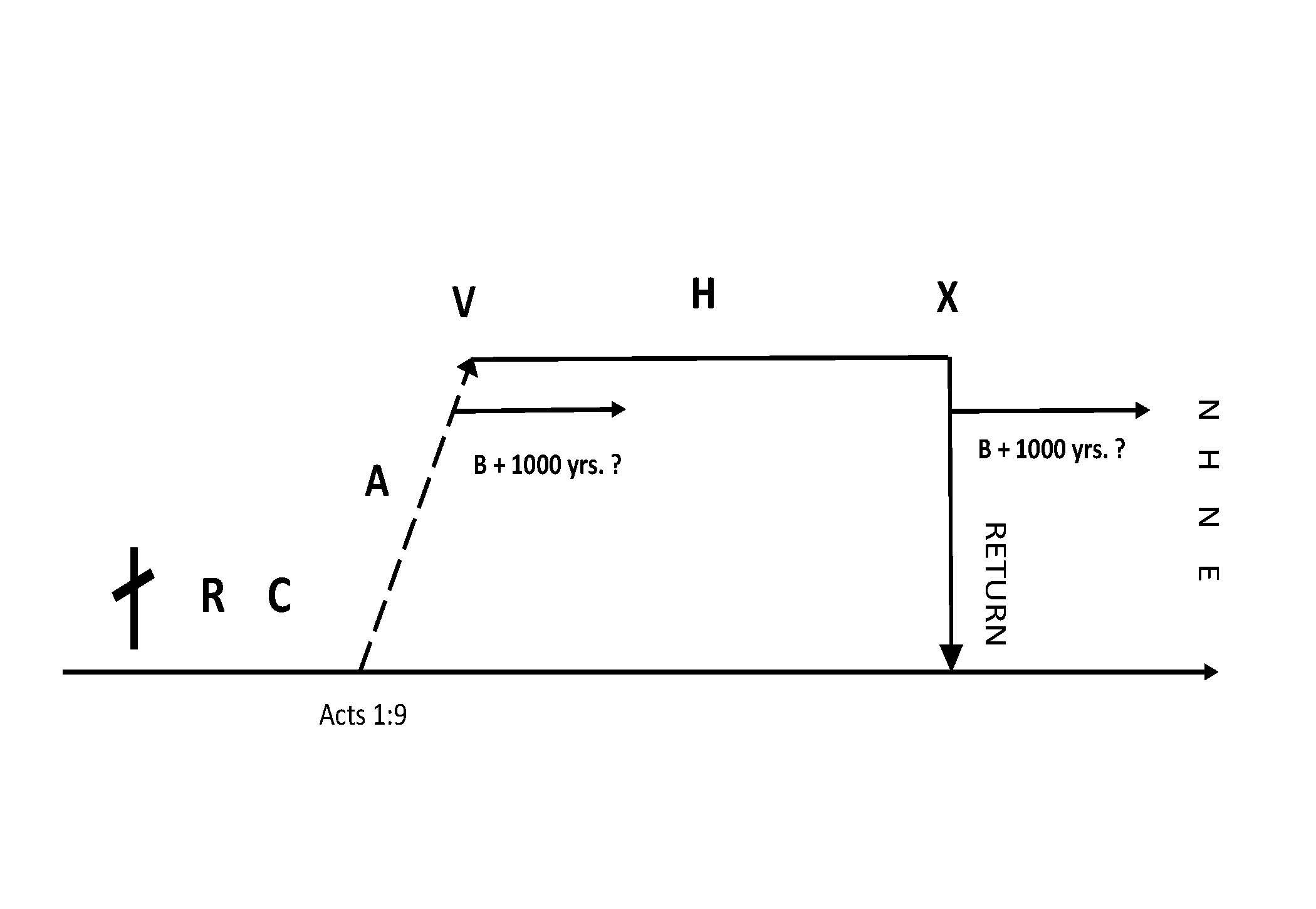
  • There are only two times when Jesus could bind Satan in the abyss, either after His coming (παρουσία) or while He is ascending to heaven between Acts 1:9 and Rev. 5:6ff.

The chart below illustrates the progress we have made up to this point in our study.

Our first two studies left us here, knowing that the binding of Satan (B) and the MILL that follows must be located in one of these two places. (See post #669 for how we reached this conclusion.) The question is, “How do we decide between these two possibilities?” Answering that question will be the subject of this study. 

OUR APPROACH. Our approach for deciding between these two options is pretty simple, at least in concept. We have two alternative scenarios, but only one of them is correct. If we can eliminate one of the alternatives or show, by the Scriptures, that one of them is not possible, then we would be left with the correct one. So, we are going to seek to show from Scriptures that one of these two options is not possible.

STEP ONE. Referring to our chart above, we will focus on the coming (“the return”) of Jesus and ask another crucial question: “WHEN does the coming (παρουσία) of Jesus take place?” For this portion of our study, we will once again leave Revelation and explore 1 Thess. 4:15-17.

As we read 1 Thess. 4:15, it is obvious that we are reading a passage about the coming (παρουσία) of the Lord. The next verse, 4:16, removes all ambiguity when Paul writes, “For the Lord Himself will descend from heaven with a shout.” It is certain that these verses describe Jesus coming to earth.

But also notice what is going on at the same time. While Christ is descending from heaven, “the dead in Christ will rise” (4:16) and then “we who are alive and remain will be caught up together with them to meet the Lord in the air” (4:17). Paul is writing about the resurrection when all those who are in Christ, whether living or dead, will receive their glorified bodies. It is the same topic that Paul teaches in 1 Cor. 15:52: “In a moment, in the twinkling of an eye, at the last trumpet; for the trumpet will sound, and the dead will be raised imperishable, and we will be changed.” Again, we see that all the saints, whether living or dead, will receive their resurrection bodies at the same time. And the resurrection will occur when Christ returns, for 1 Cor. 15:22-23 says, “For as in Adam all die, so also in Christ shall all be made alive. But each in his own order: Christ the first fruits, after that those who are Christ’s at His coming.” Thus, the Scriptures declare that all those who are Christ’s will be resurrected (glorified) at the time of His coming.

  • Our conclusion is that the coming (παρουσία) of Jesus and the resurrection of the saints occur at the same time.

We will now add the resurrection (“S”) to our chart. (See below.)

STEP TWO. Now we ask another crucial question: “WHEN does the resurrection of the saints take place?” Because Jesus’ coming and our resurrection occur at the same time, if we can determine from the Scriptures when the resurrection occurs, then we will also know when Christ’s coming takes place.

For this answer, we turn to the gospel of John and listen to the teaching of Jesus. In John 6:39, our Lord says:

“This is the will of Him who sent Me, that of all that He has given Me I lose nothing but raise it up on the last day.”

Here Christ clearly teaches that the resurrection occurs on the last day. But this is not the only time Jesus says this.

John 6:40: “I Myself will raise him up on the last day.”

John 6:44: “I will raise him up on the last day.”

John 6:54: “I will raise him up on the last day.”

Four times from the lips of Jesus we are told that the resurrection occurs on the last day. There is another instance of this in John 11:24 when Martha said to Jesus, “I know that he (Lazarus) will rise again in the resurrection on the last day.” Martha knows that the resurrection will occur on the last day. Also, notice that Jesus does not correct her, but rather affirms her theology with the words. “I am the resurrection and the life; he who believes in Me will live even if he dies” (11:25). The point is that five times in the gospel of John the Scriptures declare that the resurrection occurs on the last day.

  • Therefore, we must conclude that the resurrection of the saints occurs on the last day.

So now we will add “the last day” to our chart. (See below.) (Note that the last day is followed immediately by the new heaven and the new earth.)

STEP THREE. Previously we demonstrated that the resurrection of the saints and Christ’s coming (παρουσία) occur at the same time, so we must conclude that Christ’s coming also occurs on the last day.

  • Christ’s coming (παρουσία) occurs on the last day.

STEP FOUR. Now we will make a very interesting observation. Since Christ’s coming occurs on the last day, it is not possible for Christ to inaugurate “the thousand years” by binding Satan in the abyss after His coming. In other words, “the thousand years” cannot occur after Jesus’ coming for the simple reason that Jesus’ coming is on the last day. Here, then, is our conclusion:

  • “The thousand years” cannot occur after Jesus’ coming for the simple reason that Jesus’ coming is on the last day.

Thus, by examining the Scriptures carefully, we have shown that this scenario (or any scenario) that includes “the thousand years” occurring after Christ’s return is not possible and must be rejected. Therefore, we will remove that possibility from our chart.

This leads to another conclusion and to the answer to our original question.

  • We conclude that Christ bound Satan in the abyss (Rev. 20:2-3) and thus began “the thousand years” in about AD 30 when He was ascending to heaven (A).
  • Our answer to the original question, “When does the ‘thousand years’ (MILL) occur?” is that “the thousand years” began ca. AD 30 when Jesus bound Satan in the abyss and will continue for a very long time until “the thousand years” are completed. Then Satan “must be released for a short time” (Rev. 20:3).

Our final chart is shown below.

               BASIC TIMELINE: CHRIST TO NEW HEAVENS NEW EARTH                                                                                                                                                                                   

  • R = resurrection of Christ
  • C = Christ commissions His church (Matt. 28:18-20)
  • A = Christ’s ascension from earth (Acts 1:9)
  • B = binding of Satan (the dragon) in the abyss (Rev. 20:2-3)
  • V = Christ’s arrival in heaven (Rev. 5:6)
  • H = Christ’s reign at the Father’s right hand (Psalm 110:1; Heb. 10:12-13)
  • X = Christ’s coming (παρουσία) (1 Thess. 4:15-17; Rev. 19:11-21)
  • S = resurrection of the saints (1 Th. 4:15-17; 1 Cor. 15:23, 52)
  • NHNE = new heaven and new earth (Rev. 21-22)

CONCLUSION

QUESTION: When does “the thousand years” occur?

ANSWER: “The thousand years” began ca. AD 30 when Jesus bound Satan in the abyss and will continue until Satan is released for a short time.

Soli Deo gloria            rmb                 9/12/2023                   #670

The first resurrection (Revelation 20:4-6)

POST OVERVIEW. An interpretation of the meaning of “the first resurrection” from Revelation 20:4-6 that occurs during the “thousand years.”

Then I saw thrones, and they sat on them, and judgment was given to them. And I saw the souls of those who had been beheaded because of their testimony of Jesus and because of the word of God, and those who had not worshiped the beast or his image and had not received the mark on their forehead and on their hand; and they came to life and reigned with Christ for a thousand years. The rest of the dead did not come to life until the thousand years were completed. This is the first resurrectionBlessed and holy is the one who has a part in the first resurrection; over these the second death has no power, but they will be priests of God and of Christ and will reign with Him for a thousand years. – Revelation 20:4-6 (NAS)

The passage before us presents several interpretive difficulties, but we are going to focus our investigation on the meaning of “the first resurrection” as it appears here. What is the Scripture teaching us here about the resurrection?

INITIAL COMMENTS

As we begin our investigation, the first thing to observe is where this scene takes place. This scene is in heaven. In the book of Revelation, thrones (20:4) are always in heaven, so we know that this takes place in heaven. We also know when this takes place, since it is explicitly stated that this takes place during the “thousand years.”

It is important to observe who this vision sees. John saw “souls.” John did not see glorified saints, but he saw “souls.” This is very similar to the scene described in Revelation 6:9 when John also sees the “souls of those who had been slain because of the word of God.” These “souls” are believers who have physically died but who have not yet been glorified in the Resurrection. And this is exactly what we would expect to find during the “thousand years.” We would expect to find those who had died as faithful witnesses of Jesus and who now await the Resurrection on the Last Day.

EXEGESIS OF REVELATION 20:4-6 ON THE FIRST RESURRECTION

Now we will consider the part of the passage that talks about “the first resurrection.”

“And they came to life and reigned with Christ for a thousand years.” – Rev. 20:4

Who are these who came to life and reigned? There are two groups of believers included here, and one group is a subset of the other group. The first group, the subset, is “those who had been beheaded because of their testimony of Jesus.” These are the martyrs, the ones who had been faithful even unto violent death, “who have been slain because of the word of God” (Revelation 6:9). The martyrs are a subset of all faithful believers, “those who had not worshiped the beast or his image (Revelation 13) and had not received the mark” (20:4).

Therefore, those who came to life and reigned with Christ for the “thousand years” are all faithful believers who physically died during the “thousand years.”

The rest of the dead did not come to life until the thousand years were completed. – Revelation 20:5a

This first sentence in Revelation 20:5 should be seen as parenthetical. “The rest of the dead” is referring to all unbelievers who physically died during the “thousand years.” This parenthetical comment about unbelievers makes abundantly clear that not everyone is included in those who came to life. This simple sentence declares that only those who die in Jesus are going to be reigning with Christ during the “thousand years.” Only faithful believers will “come to life.” Only faithful believers are in heaven with Christ awaiting the glorious Resurrection. “The rest of the dead” are elsewhere awaiting the terrifying great white throne judgment that comes later (Revelation 20:11-15).

This is the first resurrection. – Revelation 20:5b

THE FIRST RESURRECTION

Here John mentions “the first resurrection.” Some have been unnecessarily confused and distressed by this expression. John is certainly not here introducing the idea of some sort of two-stage resurrection. There is no biblical support anywhere in the Scripture to suggest that there are two literal Resurrections for the saints. This term “the first resurrection” is meant to be understood figuratively to describe the transition that occurs when any believer physically dies and then “rises” to spend the remainder of the age in the spirit in heaven with Christ awaiting the final, real Resurrection.

What do we know about everyone “who has a part in the first resurrection?” We know that the one who has a part in the first resurrection is “blessed and holy.” We know that “over these the second death has no power,” so we know that they will never be threatened with the lake of fire. We know that all these “will be priests of God and of Christ” (confirm in 1 Peter 2:9). Finally, we know that they will reign with Christ for the “thousand years.”

But not all believers will experience this first resurrection. Some believers will not reign with Christ for the “thousand years.” Why? Because the first resurrection is only for those believers who physically die before the coming of Christ, and not all believers will physically die. We know that “we will not all sleep” (1 Corinthians 15:51). We know that there will be some believers “who are alive and remain” (1 Thessalonians 4:17) when the Resurrection occurs. We know that the Resurrection is for those who have fallen asleep, and it is for those who are still living. These still-living believers will not experience the first resurrection because they will be glorified in the Resurrection without going through physical death.

So, not all believers will experience “the first resurrection,” but all believers will certainly experience the Resurrection on the Last Day.

WHAT ABOUT THE UNRIGHTEOUS?

In commenting about the unrighteous from this passage, the ones referred to as “the rest of the dead” in 20:5a, it should be understood that none of the unrighteous has a part in “the first resurrection.” For this reason, none of the unrighteous “came to life and reigned with Christ for the thousand years.” None of the unrighteous is “blessed and holy.” Over the unrighteous “the second death” has all power, because all the unrighteous will experience both physical death and “the second death.” (For a fuller understanding of “the second death,” see “The great white throne judgment” in Rev. 20:11-15.)

Perhaps these statements will help make things clearer:

  • If anyone experiences the first resurrection, then he will not experience the second death.
  • If you are a believer, then you are guaranteed the Resurrection on the Last Day.
  • If you are a believer, then physical death (the first death) is optional.
  • If you are an unbeliever, then you are guaranteed both physical death (the first death) and the lake of fire, which is the second death (Revelation 20:14-15).

CONCLUSION

In summary, then, “the first resurrection” of Revelation 20:4-6 is a figurative term for the transition that takes place when any believer physically dies and their soul goes to heaven to await their glorification in the Resurrection on the Last Day.

Soli Deo gloria            rmb                 5/16/2023                   #651

A case for the 42 months being a literal period of time

POST OVERVIEW. A refresher on the 42 months from Revelation 11-13, reviewing what the Scripture says about this end-times concept. Related to post #641, 4/16/2023, on the “thousand years.”

I have written before at length about the end times, both on numerous posts on this site and in my book, “The Last Act of the Drama: a guide to the end times,” but lately I have felt that it might be beneficial to give some refreshers.

THE 42 MONTHS IN REVELATION

One of the most important interpretive decisions that the student of Revelation makes is how he understands the timing of the major end times events and time periods in the book. In my view of Revelation, the events of the last days (the time period between Jesus’ ascension and great white throne judgment) fit into three named periods: the “thousand years,” the 42 months, and the last day. In a recent post (#641, 4/16/2023), I reviewed the events of the “thousand years” and placed the “thousand years” chronologically on a timeline. In this post, my main objective, but not my only objective, is to demonstrate that “the 42 months” of Revelation 11-13 should be understood as a literal time period.

REVIEW OF THOUSAND YEARS. Looking back to Post #641, we saw that, rather than a precise measurement of exactly one thousand 365-day years, the “thousand years” (Rev. 20:1-6) was simply a figurative expression for a long period of time. That is, since “thousand” in Revelation most often simply means a very large number, the “thousand years” simply means a very long, non-specific period of time. In my previous post, I also explained from Revelation and other Scriptures that the “thousand years” begins during the ascension of Jesus to heaven between Acts 1:9 and Rev. 5:6. Then, according to Rev. 20:3 and 20:7, the “thousand years” ends when Satan (the dragon) is released from the abyss. Thus, the period of the 42 months begins with Satan’s release.

42 MONTHS A LITERAL TIME PERIOD OR FIGURATIVE?

There are seven occurrences of the “42 months” in the Scriptures: Daniel 7:25 and 12:7; and Revelation 11:2, 3; 12:6, 14; and 13:5. The first thing we want to consider as we interpret these occurrences of the 42 months is whether this is a literal time period of three-and-a-half years or whether the expression “42 months” is to be understood figuratively as just a relatively short period of time. When I was studying end-times passages for my book on the end times two years ago, my position on the 42 months (or the “time and times and half a time” or the 1,260 days) was that this expression was “relatively literal,” in that it figuratively meant a short period of time compared to the long period of the thousand years. This position was not based on in-depth exegesis or on a clear principle, so this idea of “relatively literal” was weak. But since that time, as I have continued to study these things, my position on the meaning of the 42 months has changed. I am now persuaded that the “42 months” is a literal time period of 42 calendar months in duration. I have come to this conclusion for three reasons:

  1. John mentions this period of time five times in Revelation in three different ways; “42 months” (Rev. 11:2; 13:5); “1,260 days” (Rev. 11:3; 12:6); and “time and times and half a time” (Rev. 12:14). It would be very odd for him to mention a figurative period of time in three different ways.
  2. None of these expressions of 42 months has any figurative significance that I can discern, so it is unlikely that the time span is figurative.
  3. There are two other expressions of the 42 months which are located in Daniel (“time, times, and half a time” in 7:25 and 12:7), bringing to seven the total number of times that the 42 months is mentioned in an end-times passage in the Scriptures. Seven mentions of the same time period is very significant and is strong evidence for a literal understanding.  

These three reasons taken together make a very persuasive case that the 42 months is a literal time period.

THE EVENTS DURING THE 42 MONTHS

According to my view of the last days, the “thousand years” is a time of relative peace where the primary end-times activity consists of the faithful church riding out to conquer the nations with the bow of the gospel (Rev. 6:1-2). Satan is locked in the abyss (Rev. 20:3) so that he will not thwart the work of the church to make disciples of all nations (Matt. 28:19-20).

But at a point in time known only to the Lord, Satan “must be released for a short time” (Rev. 20:3). This “short time” is the period of the 42 months. With the release of Satan from the abyss, the time period of the 42 months begins and world history takes a dramatic turn toward the end of the age. The following are comments about the 42 months.

  1. There are three main purposes for the 42 months.
    • Lawlessness increases so that the rebellious world is prepared for judgment.
    • The church gathered during the “thousand years” is purified by persecution.
    • Final warnings and calls for repentance are issued for the unrighteous.
  2. The 42 months begins with Satan’s release from the abyss (Rev. 20:3, 7) and ends on the cusp of the last day as the nations are gathered for Armageddon (Rev. 16:13-16; 19:19; 20:8-9) and the destruction of the church.
  3. With a couple of exceptions, the events of the 42 months are given only in Revelation. Since there is not a biblical cross-reference for these events, care must be taken as the student pieces these events together.
  4. A proposed flow of events of 42 months. Satan’s release begins the 42 months. Satan makes war in heaven (Rev. 12:7-8) but he is defeated and thrown to earth (Rev. 12:9ff). This event is parallel with Rev. 8:10 and the great star from heaven (Satan). This “star” opens “the shaft of the abyss” (9:1) and releases demonic forces on the earth. These are part of the trumpet warnings for the unrighteous to repent. In 12:12, Satan’s wrath will result in woe on the earth. The church is purified through persecution (Rev. 6:9-11; 11:3-10, esp. 7; 13:7, 10, 15), the rise of the antichrist in the person of the beast (Rev. 13:1-10); the rise of the false prophet (“another beast,” Rev. 13:11-17), and the gathering of the kings of the earth and the forces of wickedness against the faithful church for the annihilation of the church (Rev. 16:13-16; 19:19; 20:8-9). The conclusion of the 42 months prepares the world for the cataclysmic events of the last day.

Soli Deo gloria            rmb                 4/17/2023                   #642