POST OVERVIEW. The third in a series of studies of Revelation 20:1-3 seeking to determine when “the thousand years” occur. This specific study seeks to determine when Jesus binds Satan in the abyss by determining from the Scriptures when Jesus’ coming (παρουσία) occurs. (See also post #668, 9/10/2023, post #669, 9/11/2023.)
REVIEW THE PROGRESS OF OUR STUDY
This article is the third in a series of studies focused on Revelation 20:1-3 whose objective is to determine when, in human history, “the thousand years” (“the MILL”) occurs. In our two previous studies (Post #668, #669), we established the following:
- “The dragon” represents Satan (20:2).
- “The angel” (20:1) represents the Lord Jesus.
- The MILL begins when the Lord Jesus binds Satan and throws him into the abyss.
- At the end of the MILL, Satan is released from the abyss for a short time.
- Jesus is seated at the Father’s right hand from the time He ascended to heaven (ca. AD 30) until He returns to earth for the Judgment.
- There are only two times when Jesus could bind Satan in the abyss, either after His coming (παρουσία) or while He is ascending to heaven between Acts 1:9 and Rev. 5:6ff.
The chart below illustrates the progress we have made up to this point in our study.
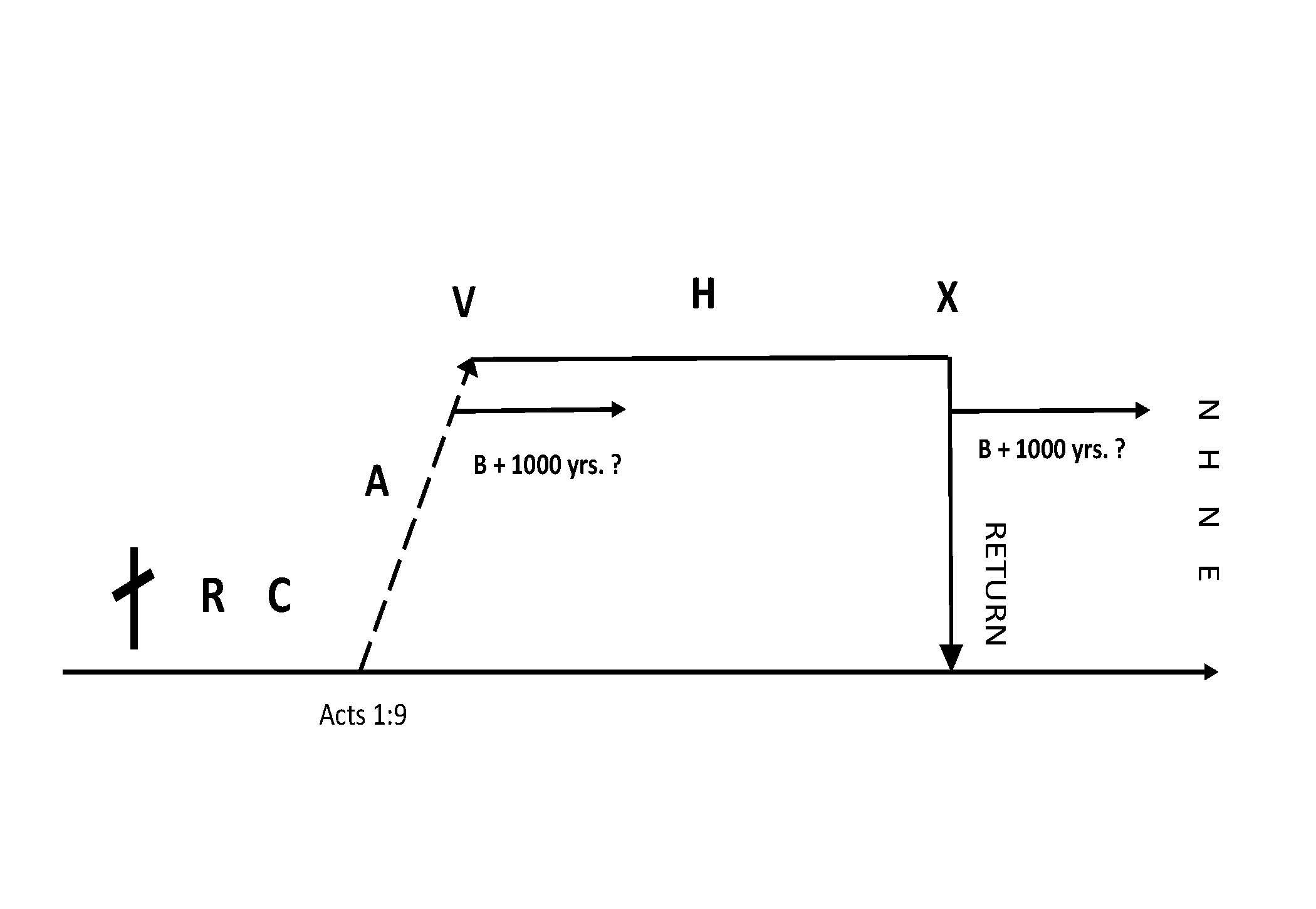
Our first two studies left us here, knowing that the binding of Satan (B) and the MILL that follows must be located in one of these two places. (See post #669 for how we reached this conclusion.) The question is, “How do we decide between these two possibilities?” Answering that question will be the subject of this study.
OUR APPROACH. Our approach for deciding between these two options is pretty simple, at least in concept. We have two alternative scenarios, but only one of them is correct. If we can eliminate one of the alternatives or show, by the Scriptures, that one of them is not possible, then we would be left with the correct one. So, we are going to seek to show from Scriptures that one of these two options is not possible.
STEP ONE. Referring to our chart above, we will focus on the coming (“the return”) of Jesus and ask another crucial question: “WHEN does the coming (παρουσία) of Jesus take place?” For this portion of our study, we will once again leave Revelation and explore 1 Thess. 4:15-17.
As we read 1 Thess. 4:15, it is obvious that we are reading a passage about the coming (παρουσία) of the Lord. The next verse, 4:16, removes all ambiguity when Paul writes, “For the Lord Himself will descend from heaven with a shout.” It is certain that these verses describe Jesus coming to earth.
But also notice what is going on at the same time. While Christ is descending from heaven, “the dead in Christ will rise” (4:16) and then “we who are alive and remain will be caught up together with them to meet the Lord in the air” (4:17). Paul is writing about the resurrection when all those who are in Christ, whether living or dead, will receive their glorified bodies. It is the same topic that Paul teaches in 1 Cor. 15:52: “In a moment, in the twinkling of an eye, at the last trumpet; for the trumpet will sound, and the dead will be raised imperishable, and we will be changed.” Again, we see that all the saints, whether living or dead, will receive their resurrection bodies at the same time. And the resurrection will occur when Christ returns, for 1 Cor. 15:22-23 says, “For as in Adam all die, so also in Christ shall all be made alive. But each in his own order: Christ the first fruits, after that those who are Christ’s at His coming.” Thus, the Scriptures declare that all those who are Christ’s will be resurrected (glorified) at the time of His coming.
- Our conclusion is that the coming (παρουσία) of Jesus and the resurrection of the saints occur at the same time.
We will now add the resurrection (“S”) to our chart. (See below.)

STEP TWO. Now we ask another crucial question: “WHEN does the resurrection of the saints take place?” Because Jesus’ coming and our resurrection occur at the same time, if we can determine from the Scriptures when the resurrection occurs, then we will also know when Christ’s coming takes place.
For this answer, we turn to the gospel of John and listen to the teaching of Jesus. In John 6:39, our Lord says:
“This is the will of Him who sent Me, that of all that He has given Me I lose nothing but raise it up on the last day.”
Here Christ clearly teaches that the resurrection occurs on the last day. But this is not the only time Jesus says this.
John 6:40: “I Myself will raise him up on the last day.”
John 6:44: “I will raise him up on the last day.”
John 6:54: “I will raise him up on the last day.”
Four times from the lips of Jesus we are told that the resurrection occurs on the last day. There is another instance of this in John 11:24 when Martha said to Jesus, “I know that he (Lazarus) will rise again in the resurrection on the last day.” Martha knows that the resurrection will occur on the last day. Also, notice that Jesus does not correct her, but rather affirms her theology with the words. “I am the resurrection and the life; he who believes in Me will live even if he dies” (11:25). The point is that five times in the gospel of John the Scriptures declare that the resurrection occurs on the last day.
- Therefore, we must conclude that the resurrection of the saints occurs on the last day.
So now we will add “the last day” to our chart. (See below.) (Note that the last day is followed immediately by the new heaven and the new earth.)

STEP THREE. Previously we demonstrated that the resurrection of the saints and Christ’s coming (παρουσία) occur at the same time, so we must conclude that Christ’s coming also occurs on the last day.
- Christ’s coming (παρουσία) occurs on the last day.
STEP FOUR. Now we will make a very interesting observation. Since Christ’s coming occurs on the last day, it is not possible for Christ to inaugurate “the thousand years” by binding Satan in the abyss after His coming. In other words, “the thousand years” cannot occur after Jesus’ coming for the simple reason that Jesus’ coming is on the last day. Here, then, is our conclusion:
- “The thousand years” cannot occur after Jesus’ coming for the simple reason that Jesus’ coming is on the last day.
Thus, by examining the Scriptures carefully, we have shown that this scenario (or any scenario) that includes “the thousand years” occurring after Christ’s return is not possible and must be rejected. Therefore, we will remove that possibility from our chart.
This leads to another conclusion and to the answer to our original question.
- We conclude that Christ bound Satan in the abyss (Rev. 20:2-3) and thus began “the thousand years” in about AD 30 when He was ascending to heaven (A).
- Our answer to the original question, “When does the ‘thousand years’ (MILL) occur?” is that “the thousand years” began ca. AD 30 when Jesus bound Satan in the abyss and will continue for a very long time until “the thousand years” are completed. Then Satan “must be released for a short time” (Rev. 20:3).
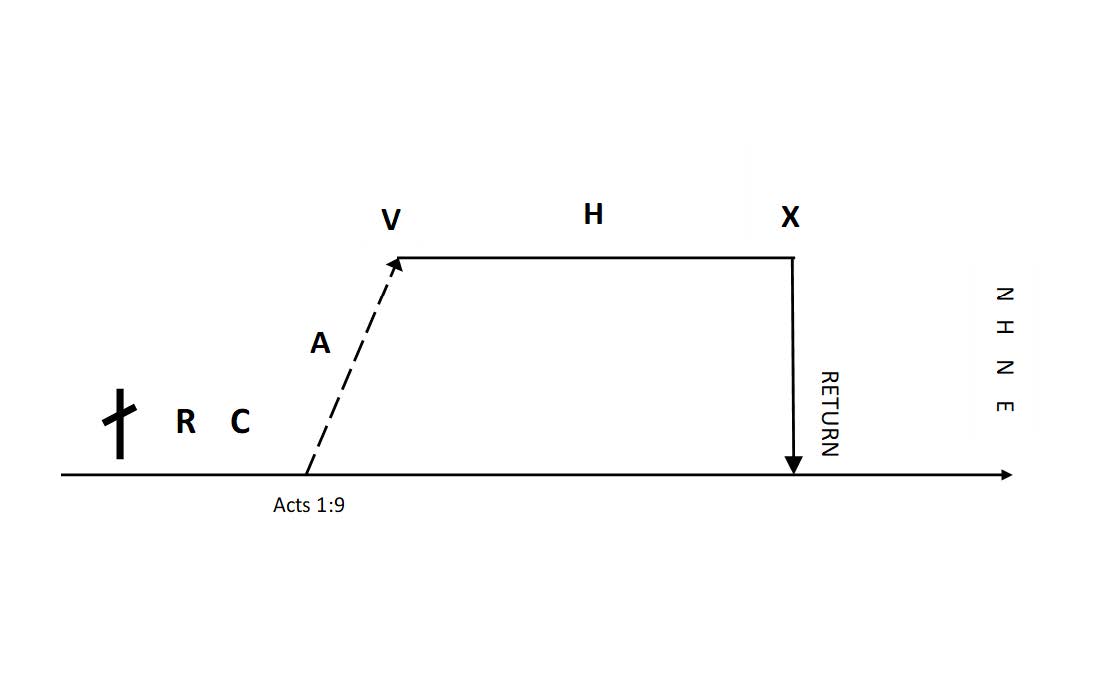
Our final chart is shown below.

BASIC TIMELINE: CHRIST TO NEW HEAVENS NEW EARTH
- R = resurrection of Christ
- C = Christ commissions His church (Matt. 28:18-20)
- A = Christ’s ascension from earth (Acts 1:9)
- B = binding of Satan (the dragon) in the abyss (Rev. 20:2-3)
- V = Christ’s arrival in heaven (Rev. 5:6)
- H = Christ’s reign at the Father’s right hand (Psalm 110:1; Heb. 10:12-13)
- X = Christ’s coming (παρουσία) (1 Thess. 4:15-17; Rev. 19:11-21)
- S = resurrection of the saints (1 Th. 4:15-17; 1 Cor. 15:23, 52)
- NHNE = new heaven and new earth (Rev. 21-22)
CONCLUSION
QUESTION: When does “the thousand years” occur?
ANSWER: “The thousand years” began ca. AD 30 when Jesus bound Satan in the abyss and will continue until Satan is released for a short time.
Soli Deo gloria rmb 9/12/2023 #670


 Roy's Reflections