Basic interpretive principles for Revelation 5-20, Part 2

POST OVERVIEW. The second in a two-part series of posts stating and justifying two key interpretive principles for Rev. 5-20 and presenting two crucial questions for applying these principles to a given text in Revelation. (The first post of this series was post #671.)

This second post is about Key Interpretive Principle #2, that the characters and events of Revelation chapters 5-20 are to be understood as symbolic and figurative, not literal.

INTRO. The purpose of this two-part series is to present two powerful principles for helping the Bible student interpret the visions in Revelation 5-20 and to explain two crucial questions which emerge from these interpretive principles.

TWO PRINCIPLES AND TWO CRUCIAL QUESTIONS FOR REVELATION 5-20

THE TWO KEY PRINCIPLES STATED. The two key principles are 1) Revelation 5-20 is not written in chronological order, and 2) our default assumption is that the characters and events of Revelation 5-20 are to be understood figuratively or symbolically, not literally.

In the previous post (#671), we stated and justified Key Interpretive Principle #1, that Revelation chapters 5-20 are not chronological. We now turn to Key Interpretive Principle #2, that the characters and events of Revelation chapters 5-20 are to be understood as symbolic and figurative, not literal.

JUSTIFICATION OF “NOT LITERAL, BUT FIGURATIVE AND SYMBOLIC.” Key Interpretive Principle #2: The default assumption is that the characters and events in Rev. 5-20 are to be understood figuratively or symbolically, not literally. To justify this principle, I refer the reader to a two-part series of articles on my blog site (Post #622, 2/16/2023 and #623, 2/16/2023), which addresses this precise subject. The essence of these two posts is expressed in the quote below from Post #623.

QUOTE FROM POST #623. “One of the most obvious features of these chapters (Revelation 4-20) is a continuous pouring forth of strange and powerful visions of angels and dragons and earthquakes and hailstones. Just speaking for me personally, I cannot imagine what a literal interpretation of these visions could possibly mean, so I have always thought that most of these were intended to be symbolic of other biblical realities. After all, Revelation is the ultimate example of the genre called biblical prophecy, and, as in all biblical prophecy, the symbolic and the figurative are common. So, while there are certainly parts of this section of Revelation that should be understood literally, the overwhelming majority of these chapters presents events and characters which only make sense if they are symbolic and figurative. In fact, the great challenge of interpreting Revelation 4-20 is determining the meanings of the many images and events that John records.

The following give evidence of the need for a symbolic or figurative interpretation.

  • The Lamb in Rev. 5:6ff
  • The seals of Rev. 5, 6
  • The four horsemen of Rev. 6:1-8
  • The 144,000 of Rev. 7:4-8; 14:1-5
  • The seven angels with the seven trumpets of Rev. 8-9
  • The star from heaven in Rev. 8:10; 9:1ff
  • The abyss (bottomless pit) and the smoke in Rev. 9:2-10
  • Locusts and scorpions in Rev. 9:3-10
  • Twice ten thousand time ten thousand horsemen Rev. 9:16
  • Kill a third of mankind Rev. 9:15 (2.5 Billion people??)
  • Two witnesses, fire flows out of their mouths Rev. 11:5
  • The woman Rev. 12
  • Red dragon Rev. 12
  • The beast Rev. 13:1-10
  • Another beast Rev. 13:11-17
  • The angel and the sickle Rev. 14:17-20
  • Seven angels with seven bowls Rev. 16:1-12
  • Armageddon Rev. 16:13-16
  • Scarlet beast and the woman Rev. 17:3-18
  • The destruction of Babylon Rev. 18
  • The Rider on the white horse Rev. 19:11-21
  • The angel from heaven Rev. 20:1-3
  • The dragon, the key, the chain, the abyss (bottomless pit) Rev. 20:1-3
  • Thousand years Rev. 20:2-7   [END QUOTE]

For those who desire to read the full posts, here are links to posts #622 and #623 on interpreting Revelation’s symbolism.  Post 622    Post 623

CRUCIAL QUESTION #2. Since most of the characters and events in Rev. 5-20 are understood figuratively and symbolically, the student of Revelation is compelled to frequently use their Bible study skills to ask and answer crucial question #2, “WHO OR WHAT does this symbol represent?”

AN EXAMPLE FROM REVELATION 20:1-3; WHO IS “THE ANGEL?”

My recent three-post study on Revelation 20:1-3 (posts #668, #669, and #670) was done to determine when in human history “the thousand years” occurs, but an important part of that larger study was identifying “the angel” in this scene in Rev. 20:1. To discover the identity of “the angel,” we employed crucial question #2, “WHO does this symbol (“the angel”) represent?” For an example of how the WHO crucial question is used, follow the link to post #668.

SUMMARY. Stating and justifying Key Interpretive Principle #2, that Revelation chapters 5-20 are figurative and symbolic, not literal. Also, presenting crucial question #2, “WHO OR WHAT does this symbol represent?”

Soli Deo gloria            rmb                 9/15/2023                   #672
Basic interpretive principles for Revelation 5-20, Part 1

POST OVERVIEW. The first in a two-part series of posts stating and justifying two key interpretive principles for Rev. 5-20 and presenting two crucial questions for applying these principles to a given text in Revelation.

This first post is about Key Interpretive Principle #1: Revelation 5-20 is not chronological.  

Interpreting and understanding the book of Revelation is a challenge for any student of the Bible. The rapidly changing scenes in Revelation and the visions of angels and dragons and beasts and creatures from the abyss can be very confusing. Where does the student begin?

The purpose of this two-post study is to present two powerful principles for helping the Bible student interpret the visions in Revelation 5-20 and to explain two crucial questions which emerge from these interpretive principles.

TWO PRINCIPLES AND TWO CRUCIAL QUESTIONS FOR REVELATION 5-20

TWO KEY PRINCIPLES STATED. The two key principles are 1) Revelation 5-20 is not written in chronological order, and 2) our default assumption is that the characters and events of Revelation 5-20 are to be understood figuratively or symbolically, not literally.

JUSTIFICATION OF “NOT CHRONOLOGICAL.” There are two features of the text that demonstrate that Rev. 5-20 is not read chronologically (Key Interpretive Principle #1). These features are, first, that there are similar or identical events and phrases which are repeated at several different points in these chapters, and second, there are some events that are clearly intended to be final that occur long before the end of the section. Examples of these follow.

REPEATED EVENTS AND PHRASES.

  • In 16:14, we see the beast and the kings of the whole world gathering together for the war of the great day of God; but in 19:19, we again see the beast and the kings of the earth “assembled” (same Greek word as “gather” in 16:14) to make war against Him who sat on the horse; and finally, in 20:8, the recently-released Satan comes out to gather the nations together for the war. These three verses say essentially the same thing about the same event, but they are in three different sections of Revelation. Conclusion? The text is not chronological.
  • In 14:8, we read, “Fallen, fallen is Babylon the great, she who made all the nations drink the wine of the passion of her immorality.” Then in 18:2-3, we read, “Fallen, fallen is Babylon the great! For all the nations have drunk the wine of the passion of her immorality.” Identical texts but separated by several chapters of intense activity means the book is not chronological.
  • In 7:9-17, we see “a great multitude” praising God who sits on the throne and praising the Lamb. Then in Rev. 19:1, we hear the loud voice of “a great multitude” worshiping God who sits on the throne (19:4). (See also “the voice of a great multitude” in 19:6.) This repeated scene takes place in the new heaven and new earth where all the redeemed are worshiping God and the Lamb forever, but these passages are far apart in the book. Also, these scenes take place in eternity in the new heaven and new earth. As such, they belong in chapters 21-22, not in chapters 7 and 19. When we see the same scene in different places, it means that the book is not chronological.
  • 6:14: “every mountain and island were moved out of their places.” 16:20: “every island fled away and the mountains were not found.” The identical event at two well-spaced places in the book means that the book is not chronological.
  • In 8:5, we read, “There followed peals of thunder and sounds and flashes of lightning and an earthquake.” But in Rev. 11:19 we find peals of thunder, flashes of lightning, and an earthquake. And in Rev. 16:18 we again have peals of thunder, flashes of lightning, and a great earthquake. The same event is found at three widely separated places in the text. This is more evidence that Revelation 5-20 is not read chronologically.

PICTURES OF FINAL JUDGMENT APPEAR LONG BEFORE THE END

  • Picture #1. Rev. 6:12-17. 6:12-14 is filled with images from “the day of the LORD” passages in the Old Testament. This scene is a picture of the end. Then in 6:15-17 we see “the kings of the earth” (see 16:14, 18:3, 19:19) hiding themselves from “the presence of Him who sits on the throne and from the wrath of the Lamb, for the great day of their wrath has come, and who is able to stand?” This is certainly the final judgment, yet, curiously, it is placed at the end of chapter 6. If the final judgment is presented in chapter 6, then Revelation is not chronological.
  • Picture #2. Rev. 16:17-21. In 16:17, a loud voice says, “It is done,” which also appears in 21:6 (new heaven and new earth). We have already mentioned the peals of thunder, etc. (11:19; 8:5). In 16:19, figurative “Babylon” receives the cup of the wine of God’s fierce wrath (also in 6:12; 14:19; 19:15). The tone of the passage is one of final judgment, but we are still in chapter 16, not at the end of chapter 20 or in chapter 21. As above, if the final judgment is presented in chapter 16, then Revelation is not chronological.
  • Picture #3. Rev. 19:11-21. The scene with the Rider on the white horse is the climax of the book of Revelation as the glorious Lamb comes from heaven to tread the wine press of the fierce wrath of God, the Almighty (19:15). To emphasize the finality of this event, in 19:21 we read, “And the rest were killed with the sword which came from the mouth of Him who sat on the horse.” If Revelation were chronological, this would be the end because there are no people living on earth after 19:21. But instead of the end coming here, we read of “the thousand years” (20:1-7) and of yet another war (20:8-9) and of Satan being thrown into the lake of fire (20:10) before we get to the great white throne (20:11-15). This is yet more evidence that Revelation is not read chronologically.

CRUCIAL QUESTION #1. Hopefully, by presenting this evidence, we have made the case that Revelation 5-20 should not be read chronologically. When we realize how not to read Revelation 5-20, our efforts at interpreting the text actually become easier because now, instead of trying to force these scenes into a bizarre chronological order, we can look carefully at the details of the text and at the interpretive clues that are available in the text and ask the crucial question, “WHEN does this event take place?” It is, therefore, incumbent upon the student of Revelation to become skilled at asking and answering crucial question #1, “WHEN does this event take place?”

AN EXAMPLE FROM REVELATION 6:12-17

To understand how to use the WHEN question, we will go quickly through an example. We have already mentioned Rev. 6:12-17 several times in this article, so let’s go there. In this passage, the Lamb breaks the sixth seal (the next to last seal, so we are probably nearing the end of the age) and we read of a great earthquake. (Think Rev. 16:18, which is in another “final judgment” passage.) The earthquake is followed by several “day of the LORD” events from the Old Testament. The sun became black (Joel 2:31; Matt. 24:29), the moon became blood, the stars fell from the sky, the sky was rolled up like a scroll (Is. 34:4), and every mountain and island was moved out of their place (Nah. 1:5; Rev. 16:20). Then notice at the conclusion of this pericope, we read (6:16-17) of the wrath of the Lamb. This is as clear a picture of the day of the Lord as we have in Scripture. The Lamb is certainly the Lord Jesus, the Rider on the white horse of Rev. 19:11-21, the Lord descending from heaven with a shout in 1 Thess. 4:16. This is the day of judgment, “that day,” when the wrath of God is poured out on the unrighteous. WHEN does the day of the Lord occur? We know that the Lord Jesus will return on the last day to destroy the unrighteous. Therefore, Rev. 6:12-17 is a scene from the last day of the age just before the great white throne judgment (Rev. 20:11-15).

For another extended example of using this crucial question #1, refer to my recent three-post study on Revelation 20:1-3 where we sought to determine WHEN in human history “the thousand years” occurs. (See posts #668, #669, and #670.) The WHEN question was used several times in this study.

SUMMARY. Stating and justifying Key Interpretive Principle #1, that Revelation chapters 5-20 are not to be read chronologically. Also, presenting crucial question #1, “WHEN does this event take place?”

Soli Deo gloria            rmb                 9/15/2023                   #671

The thousand years: Part 3 – When is Jesus coming?

POST OVERVIEW. The third in a series of studies of Revelation 20:1-3 seeking to determine when “the thousand years” occur. This specific study seeks to determine when Jesus binds Satan in the abyss by determining from the Scriptures when Jesus’ coming (παρουσία) occurs. (See also post #668, 9/10/2023, post #669, 9/11/2023.)

REVIEW THE PROGRESS OF OUR STUDY

This article is the third in a series of studies focused on Revelation 20:1-3 whose objective is to determine when, in human history, “the thousand years” (“the MILL”) occurs. In our two previous studies (Post #668, #669), we established the following:

  • “The dragon” represents Satan (20:2).
  • “The angel” (20:1) represents the Lord Jesus.
  • The MILL begins when the Lord Jesus binds Satan and throws him into the abyss.
  • At the end of the MILL, Satan is released from the abyss for a short time.
  • Jesus is seated at the Father’s right hand from the time He ascended to heaven (ca. AD 30) until He returns to earth for the Judgment.
  • There are only two times when Jesus could bind Satan in the abyss, either after His coming (παρουσία) or while He is ascending to heaven between Acts 1:9 and Rev. 5:6ff.

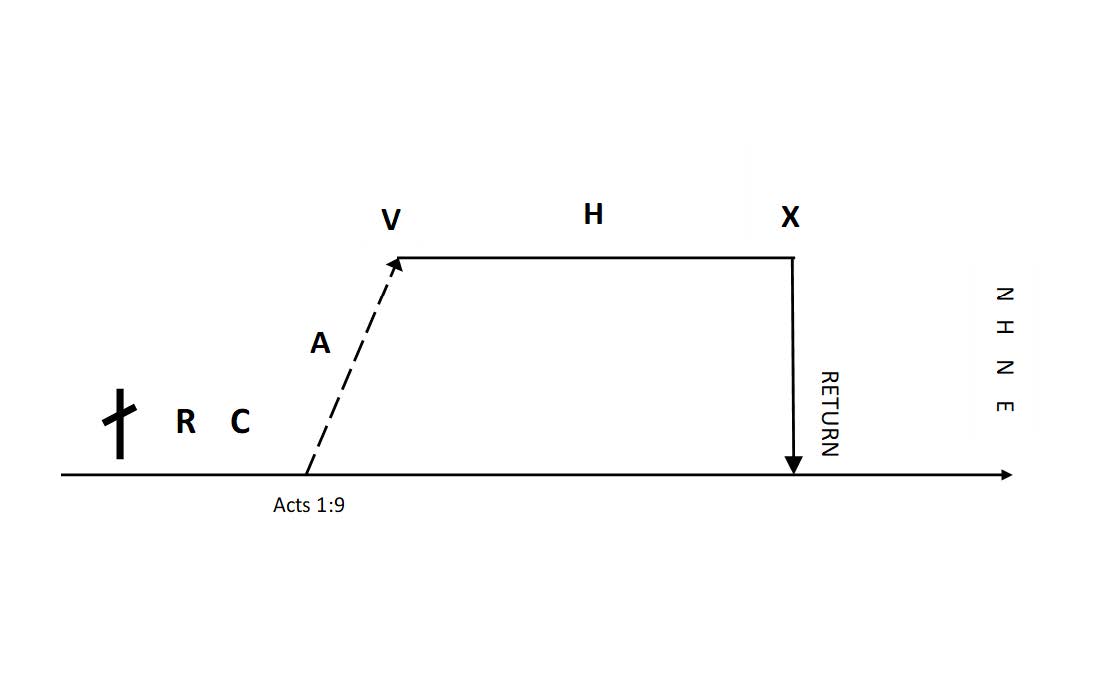
The chart below illustrates the progress we have made up to this point in our study.

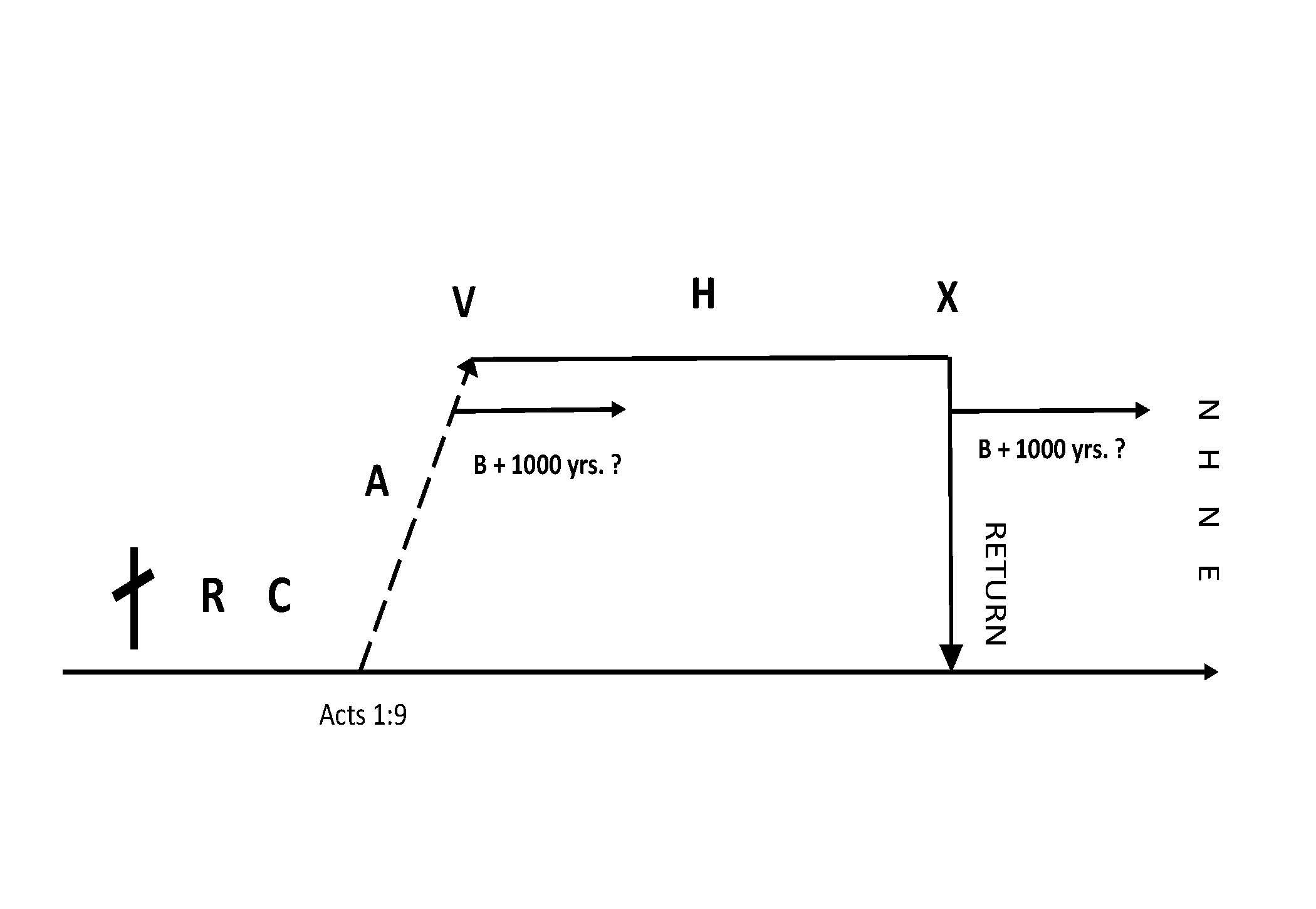
Our first two studies left us here, knowing that the binding of Satan (B) and the MILL that follows must be located in one of these two places. (See post #669 for how we reached this conclusion.) The question is, “How do we decide between these two possibilities?” Answering that question will be the subject of this study. 

OUR APPROACH. Our approach for deciding between these two options is pretty simple, at least in concept. We have two alternative scenarios, but only one of them is correct. If we can eliminate one of the alternatives or show, by the Scriptures, that one of them is not possible, then we would be left with the correct one. So, we are going to seek to show from Scriptures that one of these two options is not possible.

STEP ONE. Referring to our chart above, we will focus on the coming (“the return”) of Jesus and ask another crucial question: “WHEN does the coming (παρουσία) of Jesus take place?” For this portion of our study, we will once again leave Revelation and explore 1 Thess. 4:15-17.

As we read 1 Thess. 4:15, it is obvious that we are reading a passage about the coming (παρουσία) of the Lord. The next verse, 4:16, removes all ambiguity when Paul writes, “For the Lord Himself will descend from heaven with a shout.” It is certain that these verses describe Jesus coming to earth.

But also notice what is going on at the same time. While Christ is descending from heaven, “the dead in Christ will rise” (4:16) and then “we who are alive and remain will be caught up together with them to meet the Lord in the air” (4:17). Paul is writing about the resurrection when all those who are in Christ, whether living or dead, will receive their glorified bodies. It is the same topic that Paul teaches in 1 Cor. 15:52: “In a moment, in the twinkling of an eye, at the last trumpet; for the trumpet will sound, and the dead will be raised imperishable, and we will be changed.” Again, we see that all the saints, whether living or dead, will receive their resurrection bodies at the same time. And the resurrection will occur when Christ returns, for 1 Cor. 15:22-23 says, “For as in Adam all die, so also in Christ shall all be made alive. But each in his own order: Christ the first fruits, after that those who are Christ’s at His coming.” Thus, the Scriptures declare that all those who are Christ’s will be resurrected (glorified) at the time of His coming.

  • Our conclusion is that the coming (παρουσία) of Jesus and the resurrection of the saints occur at the same time.

We will now add the resurrection (“S”) to our chart. (See below.)

STEP TWO. Now we ask another crucial question: “WHEN does the resurrection of the saints take place?” Because Jesus’ coming and our resurrection occur at the same time, if we can determine from the Scriptures when the resurrection occurs, then we will also know when Christ’s coming takes place.

For this answer, we turn to the gospel of John and listen to the teaching of Jesus. In John 6:39, our Lord says:

“This is the will of Him who sent Me, that of all that He has given Me I lose nothing but raise it up on the last day.”

Here Christ clearly teaches that the resurrection occurs on the last day. But this is not the only time Jesus says this.

John 6:40: “I Myself will raise him up on the last day.”

John 6:44: “I will raise him up on the last day.”

John 6:54: “I will raise him up on the last day.”

Four times from the lips of Jesus we are told that the resurrection occurs on the last day. There is another instance of this in John 11:24 when Martha said to Jesus, “I know that he (Lazarus) will rise again in the resurrection on the last day.” Martha knows that the resurrection will occur on the last day. Also, notice that Jesus does not correct her, but rather affirms her theology with the words. “I am the resurrection and the life; he who believes in Me will live even if he dies” (11:25). The point is that five times in the gospel of John the Scriptures declare that the resurrection occurs on the last day.

  • Therefore, we must conclude that the resurrection of the saints occurs on the last day.

So now we will add “the last day” to our chart. (See below.) (Note that the last day is followed immediately by the new heaven and the new earth.)

STEP THREE. Previously we demonstrated that the resurrection of the saints and Christ’s coming (παρουσία) occur at the same time, so we must conclude that Christ’s coming also occurs on the last day.

  • Christ’s coming (παρουσία) occurs on the last day.

STEP FOUR. Now we will make a very interesting observation. Since Christ’s coming occurs on the last day, it is not possible for Christ to inaugurate “the thousand years” by binding Satan in the abyss after His coming. In other words, “the thousand years” cannot occur after Jesus’ coming for the simple reason that Jesus’ coming is on the last day. Here, then, is our conclusion:

  • “The thousand years” cannot occur after Jesus’ coming for the simple reason that Jesus’ coming is on the last day.

Thus, by examining the Scriptures carefully, we have shown that this scenario (or any scenario) that includes “the thousand years” occurring after Christ’s return is not possible and must be rejected. Therefore, we will remove that possibility from our chart.

This leads to another conclusion and to the answer to our original question.

  • We conclude that Christ bound Satan in the abyss (Rev. 20:2-3) and thus began “the thousand years” in about AD 30 when He was ascending to heaven (A).
  • Our answer to the original question, “When does the ‘thousand years’ (MILL) occur?” is that “the thousand years” began ca. AD 30 when Jesus bound Satan in the abyss and will continue for a very long time until “the thousand years” are completed. Then Satan “must be released for a short time” (Rev. 20:3).

Our final chart is shown below.

               BASIC TIMELINE: CHRIST TO NEW HEAVENS NEW EARTH                                                                                                                                                                                   

  • R = resurrection of Christ
  • C = Christ commissions His church (Matt. 28:18-20)
  • A = Christ’s ascension from earth (Acts 1:9)
  • B = binding of Satan (the dragon) in the abyss (Rev. 20:2-3)
  • V = Christ’s arrival in heaven (Rev. 5:6)
  • H = Christ’s reign at the Father’s right hand (Psalm 110:1; Heb. 10:12-13)
  • X = Christ’s coming (παρουσία) (1 Thess. 4:15-17; Rev. 19:11-21)
  • S = resurrection of the saints (1 Th. 4:15-17; 1 Cor. 15:23, 52)
  • NHNE = new heaven and new earth (Rev. 21-22)

CONCLUSION

QUESTION: When does “the thousand years” occur?

ANSWER: “The thousand years” began ca. AD 30 when Jesus bound Satan in the abyss and will continue until Satan is released for a short time.

Soli Deo gloria            rmb                 9/12/2023                   #670

The thousand years: Part 2 – When does Jesus bind Satan?

POST OVERVIEW. The second in a series of studies of Revelation 20:1-3 seeking to determine when “the thousand years” occur. This specific study attempts to determine when Jesus binds Satan in the abyss (Rev. 20:2-3). (See also post #668, 9/10/2023.)

REVIEW

This article is the second in a series of studies focused on Revelation 20:1-3 whose objective is to determine when, in human history, “the thousand years” (“the MILL”) occurs. In our first study (Post #668, 9/10/2023), we discovered the following:

  • “The dragon” represents Satan (20:2). (Thus, whenever we encounter “the dragon” in Revelation, we know that we have encountered Satan.)
  • “The angel” (20:1) represents the Lord Jesus.
  • The MILL begins when the Lord Jesus binds Satan and throws him into the abyss.
  • At the end of the MILL, Satan is released from the abyss for a short time.

This second study is intended to begin to answer the crucial question, “WHEN does Jesus bind Satan in the abyss?”

As we consider this question and review the passage in Revelation 20:1-3, it may at first appear that we have reached a cul-de-sac. It may seem that there is no way to figure out when Jesus binds Satan in the abyss at the beginning of the MILL. Where do we go from here?

JESUS BINDS SATAN. First, there is significance in the fact that it is Jesus who binds Satan in the abyss. Jesus is King of kings and Lord of lords and He reigns over heaven and earth, but He, as the God-Man, can only be in one place at a time. This fact will help us as we explore the question of when Jesus binds Satan.

Thinking broadly, one thing we can say for certain is that Jesus’ binding of Satan takes place after His resurrection and subsequent ascension to heaven (Acts 1:9) and before the inauguration of the new heaven and the new earth (Rev. 21:1). We also know with certainty that, at some point in time, Jesus is coming from heaven to judge the earth. Those realities are illustrated in the figure below.

  BASIC TIMELINE: CHRIST TO NEW HEAVENS NEW EARTH

  • R = resurrection of Christ
  • C = Christ commissions His church (Matt. 28:18-20)
  • A = Christ’s ascension (Acts 1:9)
  • V = Christ’s arrival in heaven (Revelation 5:6)
  • X = Christ’s coming (παρουσία) (Revelation 19:11-21)
  • NHNE = new heavens and the new earth (Rev. 21-22)

Next, recalling that Jesus as God-Man can only be in one place at a time (see above), we will refine our crucial question and ask, “WHEN could Jesus bind Satan in the abyss?” Our study of the Scriptures will reveal that there are only two times when it is possible for Jesus to bind Satan in the abyss.

As we prepare to expand our study to the books outside of Revelation, it is appropriate to remind ourselves of the nature of this amazing Bible that we hold in our hands.

THE POWER AND BEAUTY OF THE SCRIPTURES

The beauty of the Bible is that each of its 66 books has been inspired by the same Author, the Holy Spirit. Because all Scripture is God-breathed (2 Tim. 3:16), the Bible is both interconnected and consistent.

It is interconnected in that each book of the Bible fits together with the other books to form a cohesive whole. Just as each piece of a jigsaw puzzle is necessary to complete the whole puzzle, so the books of the Bible connect with each other to form the whole message of God to man. Because this is the case, we can allow Scripture to interpret Scripture as one portion of the Word illumines and informs another portion.

And the Bible is consistent in that there is no contradiction between the individual books, but instead there is a God-breathed harmony. Despite including writings of poetry and prophecy, narrative history and Mosaic Law, gospels and epistles and apocalypse, the themes and doctrines pictured throughout the Bible do not contradict or conflict with one another but rather reinforce and complement one another. This means that the better we know our Bibles, the more confident we become about its power to guide us into all truth.

In 2 Tim. 2:15, Paul exhorts Timothy, “Be diligent to present yourself approved to God as a workman who does not need to be ashamed, accurately handling the word of truth.” Confident of the power of the Scriptures, we are now going to accurately handle the word of truth and go to other Scriptures outside of Revelation to answer these crucial questions.

FROM REVELATION 20 TO PSALM 110

For this part of our study we will leave Revelation 20 and turn to Psalm 110. This psalm is both Messianic and eschatological and will teach us about Christ’s reign after His ascension to heaven. We will focus our attention on Psalm 110:1.

The Lord says to my Lord:
“Sit at My right hand
Until I make Your enemies a footstool for Your feet.” – Psalm 110:1

Here in Psalm 110:1 we see one Person of the Godhead (the LORD) speaking to another Person of the Godhead (the Lord). The conversation is between God the Father and God the Son, and the nature of the conversation reveals the occasion of this verse. This verse takes place after Jesus has accomplished His work of atonement on the cross (John 19:30, etc.), has been raised from the dead, and has ascended back to heaven. Now (ca. AD 30) the Father welcomes the victorious Son back to heaven and seats Jesus in the place of honor at the Father’s right hand until the time comes for Jesus to return to earth for the Judgment (“make Your enemies a footstool”). So, according to Psalm 110:1, from the time of Jesus’ return to heaven until His coming to earth in judgment, He is seated at the Father’s right hand in heaven.

Other verses in Scripture confirm this reality. In Ephesians 1:20, Paul tells us that “the Father raised Him (Jesus) from the dead and seated Him at His right hand in the heavenly places.” Hebrews 1:3 says, “When He had made purification of sins (the cross), He sat down at the right hand of the Majesty on high.” The same point is made in Hebrews 8:1 and 12:2, but the clearest expression of this is in Hebrews 10:12-13:

12 but He, having offered one sacrifice for sins for all time, sat down at the right hand of God, 13 waiting from that time onward until His enemies be made a footstool for His feet.

The time when “His enemies (will) be made a footstool for His feet” refers to the time when Christ will rise from His seat at the Father’s right hand and will come back to earth to judge the unrighteous. These Scriptures teach us that:

  • Jesus is seated at the Father’s right hand from the time He ascended to heaven (ca. AD 30) until He returns to earth for the Judgment.

We are going to add this new discovery to our chart. (See below.)

BASIC TIMELINE: CHRIST TO NEW HEAVENS NEW EARTH

  • R = resurrection of Christ
  • C = Christ commissions His church (Matt. 28:18-20)
  • A = Christ’s ascension (Acts 1:9)
  • V = Christ’s arrival in heaven (Revelation 5:6)
  • H = Christ’s reign at Father’s right hand (Ps. 110:1; Heb. 10:12-13)
  • X = Christ’s coming (παρουσία) (Rev. 19:11-21)
  • NHNE = new heavens and the new earth (Rev. 21-22)

Thus we can logically say that, while Jesus is seated at the Father’s right hand (H) in heaven, He cannot at the same time bind Satan in the abyss. In other words, the event of Jesus binding Satan in the abyss cannot take place between the time of Jesus’ arrival in heaven (V – Rev. 5:6) and His coming to earth as Judge (X – Rev. 19:11-21; etc.) because He is seated at the Father’s right hand.

Since that is the case, we can see from our chart that there are only two times when Jesus could bind Satan in the abyss. The first possibility would be after His return (His παρουσία), and the second possibility would be for Him to bind Satan while He is ascending to heaven between Acts 1:9 and Rev. 5:6ff. And this is the answer to the crucial question we asked above about WHEN Jesus could bind Satan in the abyss. These possibilities are illustrated in the figure below. (“B” stands for “binding.”)

The question is, “How do we decide between these two possibilities?” That will be the subject of our next study.

Soli Deo gloria            rmb                 9/11/2023                   #669

When does “the thousand years” occur? Part 1 – Who is the angel?

POST OVERVIEW. The first in a series of studies of Revelation 20:1-3 seeking to determine when “the thousand years” occur. This specific study seeks to determine the identity of the angel in Revelation 20:1.

INTRODUCTION

Some of the most controversial questions concerning the book of Revelation revolve around the subject of “the thousand years” in Rev. 20:1-7. The purpose of this series of studies is to determine when “the thousand years” occurs in human history. The outcome that we seek is a graphical representation of where “the thousand years” fits on the timeline between the crucifixion and resurrection of Jesus Christ (ca. AD 30) on the one end and the inauguration of the new heaven and the new earth (Rev. 21:1) on the other.

PRELIMINARIES

PASSAGE FOR STUDY. Despite the immense attention and emphasis that accrues to “the thousand years,” the only explicit mention of this time period in the Bible is in the six verses of Rev. 20:2-7. But because we are seeking the answer to a very specific question (“When do the thousand years occur?”), we will further limit the focus of these studies to Revelation 20:1-3 when the angel throws the dragon into the abyss for “the thousand years.”

In any of these studies in Revelation 5-20, it is assumed that the reader has previously read my article, “Basic interpretive principles for Rev. 5-20.” [APOLOGIES: As of the publishing of this blog post, this article was still in progress.] This article explains the basis for the two key interpretive principles for Rev. 5-20 and also presents two crucial questions which are very useful for understanding these difficult passages.

TWO KEY PRINCIPLES AND TWO CRUCIAL QUESTIONS. Stated briefly, the two key principles are 1) Rev. 5-20 is not written in chronological order, and 2) our default assumption is that the characters and events of Rev. 5-20 are to be understood figuratively or symbolically, not literally. Since Revelation is not written chronologically, we must persistently ask the crucial question, “WHEN does this event occur?” And because Revelation is characterized by symbolism, we must often ask the crucial question, “WHO OR WHAT does this symbol represent?” As we progress through this study in Revelation 20, we will see the power and the usefulness of skillfully asking and answering these two crucial questions.

DEFINITION OF THE “THOUSAND YEARS.” In these studies, we are treating “the thousand years” as a label for a long period of time rather than as a literal thousand years. In the book of Revelation, certain numbers have symbolic meaning. “One thousand” is one of those symbolic numbers. When John wrote Revelation, “one thousand” simply meant a very large number, and so “a thousand years” should be understood simply as a very long period of time.

SUBSTITUTE “THE MILL” FOR “THE THOUSAND YEARS.” Since we are treating “the thousand years” as a single block of time, I am inventing the singular noun “the MILL” to represent “the thousand years.” This substitution is done to avoid confusion about whether “the thousand years” is singular or plural.

Finally, unless otherwise noted, my text is the New American Standard Bible (1995).

THE STUDY: WHEN DOES ‘THE THOUSAND YEARS’ OCCUR?

Part 1: Who is the angel in Rev. 20:1?

Then I saw an angel coming down from heaven, holding the key of the abyss and a great chain in his hand. And he laid hold of the dragon, the serpent of old, who is the devil and Satan, and bound him for a thousand years; and he threw him into the abyss, and shut it and sealed it over him, so that he would not deceive the nations any longer, until the thousand years were completed; after these things he must be released for a short time. – Revelation 20:1-3

While the overall objective of this series of studies is to determine from the Scriptures when “the MILL” occurs on the timeline of end-times events, this first study is aimed at determining the identity of the angel mentioned in this passage.

We will begin by surveying the text to see what information these verses provide. First, we see two characters, an angel and the dragon. The dragon is clearly identified as Satan (20:2). Then we see the angel “laid hold of the dragon (Satan) and bound him for a MILL; and he threw him into the abyss and shut it and sealed it over him until the MILL was completed; after these things he (Satan) must be released for a short time.” From this we can say that the MILL begins when an angel grabs Satan and throws him into the abyss for the duration of the MILL. We also see that, at the end of the MILL, Satan must be released for a short time. So far, we know that:

  • The dragon represents Satan. (Thus, whenever we encounter “the dragon” in Revelation, we know that we have encountered Satan.)
  • The MILL begins when an angel binds Satan and throws him into the abyss.
  • At the end of the MILL, Satan is released from the abyss for a short time.

So now we know who the dragon represents, but we do not yet know who the angel represents. Therefore, we ask a crucial question. “WHO does this angel represent?”

THE ANGEL. Let’s examine what we know about this angel.

The angel is “coming down from heaven.” This is the identical phrase that we read in Rev. 10:1 (“another angel coming down out of heaven”) and “the angel” of Rev. 10 is certainly the glorious Lord Jesus. Thus, this may be a clue that this angel is also Jesus.

We also read that this “angel” has the key of the abyss in his hand. In Revelation, the one who controls all the keys is Jesus, for we read in Rev. 1:18, “I (Jesus) have the keys of death and Hades.” Just so, Jesus is the one who controls the key of the abyss. And here this “angel” has the key of the abyss. Another clue!

Thirdly, we see that the angel “laid hold of Satan and threw him into the abyss” (20:2-3). This cannot be an ordinary angel, because Satan is “the anointed cherub” of Ezekiel 28:14 and is the most powerful of all the angels. In Jude 9, even Michael the archangel did not dare pronounce a judgment against the devil, but said, “The Lord rebuke you.” But if Satan is more powerful than even archangels, we must ask the question, “Who, then, is this ‘angel’ who grabs Satan like a ragdoll and then throws him and shuts him and seals him in the abyss?” The answer is obvious: The “angel” of Rev. 20:1-3 can only be the glorious Lord Jesus Himself. He is the One who descends from heaven to deal with Satan and He is the One who holds the key to the abyss and He is the only one with the authority to completely overwhelm and subdue Satan. We conclude, then, that “the angel” of Rev. 20:1-3 is a symbol for the Lord Jesus.

  • The “angel” of Rev. 20:1-3 is Jesus and the event that begins the MILL is when Jesus binds Satan in the abyss for the duration of the MILL.

CONCLUSION. In this first study of Rev. 20:1-3, we have gathered these facts.

  • “The dragon” represents Satan. (Thus, whenever we encounter “the dragon” in Revelation, we know that we have encountered Satan.)
  • “The angel” in verse 1 represents the Lord Jesus.
  • The MILL begins when the Lord Jesus binds Satan and throws him into the abyss.
  • At the end of the MILL, Satan is released from the abyss for a short time.

Knowing that the MILL begins with Jesus binding Satan in the abyss, our next study will attempt to answer another crucial question, “WHEN does Jesus bind Satan in the abyss?”

Soli Deo gloria            rmb                 9/10/2023                   #668

There is only one “beast” in Revelation

POST OVERVIEW. An article for my upcoming book on Revelation that demonstrates that, despite the various appearances of “the beast” in the latter half of Revelation, there is only one beast. Everywhere that “the beast” appears, he is the same beast.

ONLY ONE BEAST IN REVELATION

One of the most intriguing characters in the book of Revelation is “the beast,” who plays a major role in the unfolding events of the 42 months at the very end of the age. “The beast” is the final and most vivid of the seven manifestations of the antichrist in the Bible and, because many people have studied Revelation, “the beast” is also the best-known. My upcoming book on Revelation will contain several different articles and studies touching on “the beast,” but this article has only one aim: namely, to demonstrate that, despite the various appearances of “the beast” in the latter half of Revelation, there is only one beast. Everywhere that “the beast” appears, he is the same beast. The following notes make this case.

  • In Rev. 11:7, we encounter “the beast” warring with “the two witnesses.” “The beast that comes up out of the abyss will make war with them (i.e., ‘the two witnesses’) and overcome them and kill them.” The “two witnesses” are symbolic of the faithful church, which courageously “finishes their testimony” (Rev. 11:7). (Note that there are many verses in the New Testament that speak of the church’s duty to witness of Jesus, like Acts 1:8; John 15:27).
  • As Revelation 12 is focused on “the dragon,” so Revelation 13:1-10 is focused on “the beast” and gives us insight into his character, his ambitions, and his activity.
  • In fact, we see displayed in Rev. 12-13 the entire “unholy trinity” of “the dragon” (Satan), “the beast,” and “the false prophet,” who is called “another beast” in Rev. 13:11-17. (This “unholy trinity” appears again in Rev. 16:13-16, 19:19-20, and 20:10.)
  • A comparison of Rev. 13:7 with Rev. 11:7 makes it apparent that these two verses are describing the same “beast.” (See “only one beast” above.)
  • IMPORTANT INTERPRETIVE NOTE: Not only is it apparent that “the beast” of Rev. 11:7 is the same beast of Rev. 13:7, but it is also logical to conclude that these two verses are describing the same events and, therefore, must be occurring at the same time. That these events take place at the same time is further supported by the fact that the events of Rev. 11:3-10 happen during the 42 months (“twelve hundred and sixty days” in Rev. 11:3) and the events of Rev. 13:5-10 also happen during the 42 months (“forty-two months” in Rev. 13:5).
  • Since Rev. 11:7 is describing the same events as Rev. 13:7, and since in both verses “the beast” is the one who is “making war with and overcoming” his adversaries, we conclude that “the two witnesses” of Rev. 11:7 must also be “the saints” of Rev. 13:7. This supports our earlier statement that “the two witnesses” represent the faithful church under persecution.
  • This means that the events surrounding “the beast’s” persecution of the faithful church in Rev. 11:3-10 are essentially the same events that occur in Rev. 13:5-10, but from a different perspective.
  • The next time “the beast” appears, he is with “the dragon” and “the false prophet” preparing to gather the kings of the earth for Armageddon (Rev. 16:13-16). This is obviously the same beast that we saw in Rev. 13.
  • When we meet “the scarlet beast” in Rev. 17:3, it may initially seem that we have met a new character, but a careful reading of the text of Rev. 17 will reveal that this, too, is “the same beast” we have encountered before.
  • Here are the clues that tell us that “the beast” here is the same beast.
    • He is “full of blasphemous names, having seven heads and ten horns” (17:3). In Rev. 13:1, “the beast” has “ten horns and seven heads, and on his heads were blasphemous names.” This exact agreement between the two descriptions of “the beast” is strong evidence that this is the same beast, but there are more clues.
    • In Rev. 17:8, “the beast” “is about to come up out of the abyss,” but in Rev. 11:7 we read of “‘the beast’ that comes out of the abyss.” Again, the agreement between the two texts removes any doubt that they are the same character. But the clues go on.
    • Still in Rev. 17:8, we read “those who dwell on the earth” (“all who dwell on the earth” 13:8), “whose name has not been written in the book of life from the foundation of the world” (“whose name has not been written from the foundation of the world in the book of life” 13:8). Again we observe intentional repetition of the exact phrases in order to alert the reader to the connection.
    • Finally, we read in Rev. 17:8 that “those who dwell on the earth will wonder” (θαυμασθήσονται, from θαυμάζω (Greek) meaning “wonder” or “be amazed” or “marvel”) “when they see the beast.” But in the parallel verse in Rev. 13:3 we read, “the whole earth was amazed“ (ἐθαυμάσθη, from θαυμάζω (Greek) meaning “wonder” or “be amazed” or “marvel”) “and followed after the beast.” [NOTE: The NASB chooses a different English verb for Rev. 17:8 and Rev. 13:3, but the underlying original Greek uses the same Greek verb to make sure the observant reader sees the connection.]
    • By carefully examining the words and phrases that are used, we are making the point that “the scarlet beast” that we meet in Revelation 17 is “the same beast” that we have already encountered in Revelation 11, 13, and 16. Again, in Revelation, there is only one beast.
  • The last time that we see “the beast” is in Rev. 19:19-20 when he has “assembled the kings of the earth and their armies to make war against Him who sat on the horse and against His army.” This scene takes place during what I call the second half of Armageddon, when the glorified Lord Jesus has returned “with all His (glorified) saints” (1 Thess. 3:13) “to judge the living and the dead” (2 Tim. 4:1) and “to tread the wine press of the fierce wrath of God, the Almighty” (Rev. 19:15). In this hopeless mismatch, the Lord throws “the beast” “into the lake of fire” (19:20).

SUMMARY. By carefully examining the passages where “the beast” appears in Revelation and by comparing the passages with one another we have seen that each appearance of the beast reveals the same personality. The author of Revelation has intentionally placed clues in the text to ensure that his readers connect the clues and see that there is only one beast in Revelation.

Soli Deo gloria            rmb                 8/11/2023                   #667

A case for the 42 months being a literal period of time

POST OVERVIEW. A refresher on the 42 months from Revelation 11-13, reviewing what the Scripture says about this end-times concept. Related to post #641, 4/16/2023, on the “thousand years.”

I have written before at length about the end times, both on numerous posts on this site and in my book, “The Last Act of the Drama: a guide to the end times,” but lately I have felt that it might be beneficial to give some refreshers.

THE 42 MONTHS IN REVELATION

One of the most important interpretive decisions that the student of Revelation makes is how he understands the timing of the major end times events and time periods in the book. In my view of Revelation, the events of the last days (the time period between Jesus’ ascension and great white throne judgment) fit into three named periods: the “thousand years,” the 42 months, and the last day. In a recent post (#641, 4/16/2023), I reviewed the events of the “thousand years” and placed the “thousand years” chronologically on a timeline. In this post, my main objective, but not my only objective, is to demonstrate that “the 42 months” of Revelation 11-13 should be understood as a literal time period.

REVIEW OF THOUSAND YEARS. Looking back to Post #641, we saw that, rather than a precise measurement of exactly one thousand 365-day years, the “thousand years” (Rev. 20:1-6) was simply a figurative expression for a long period of time. That is, since “thousand” in Revelation most often simply means a very large number, the “thousand years” simply means a very long, non-specific period of time. In my previous post, I also explained from Revelation and other Scriptures that the “thousand years” begins during the ascension of Jesus to heaven between Acts 1:9 and Rev. 5:6. Then, according to Rev. 20:3 and 20:7, the “thousand years” ends when Satan (the dragon) is released from the abyss. Thus, the period of the 42 months begins with Satan’s release.

42 MONTHS A LITERAL TIME PERIOD OR FIGURATIVE?

There are seven occurrences of the “42 months” in the Scriptures: Daniel 7:25 and 12:7; and Revelation 11:2, 3; 12:6, 14; and 13:5. The first thing we want to consider as we interpret these occurrences of the 42 months is whether this is a literal time period of three-and-a-half years or whether the expression “42 months” is to be understood figuratively as just a relatively short period of time. When I was studying end-times passages for my book on the end times two years ago, my position on the 42 months (or the “time and times and half a time” or the 1,260 days) was that this expression was “relatively literal,” in that it figuratively meant a short period of time compared to the long period of the thousand years. This position was not based on in-depth exegesis or on a clear principle, so this idea of “relatively literal” was weak. But since that time, as I have continued to study these things, my position on the meaning of the 42 months has changed. I am now persuaded that the “42 months” is a literal time period of 42 calendar months in duration. I have come to this conclusion for three reasons:

  1. John mentions this period of time five times in Revelation in three different ways; “42 months” (Rev. 11:2; 13:5); “1,260 days” (Rev. 11:3; 12:6); and “time and times and half a time” (Rev. 12:14). It would be very odd for him to mention a figurative period of time in three different ways.
  2. None of these expressions of 42 months has any figurative significance that I can discern, so it is unlikely that the time span is figurative.
  3. There are two other expressions of the 42 months which are located in Daniel (“time, times, and half a time” in 7:25 and 12:7), bringing to seven the total number of times that the 42 months is mentioned in an end-times passage in the Scriptures. Seven mentions of the same time period is very significant and is strong evidence for a literal understanding.  

These three reasons taken together make a very persuasive case that the 42 months is a literal time period.

THE EVENTS DURING THE 42 MONTHS

According to my view of the last days, the “thousand years” is a time of relative peace where the primary end-times activity consists of the faithful church riding out to conquer the nations with the bow of the gospel (Rev. 6:1-2). Satan is locked in the abyss (Rev. 20:3) so that he will not thwart the work of the church to make disciples of all nations (Matt. 28:19-20).

But at a point in time known only to the Lord, Satan “must be released for a short time” (Rev. 20:3). This “short time” is the period of the 42 months. With the release of Satan from the abyss, the time period of the 42 months begins and world history takes a dramatic turn toward the end of the age. The following are comments about the 42 months.

  1. There are three main purposes for the 42 months.
    • Lawlessness increases so that the rebellious world is prepared for judgment.
    • The church gathered during the “thousand years” is purified by persecution.
    • Final warnings and calls for repentance are issued for the unrighteous.
  2. The 42 months begins with Satan’s release from the abyss (Rev. 20:3, 7) and ends on the cusp of the last day as the nations are gathered for Armageddon (Rev. 16:13-16; 19:19; 20:8-9) and the destruction of the church.
  3. With a couple of exceptions, the events of the 42 months are given only in Revelation. Since there is not a biblical cross-reference for these events, care must be taken as the student pieces these events together.
  4. A proposed flow of events of 42 months. Satan’s release begins the 42 months. Satan makes war in heaven (Rev. 12:7-8) but he is defeated and thrown to earth (Rev. 12:9ff). This event is parallel with Rev. 8:10 and the great star from heaven (Satan). This “star” opens “the shaft of the abyss” (9:1) and releases demonic forces on the earth. These are part of the trumpet warnings for the unrighteous to repent. In 12:12, Satan’s wrath will result in woe on the earth. The church is purified through persecution (Rev. 6:9-11; 11:3-10, esp. 7; 13:7, 10, 15), the rise of the antichrist in the person of the beast (Rev. 13:1-10); the rise of the false prophet (“another beast,” Rev. 13:11-17), and the gathering of the kings of the earth and the forces of wickedness against the faithful church for the annihilation of the church (Rev. 16:13-16; 19:19; 20:8-9). The conclusion of the 42 months prepares the world for the cataclysmic events of the last day.

Soli Deo gloria            rmb                 4/17/2023                   #642

Interpreting Revelation: Symbolic or literal? – Part 2

POST OVERVIEW. The second of a two-post series discussing whether our default approach to Revelation 4-20 should be to interpret the text literally or symbolically.

These two articles together attempt to answer one very simple question:

When interpreting the book of Revelation, should our default be to understand the book literally or symbolically?

IS OUR DEFAULT LITERAL OR SYMBOLIC?

In our previous post, we laid a foundation for interpreting the difficult section of Scripture between Revelation chapter 4 and chapter 20, but we left unanswered one of the most important questions for interpreting these texts, namely, “Do we approach these visions that John saw from a literal or a symbolic perspective?”

One of the most obvious features of these chapters is a continuous pouring forth of strange and powerful visions of angels and dragons and earthquakes and hailstones. Just speaking for me personally, I cannot imagine what a literal interpretation of these visions could possibly mean, so I have always thought that most of these were intended to be symbolic of other biblical realities. After all, Revelation is the extreme example of the genre called biblical prophecy, and in this genre, the symbolic and the figurative are common. So, while there are certainly parts of this section of Revelation that should be understood literally, the overwhelming majority of these chapters presents events and characters which only make sense if they are symbolic and figurative. In fact, the great challenge of interpreting Revelation 4-20 is determining the symbolic meanings of the many images that John records.

The following give evidence of the need for a symbolic or figurative interpretation. It is difficult to conceive of these being interpreted literally.

  • Twenty-four elders, four living creatures Rev. 4, 5
  • The Lamb in Rev. 5:6ff
  • The seals of Rev. 5, 6
  • The four horsemen of Rev. 6:1-8
  • The 144,000 of Rev. 7:4-8; 14:1-5
  • The seven angels with the seven trumpets of Rev. 8-9
  • The star from heaven in Rev. 8:10; 9:1ff
  • The abyss (bottomless pit) and the smoke Rev. 9:2-10
  • Locusts and scorpions Rev. 9:3-10
  • Twice ten thousand time ten thousand horsemen Rev. 9:16
  • Kill a third of mankind Rev. 9:15 (2.5 Billion people??)
  • Two witnesses, fire flows out of their mouths Rev. 11:5
  • The woman Rev. 12
  • Red dragon Rev. 12
  • The beast Rev. 13:1-10
  • Another beast Rev. 13:11-17
  • The angel and the sickle Rev. 14:17-20
  • Seven angels with seven bowls Rev. 16:1-12
  • Armageddon Rev. 16:13-16
  • Scarlet beast and the woman Rev. 17:3-18
  • The destruction of Babylon Rev. 18
  • The Rider on the white horse Rev. 19:11-21
  • The angel from heaven Rev. 20:1-3
  • The dragon, the key, the chain, the abyss (bottomless pit) Rev. 20:1-2
  • Thousand years Rev. 20:2-7

In addition to these obviously symbolic images, we should also recognize that numbers in Revelation like 3, 7, 12, and 1000, are often to be understood symbolically rather than literally. Colors also often convey symbolic meaning. White is always associated with God or Christ or holiness, so, when we see white characters or objects, we can confidently interpret them as with Christ. By contrast, red means evil or Satan.

All of this means that the student of Revelation needs to approach his study prepared for the hard work of determining the meaning of the book’s complex figures and symbols.

MORE ABOUT SKILL AND CARE IN INTERPRETATION

The reader of Revelation, whether biblical scholar or new believer, must also be constrained by the warning of 2 Peter 1:20-21: “No prophecy of Scripture is a matter of one’s own interpretation, for no prophecy was ever made by an act of human will, but by men moved by the Holy Spirit spoke from God.” Thus, the meaning we determine must not only fit the immediate context, but it must also harmonize with the entirety of Scripture.

This challenge of careful interpretation is one of the reasons that studying Revelation is such a difficult undertaking. There is a price that must be paid. The “entrance fee” is much time spent going deep in the Scriptures to learn how to read the Bible. The student of Revelation must be patient and persistent, reading and re-reading passages until they yield their meaning and reveal how they fit into the beautiful tapestry of God’s word. Finally, the student of Revelation must have the humility to admit when their cherished ideas about a particular passage are shown to be incorrect and then to surrender the old idea and replace it with the new.

Soli Deo gloria            rmb                 2/16/2023                   #623

Interpreting Revelation: Symbolic or literal? – Part 1

POST OVERVIEW. The first of a two-post series discussing whether our default approach to Revelation 4-20 should be to interpret the text literally or symbolically.

These two articles attempt to answer one very simple question:

When interpreting the book of Revelation, should our default be to understand the book literally or symbolically?

GENERAL COMMENTS ON INTERPRETING REVELATION 4-20

But before we tackle this “one very simple question,” I wanted to make some general comments about interpreting Revelation. It is almost universally regarded that Chapters 4 through 20 of Revelation is the most difficult passage to interpret in the entire Bible, and this for several reasons.

The first reason is that the visions that John sees are dense with details requiring interpretation. In most of Scripture, we occasionally encounter something that requires us to interpret its meaning, but in Revelation it seems that almost everything must be interpreted and understood, and this is both daunting and intellectually demanding.

Second, interpreting Revelation requires a thorough and comprehensive knowledge of the entire Bible. Chapters 4 through 20 are packed with allusions to Old Testament passages and, if you do not recognize those allusions or references, you may assume that these images or scenes have never occurred before. You thus interpret them as if they are brand new. This leads to interpretive errors.

Third, “small” interpretive errors in Revelation can produce big confusion. It is thus very easy to find yourself well off the interpretive path.

Fourth, because interpreting Revelation is so intimidating and demanding, there have sprung up three or four simplified schemes for understanding the book that attempt to remove the difficulties by telling the reader what things mean. The net result of this is that, when someone tells you they understand Revelation, they really mean they have learned one of the canned approaches to the book. Unfortunately, it turns out that most of these people have spent very little time wrestling with the text of Revelation and so remain largely ignorant of what the book actually says.

For these reasons and more, the Bible student is required to bring all their sharpest skills to bear when interpreting Revelation 4-20. Also, the student of Revelation should move forward slowly and thoughtfully, being ever-ready to acknowledge when a more biblically accurate idea has surfaced.

There are also several principles that can help keep us on the narrow path of interpretive accuracy.

BASIC PRINCIPLES

First, we consider three skills that greatly aid the student of Revelation. I call these the “Sherlock Holmes skills of eschatology.” Using these skills, Sherlock Holmes solved crimes and using these same skills, we can better understand Revelation.

  1. Keen observation of all the details. Here we are making note of all the potential clues in the text, so nothing escapes our gaze.
  2. Evaluate the details and assign meaning to them. Which details are useful clues? What is the meaning of each clue in this context? Is this clue important or incidental?
  3. Fit the clues together into the proper order so that the clues yield a solution that gives understanding to the verse or passage. Note that, in the case of Revelation, our solution must not only fit the context of the immediate passage, but it must also agree with the rest of Revelation and it must be consistent with the entirety of Scripture. A solution that disagrees with other teaching in Scripture is in error and must be either abandoned or modified.

There are also three purposes of Revelation which establish boundaries for our interpretations. Keeping these in mind helps in evaluating clues (see Step 2 above).

  1. As the concluding book of the Bible, Revelation has the purpose of filling in some blanks. Many of the details of the end times have already been announced or described in the previous sixty-five books, but there are a few minor details that Revelation adds that make the picture of the end times more complete. Examples would be the time period of the “42 months” (Rev. 11:2, 3; 12:6, 14; 13:5) and “another beast” (Rev. 13:11-17), who is also the false prophet of Rev. 16 and Rev. 19.
  2. As the final book of the Bible, Revelation supplies the final, most detailed picture of characters and events which have already appeared before. Examples are the final (seventh) appearance of the antichrist as the beast in Rev. 13, etc., and the final occurrence of Armageddon in Rev. 16, 19, and 20.
  3. With Revelation, we receive the last opportunity to discern the order of the events of the end times. Thus, Revelation allows us to connect the dots. For example, a careful reading of Revelation allows us to order the events of the Last Day, including how the coming of Jesus, the occurrence of the Resurrection, and the events of Armageddon fit together. Revelation also provides a general flow of the events of the “42 months” (see a) above) as they move toward the Last Day. So, Revelation has the purpose of connecting some dots.

Having these six principles and purposes in our interpretive tool-belt allows us to approach the text of Revelation 4-20 with a degree of confidence that, with work, we can find out the meaning and put the puzzle pieces together.

DO WE DEFAULT TO LITERAL OR SYMBOLIC?

You may think that I have forgotten the “one very simple question” that we were going to answer, but that is not the case. We are now prepared to address our question: “When interpreting the book of Revelation, should our default be to understand the book literally or symbolically?” Our next post will answer that question.

Soli Deo gloria            rmb                 2/16/2023                   #622

Reading “Revelation” #5 – More principles and guidelines

POST OVERVIEW. One of a series of posts giving principles for reading and interpreting Revelation chapters 4-20, which is the most difficult section of the book. This fifth post of the series continues with the general principles and guidelines of interpretation begun in the previous post (#594). Previous posts in series: Post #590 (11/21), Post #592 (11/26), Post #593 (11/28), Post #594 (11/29).

SERIES DESCRIPTION. The book of Revelation is probably the most difficult book of the Bible to interpret correctly, and the main difficulties of the book are in chapters 4-20. Because of these interpretive difficulties and because many Bible teachers have offered conflicting and bewildering ideas about what the various passages of Revelation 4-20 mean, many earnest believers know just enough about the book of Revelation to be confused and intimidated by it. To clear up some of this confusion, in October 2021, I published my book, The Last Act of the Drama: a guide to the end times.

Now, a year later and before the 2nd edition of that book, I want to offer to readers of this beautiful prophecy a series of posts giving principles and guidelines for how to understand and interpret Revelation so that the book becomes a delight instead of a burden.

Interpreting the complex visions of Revelation 4-20 is made more manageable when the reader understands both the purposes for the book of Revelation and principles for navigating the text. In post #593 (11/28/2022), we had explored four purposes for Revelation, and in post #594 (11/29), we had considered some principles for approaching Revelation. In this post, we will continue our look at general principles for understanding the book.

PRINCIPLES – CONTINUED

PRINCIPLE. To understand the prophecy of Revelation, the reader should be quite familiar and comfortable with reading and understanding all biblical prophecy. One reason that many readers have difficulty with Revelation is that they are unfamiliar with the genre of biblical prophecy. While historical narratives (gospels and Acts) and the epistles (Romans through Jude) are understood literally, the book of Revelation is biblical prophecy and so is heavy on symbolism and figurative meanings and must be approached using a different lens. Because of the complexity of handling prophecy, I recommend that the student of Revelation should have read the Old Testament prophets Isaiah through Malachi several times before they study Revelation 4-20. If you have little knowledge of how to understand biblical prophecy, it is unlikely that you will successfully navigate the deep waters of Revelation.

Before we leave this point, I need to make a comment. It goes without saying that any believer can read Revelation at any time in their journey with the Lord. The beauty of the imagery and the power of the visions will edify any disciple. I am simply saying that, if you would study the book, you would be well-served to read and reread the Old Testament prophets and understand the genre of biblical prophecy.

PRINCIPLE. Biblical prophecy like Revelation typically presents events and characters figuratively and symbolically. Therefore, the default should be to interpret the text figuratively. For example, in Revelation, numbers are often symbolic. Symbolic numbers include 12, 7, 144,000, one thousand, and 666. Colors are symbolic, especially white, red, and black. Babylon is symbolic for all worldly and sensual wickedness. Other examples are the two witnesses (11:3ff), the woman of Revelation 12, the mark of the beast (13:16, 17; etc.),

Because so much of Revelation is marked by figurative and symbolic language, a key interpretive skill is discerning the meaning of these figures and symbols such that the interpretation makes sense in its context, is consistent with the rest of Scripture, and is consistent with the other passages in Revelation.

The principle here is that Revelation is to be interpreted figuratively.

GUIDELINE. Revelation is placed at the end of the canon because it is a summary of all that has gone before and is a tying together of any loose ends in the Scripture. As such, the student of Revelation will encounter a thorough test of biblical knowledge. This means that, before we interpret a passage or event in Revelation as new, we need to answer the question, “Haven’t we seen this (event or character) before?” Errors in interpreting Revelation can be avoided if the student remembers that there is little that is new in this final book of the Bible. Instead of new things, Revelation is usually presenting to us the final manifestations of things that we have seen before.

Soli Deo gloria                 rmb                 12/5/2022                   #596