Basic interpretive principles for Revelation 5-20, Part 1

POST OVERVIEW. The first in a two-part series of posts stating and justifying two key interpretive principles for Rev. 5-20 and presenting two crucial questions for applying these principles to a given text in Revelation.

This first post is about Key Interpretive Principle #1: Revelation 5-20 is not chronological.  

Interpreting and understanding the book of Revelation is a challenge for any student of the Bible. The rapidly changing scenes in Revelation and the visions of angels and dragons and beasts and creatures from the abyss can be very confusing. Where does the student begin?

The purpose of this two-post study is to present two powerful principles for helping the Bible student interpret the visions in Revelation 5-20 and to explain two crucial questions which emerge from these interpretive principles.

TWO PRINCIPLES AND TWO CRUCIAL QUESTIONS FOR REVELATION 5-20

TWO KEY PRINCIPLES STATED. The two key principles are 1) Revelation 5-20 is not written in chronological order, and 2) our default assumption is that the characters and events of Revelation 5-20 are to be understood figuratively or symbolically, not literally.

JUSTIFICATION OF “NOT CHRONOLOGICAL.” There are two features of the text that demonstrate that Rev. 5-20 is not read chronologically (Key Interpretive Principle #1). These features are, first, that there are similar or identical events and phrases which are repeated at several different points in these chapters, and second, there are some events that are clearly intended to be final that occur long before the end of the section. Examples of these follow.

REPEATED EVENTS AND PHRASES.

  • In 16:14, we see the beast and the kings of the whole world gathering together for the war of the great day of God; but in 19:19, we again see the beast and the kings of the earth “assembled” (same Greek word as “gather” in 16:14) to make war against Him who sat on the horse; and finally, in 20:8, the recently-released Satan comes out to gather the nations together for the war. These three verses say essentially the same thing about the same event, but they are in three different sections of Revelation. Conclusion? The text is not chronological.
  • In 14:8, we read, “Fallen, fallen is Babylon the great, she who made all the nations drink the wine of the passion of her immorality.” Then in 18:2-3, we read, “Fallen, fallen is Babylon the great! For all the nations have drunk the wine of the passion of her immorality.” Identical texts but separated by several chapters of intense activity means the book is not chronological.
  • In 7:9-17, we see “a great multitude” praising God who sits on the throne and praising the Lamb. Then in Rev. 19:1, we hear the loud voice of “a great multitude” worshiping God who sits on the throne (19:4). (See also “the voice of a great multitude” in 19:6.) This repeated scene takes place in the new heaven and new earth where all the redeemed are worshiping God and the Lamb forever, but these passages are far apart in the book. Also, these scenes take place in eternity in the new heaven and new earth. As such, they belong in chapters 21-22, not in chapters 7 and 19. When we see the same scene in different places, it means that the book is not chronological.
  • 6:14: “every mountain and island were moved out of their places.” 16:20: “every island fled away and the mountains were not found.” The identical event at two well-spaced places in the book means that the book is not chronological.
  • In 8:5, we read, “There followed peals of thunder and sounds and flashes of lightning and an earthquake.” But in Rev. 11:19 we find peals of thunder, flashes of lightning, and an earthquake. And in Rev. 16:18 we again have peals of thunder, flashes of lightning, and a great earthquake. The same event is found at three widely separated places in the text. This is more evidence that Revelation 5-20 is not read chronologically.

PICTURES OF FINAL JUDGMENT APPEAR LONG BEFORE THE END

  • Picture #1. Rev. 6:12-17. 6:12-14 is filled with images from “the day of the LORD” passages in the Old Testament. This scene is a picture of the end. Then in 6:15-17 we see “the kings of the earth” (see 16:14, 18:3, 19:19) hiding themselves from “the presence of Him who sits on the throne and from the wrath of the Lamb, for the great day of their wrath has come, and who is able to stand?” This is certainly the final judgment, yet, curiously, it is placed at the end of chapter 6. If the final judgment is presented in chapter 6, then Revelation is not chronological.
  • Picture #2. Rev. 16:17-21. In 16:17, a loud voice says, “It is done,” which also appears in 21:6 (new heaven and new earth). We have already mentioned the peals of thunder, etc. (11:19; 8:5). In 16:19, figurative “Babylon” receives the cup of the wine of God’s fierce wrath (also in 6:12; 14:19; 19:15). The tone of the passage is one of final judgment, but we are still in chapter 16, not at the end of chapter 20 or in chapter 21. As above, if the final judgment is presented in chapter 16, then Revelation is not chronological.
  • Picture #3. Rev. 19:11-21. The scene with the Rider on the white horse is the climax of the book of Revelation as the glorious Lamb comes from heaven to tread the wine press of the fierce wrath of God, the Almighty (19:15). To emphasize the finality of this event, in 19:21 we read, “And the rest were killed with the sword which came from the mouth of Him who sat on the horse.” If Revelation were chronological, this would be the end because there are no people living on earth after 19:21. But instead of the end coming here, we read of “the thousand years” (20:1-7) and of yet another war (20:8-9) and of Satan being thrown into the lake of fire (20:10) before we get to the great white throne (20:11-15). This is yet more evidence that Revelation is not read chronologically.

CRUCIAL QUESTION #1. Hopefully, by presenting this evidence, we have made the case that Revelation 5-20 should not be read chronologically. When we realize how not to read Revelation 5-20, our efforts at interpreting the text actually become easier because now, instead of trying to force these scenes into a bizarre chronological order, we can look carefully at the details of the text and at the interpretive clues that are available in the text and ask the crucial question, “WHEN does this event take place?” It is, therefore, incumbent upon the student of Revelation to become skilled at asking and answering crucial question #1, “WHEN does this event take place?”

AN EXAMPLE FROM REVELATION 6:12-17

To understand how to use the WHEN question, we will go quickly through an example. We have already mentioned Rev. 6:12-17 several times in this article, so let’s go there. In this passage, the Lamb breaks the sixth seal (the next to last seal, so we are probably nearing the end of the age) and we read of a great earthquake. (Think Rev. 16:18, which is in another “final judgment” passage.) The earthquake is followed by several “day of the LORD” events from the Old Testament. The sun became black (Joel 2:31; Matt. 24:29), the moon became blood, the stars fell from the sky, the sky was rolled up like a scroll (Is. 34:4), and every mountain and island was moved out of their place (Nah. 1:5; Rev. 16:20). Then notice at the conclusion of this pericope, we read (6:16-17) of the wrath of the Lamb. This is as clear a picture of the day of the Lord as we have in Scripture. The Lamb is certainly the Lord Jesus, the Rider on the white horse of Rev. 19:11-21, the Lord descending from heaven with a shout in 1 Thess. 4:16. This is the day of judgment, “that day,” when the wrath of God is poured out on the unrighteous. WHEN does the day of the Lord occur? We know that the Lord Jesus will return on the last day to destroy the unrighteous. Therefore, Rev. 6:12-17 is a scene from the last day of the age just before the great white throne judgment (Rev. 20:11-15).

For another extended example of using this crucial question #1, refer to my recent three-post study on Revelation 20:1-3 where we sought to determine WHEN in human history “the thousand years” occurs. (See posts #668, #669, and #670.) The WHEN question was used several times in this study.

SUMMARY. Stating and justifying Key Interpretive Principle #1, that Revelation chapters 5-20 are not to be read chronologically. Also, presenting crucial question #1, “WHEN does this event take place?”

Soli Deo gloria            rmb                 9/15/2023                   #671
The thousand years: Part 3 – When is Jesus coming?

POST OVERVIEW. The third in a series of studies of Revelation 20:1-3 seeking to determine when “the thousand years” occur. This specific study seeks to determine when Jesus binds Satan in the abyss by determining from the Scriptures when Jesus’ coming (παρουσία) occurs. (See also post #668, 9/10/2023, post #669, 9/11/2023.)

REVIEW THE PROGRESS OF OUR STUDY

This article is the third in a series of studies focused on Revelation 20:1-3 whose objective is to determine when, in human history, “the thousand years” (“the MILL”) occurs. In our two previous studies (Post #668, #669), we established the following:

  • “The dragon” represents Satan (20:2).
  • “The angel” (20:1) represents the Lord Jesus.
  • The MILL begins when the Lord Jesus binds Satan and throws him into the abyss.
  • At the end of the MILL, Satan is released from the abyss for a short time.
  • Jesus is seated at the Father’s right hand from the time He ascended to heaven (ca. AD 30) until He returns to earth for the Judgment.
  • There are only two times when Jesus could bind Satan in the abyss, either after His coming (παρουσία) or while He is ascending to heaven between Acts 1:9 and Rev. 5:6ff.

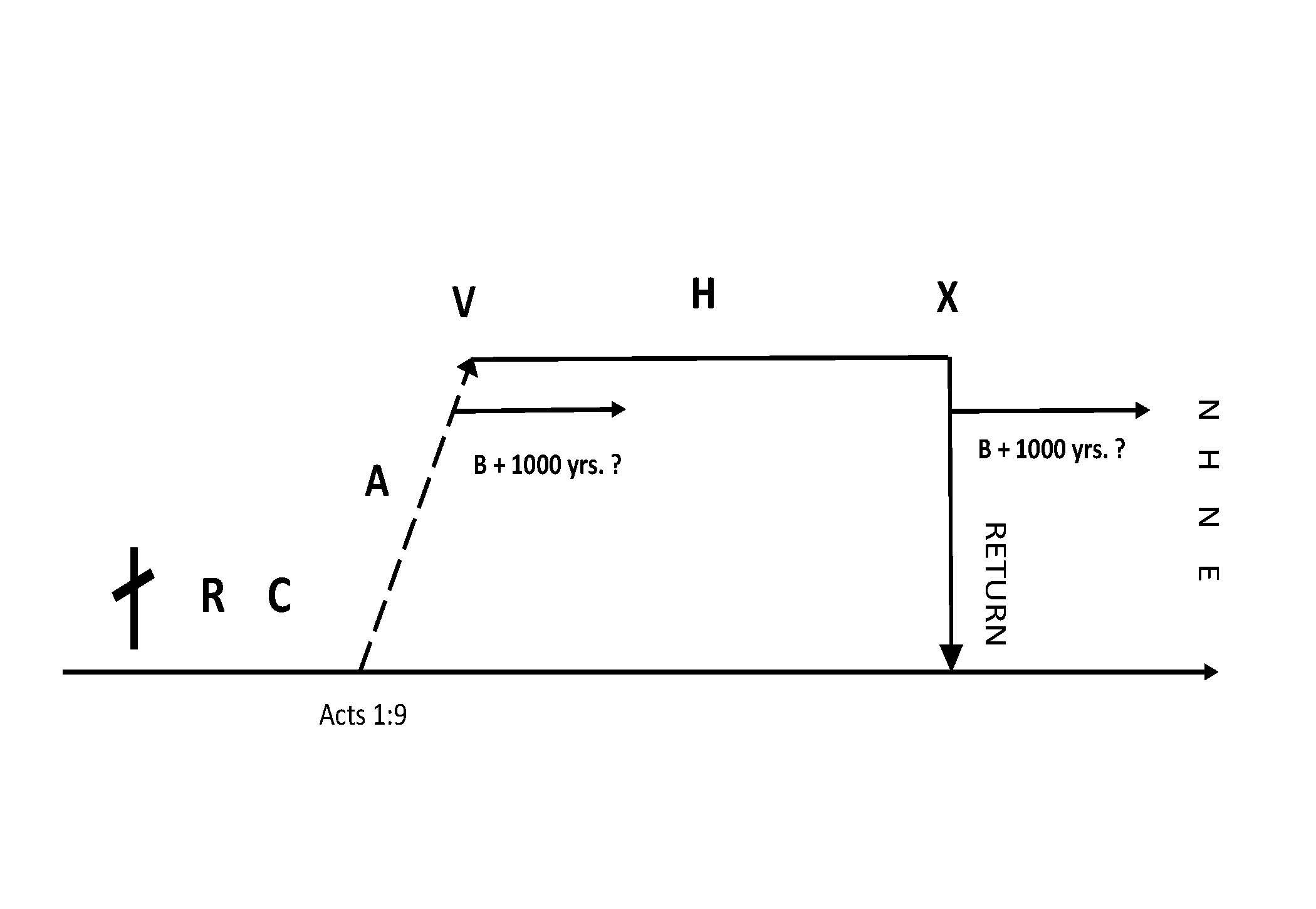
The chart below illustrates the progress we have made up to this point in our study.

Our first two studies left us here, knowing that the binding of Satan (B) and the MILL that follows must be located in one of these two places. (See post #669 for how we reached this conclusion.) The question is, “How do we decide between these two possibilities?” Answering that question will be the subject of this study. 

OUR APPROACH. Our approach for deciding between these two options is pretty simple, at least in concept. We have two alternative scenarios, but only one of them is correct. If we can eliminate one of the alternatives or show, by the Scriptures, that one of them is not possible, then we would be left with the correct one. So, we are going to seek to show from Scriptures that one of these two options is not possible.

STEP ONE. Referring to our chart above, we will focus on the coming (“the return”) of Jesus and ask another crucial question: “WHEN does the coming (παρουσία) of Jesus take place?” For this portion of our study, we will once again leave Revelation and explore 1 Thess. 4:15-17.

As we read 1 Thess. 4:15, it is obvious that we are reading a passage about the coming (παρουσία) of the Lord. The next verse, 4:16, removes all ambiguity when Paul writes, “For the Lord Himself will descend from heaven with a shout.” It is certain that these verses describe Jesus coming to earth.

But also notice what is going on at the same time. While Christ is descending from heaven, “the dead in Christ will rise” (4:16) and then “we who are alive and remain will be caught up together with them to meet the Lord in the air” (4:17). Paul is writing about the resurrection when all those who are in Christ, whether living or dead, will receive their glorified bodies. It is the same topic that Paul teaches in 1 Cor. 15:52: “In a moment, in the twinkling of an eye, at the last trumpet; for the trumpet will sound, and the dead will be raised imperishable, and we will be changed.” Again, we see that all the saints, whether living or dead, will receive their resurrection bodies at the same time. And the resurrection will occur when Christ returns, for 1 Cor. 15:22-23 says, “For as in Adam all die, so also in Christ shall all be made alive. But each in his own order: Christ the first fruits, after that those who are Christ’s at His coming.” Thus, the Scriptures declare that all those who are Christ’s will be resurrected (glorified) at the time of His coming.

  • Our conclusion is that the coming (παρουσία) of Jesus and the resurrection of the saints occur at the same time.

We will now add the resurrection (“S”) to our chart. (See below.)

STEP TWO. Now we ask another crucial question: “WHEN does the resurrection of the saints take place?” Because Jesus’ coming and our resurrection occur at the same time, if we can determine from the Scriptures when the resurrection occurs, then we will also know when Christ’s coming takes place.

For this answer, we turn to the gospel of John and listen to the teaching of Jesus. In John 6:39, our Lord says:

“This is the will of Him who sent Me, that of all that He has given Me I lose nothing but raise it up on the last day.”

Here Christ clearly teaches that the resurrection occurs on the last day. But this is not the only time Jesus says this.

John 6:40: “I Myself will raise him up on the last day.”

John 6:44: “I will raise him up on the last day.”

John 6:54: “I will raise him up on the last day.”

Four times from the lips of Jesus we are told that the resurrection occurs on the last day. There is another instance of this in John 11:24 when Martha said to Jesus, “I know that he (Lazarus) will rise again in the resurrection on the last day.” Martha knows that the resurrection will occur on the last day. Also, notice that Jesus does not correct her, but rather affirms her theology with the words. “I am the resurrection and the life; he who believes in Me will live even if he dies” (11:25). The point is that five times in the gospel of John the Scriptures declare that the resurrection occurs on the last day.

  • Therefore, we must conclude that the resurrection of the saints occurs on the last day.

So now we will add “the last day” to our chart. (See below.) (Note that the last day is followed immediately by the new heaven and the new earth.)

STEP THREE. Previously we demonstrated that the resurrection of the saints and Christ’s coming (παρουσία) occur at the same time, so we must conclude that Christ’s coming also occurs on the last day.

  • Christ’s coming (παρουσία) occurs on the last day.

STEP FOUR. Now we will make a very interesting observation. Since Christ’s coming occurs on the last day, it is not possible for Christ to inaugurate “the thousand years” by binding Satan in the abyss after His coming. In other words, “the thousand years” cannot occur after Jesus’ coming for the simple reason that Jesus’ coming is on the last day. Here, then, is our conclusion:

  • “The thousand years” cannot occur after Jesus’ coming for the simple reason that Jesus’ coming is on the last day.

Thus, by examining the Scriptures carefully, we have shown that this scenario (or any scenario) that includes “the thousand years” occurring after Christ’s return is not possible and must be rejected. Therefore, we will remove that possibility from our chart.

This leads to another conclusion and to the answer to our original question.

  • We conclude that Christ bound Satan in the abyss (Rev. 20:2-3) and thus began “the thousand years” in about AD 30 when He was ascending to heaven (A).
  • Our answer to the original question, “When does the ‘thousand years’ (MILL) occur?” is that “the thousand years” began ca. AD 30 when Jesus bound Satan in the abyss and will continue for a very long time until “the thousand years” are completed. Then Satan “must be released for a short time” (Rev. 20:3).

Our final chart is shown below.

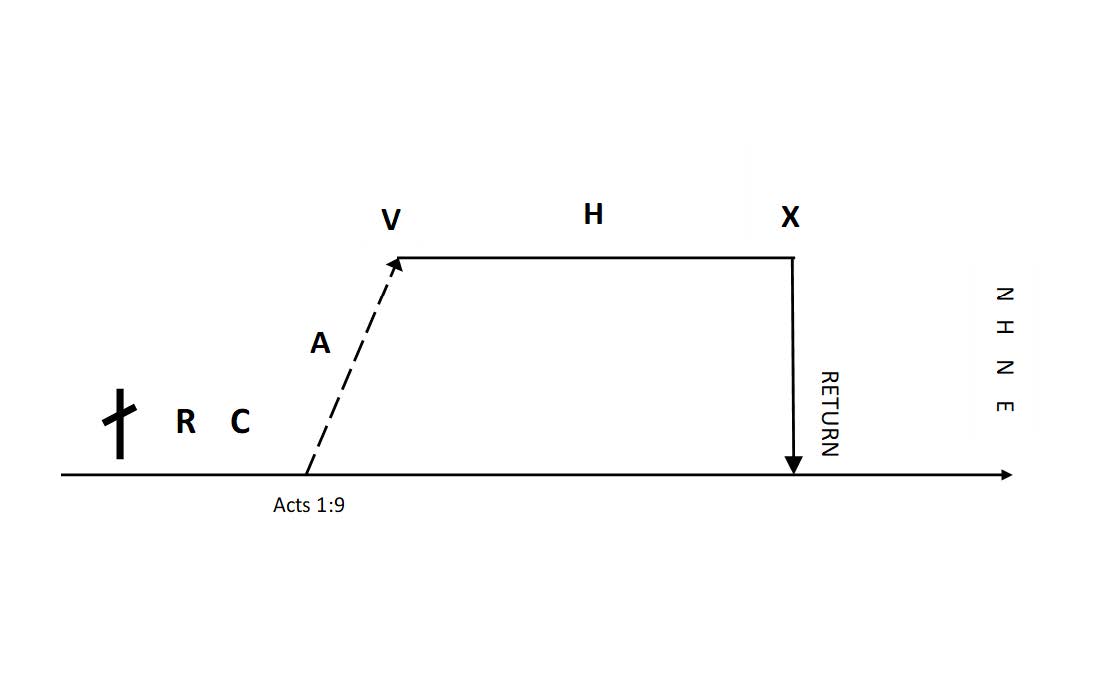
               BASIC TIMELINE: CHRIST TO NEW HEAVENS NEW EARTH                                                                                                                                                                                   

  • R = resurrection of Christ
  • C = Christ commissions His church (Matt. 28:18-20)
  • A = Christ’s ascension from earth (Acts 1:9)
  • B = binding of Satan (the dragon) in the abyss (Rev. 20:2-3)
  • V = Christ’s arrival in heaven (Rev. 5:6)
  • H = Christ’s reign at the Father’s right hand (Psalm 110:1; Heb. 10:12-13)
  • X = Christ’s coming (παρουσία) (1 Thess. 4:15-17; Rev. 19:11-21)
  • S = resurrection of the saints (1 Th. 4:15-17; 1 Cor. 15:23, 52)
  • NHNE = new heaven and new earth (Rev. 21-22)

CONCLUSION

QUESTION: When does “the thousand years” occur?

ANSWER: “The thousand years” began ca. AD 30 when Jesus bound Satan in the abyss and will continue until Satan is released for a short time.

Soli Deo gloria            rmb                 9/12/2023                   #670

The thousand years: Part 2 – When does Jesus bind Satan?

POST OVERVIEW. The second in a series of studies of Revelation 20:1-3 seeking to determine when “the thousand years” occur. This specific study attempts to determine when Jesus binds Satan in the abyss (Rev. 20:2-3). (See also post #668, 9/10/2023.)

REVIEW

This article is the second in a series of studies focused on Revelation 20:1-3 whose objective is to determine when, in human history, “the thousand years” (“the MILL”) occurs. In our first study (Post #668, 9/10/2023), we discovered the following:

  • “The dragon” represents Satan (20:2). (Thus, whenever we encounter “the dragon” in Revelation, we know that we have encountered Satan.)
  • “The angel” (20:1) represents the Lord Jesus.
  • The MILL begins when the Lord Jesus binds Satan and throws him into the abyss.
  • At the end of the MILL, Satan is released from the abyss for a short time.

This second study is intended to begin to answer the crucial question, “WHEN does Jesus bind Satan in the abyss?”

As we consider this question and review the passage in Revelation 20:1-3, it may at first appear that we have reached a cul-de-sac. It may seem that there is no way to figure out when Jesus binds Satan in the abyss at the beginning of the MILL. Where do we go from here?

JESUS BINDS SATAN. First, there is significance in the fact that it is Jesus who binds Satan in the abyss. Jesus is King of kings and Lord of lords and He reigns over heaven and earth, but He, as the God-Man, can only be in one place at a time. This fact will help us as we explore the question of when Jesus binds Satan.

Thinking broadly, one thing we can say for certain is that Jesus’ binding of Satan takes place after His resurrection and subsequent ascension to heaven (Acts 1:9) and before the inauguration of the new heaven and the new earth (Rev. 21:1). We also know with certainty that, at some point in time, Jesus is coming from heaven to judge the earth. Those realities are illustrated in the figure below.

  BASIC TIMELINE: CHRIST TO NEW HEAVENS NEW EARTH

  • R = resurrection of Christ
  • C = Christ commissions His church (Matt. 28:18-20)
  • A = Christ’s ascension (Acts 1:9)
  • V = Christ’s arrival in heaven (Revelation 5:6)
  • X = Christ’s coming (παρουσία) (Revelation 19:11-21)
  • NHNE = new heavens and the new earth (Rev. 21-22)

Next, recalling that Jesus as God-Man can only be in one place at a time (see above), we will refine our crucial question and ask, “WHEN could Jesus bind Satan in the abyss?” Our study of the Scriptures will reveal that there are only two times when it is possible for Jesus to bind Satan in the abyss.

As we prepare to expand our study to the books outside of Revelation, it is appropriate to remind ourselves of the nature of this amazing Bible that we hold in our hands.

THE POWER AND BEAUTY OF THE SCRIPTURES

The beauty of the Bible is that each of its 66 books has been inspired by the same Author, the Holy Spirit. Because all Scripture is God-breathed (2 Tim. 3:16), the Bible is both interconnected and consistent.

It is interconnected in that each book of the Bible fits together with the other books to form a cohesive whole. Just as each piece of a jigsaw puzzle is necessary to complete the whole puzzle, so the books of the Bible connect with each other to form the whole message of God to man. Because this is the case, we can allow Scripture to interpret Scripture as one portion of the Word illumines and informs another portion.

And the Bible is consistent in that there is no contradiction between the individual books, but instead there is a God-breathed harmony. Despite including writings of poetry and prophecy, narrative history and Mosaic Law, gospels and epistles and apocalypse, the themes and doctrines pictured throughout the Bible do not contradict or conflict with one another but rather reinforce and complement one another. This means that the better we know our Bibles, the more confident we become about its power to guide us into all truth.

In 2 Tim. 2:15, Paul exhorts Timothy, “Be diligent to present yourself approved to God as a workman who does not need to be ashamed, accurately handling the word of truth.” Confident of the power of the Scriptures, we are now going to accurately handle the word of truth and go to other Scriptures outside of Revelation to answer these crucial questions.

FROM REVELATION 20 TO PSALM 110

For this part of our study we will leave Revelation 20 and turn to Psalm 110. This psalm is both Messianic and eschatological and will teach us about Christ’s reign after His ascension to heaven. We will focus our attention on Psalm 110:1.

The Lord says to my Lord:
“Sit at My right hand
Until I make Your enemies a footstool for Your feet.” – Psalm 110:1

Here in Psalm 110:1 we see one Person of the Godhead (the LORD) speaking to another Person of the Godhead (the Lord). The conversation is between God the Father and God the Son, and the nature of the conversation reveals the occasion of this verse. This verse takes place after Jesus has accomplished His work of atonement on the cross (John 19:30, etc.), has been raised from the dead, and has ascended back to heaven. Now (ca. AD 30) the Father welcomes the victorious Son back to heaven and seats Jesus in the place of honor at the Father’s right hand until the time comes for Jesus to return to earth for the Judgment (“make Your enemies a footstool”). So, according to Psalm 110:1, from the time of Jesus’ return to heaven until His coming to earth in judgment, He is seated at the Father’s right hand in heaven.

Other verses in Scripture confirm this reality. In Ephesians 1:20, Paul tells us that “the Father raised Him (Jesus) from the dead and seated Him at His right hand in the heavenly places.” Hebrews 1:3 says, “When He had made purification of sins (the cross), He sat down at the right hand of the Majesty on high.” The same point is made in Hebrews 8:1 and 12:2, but the clearest expression of this is in Hebrews 10:12-13:

12 but He, having offered one sacrifice for sins for all time, sat down at the right hand of God, 13 waiting from that time onward until His enemies be made a footstool for His feet.

The time when “His enemies (will) be made a footstool for His feet” refers to the time when Christ will rise from His seat at the Father’s right hand and will come back to earth to judge the unrighteous. These Scriptures teach us that:

  • Jesus is seated at the Father’s right hand from the time He ascended to heaven (ca. AD 30) until He returns to earth for the Judgment.

We are going to add this new discovery to our chart. (See below.)

BASIC TIMELINE: CHRIST TO NEW HEAVENS NEW EARTH

  • R = resurrection of Christ
  • C = Christ commissions His church (Matt. 28:18-20)
  • A = Christ’s ascension (Acts 1:9)
  • V = Christ’s arrival in heaven (Revelation 5:6)
  • H = Christ’s reign at Father’s right hand (Ps. 110:1; Heb. 10:12-13)
  • X = Christ’s coming (παρουσία) (Rev. 19:11-21)
  • NHNE = new heavens and the new earth (Rev. 21-22)

Thus we can logically say that, while Jesus is seated at the Father’s right hand (H) in heaven, He cannot at the same time bind Satan in the abyss. In other words, the event of Jesus binding Satan in the abyss cannot take place between the time of Jesus’ arrival in heaven (V – Rev. 5:6) and His coming to earth as Judge (X – Rev. 19:11-21; etc.) because He is seated at the Father’s right hand.

Since that is the case, we can see from our chart that there are only two times when Jesus could bind Satan in the abyss. The first possibility would be after His return (His παρουσία), and the second possibility would be for Him to bind Satan while He is ascending to heaven between Acts 1:9 and Rev. 5:6ff. And this is the answer to the crucial question we asked above about WHEN Jesus could bind Satan in the abyss. These possibilities are illustrated in the figure below. (“B” stands for “binding.”)

The question is, “How do we decide between these two possibilities?” That will be the subject of our next study.

Soli Deo gloria            rmb                 9/11/2023                   #669

There is only one “beast” in Revelation

POST OVERVIEW. An article for my upcoming book on Revelation that demonstrates that, despite the various appearances of “the beast” in the latter half of Revelation, there is only one beast. Everywhere that “the beast” appears, he is the same beast.

ONLY ONE BEAST IN REVELATION

One of the most intriguing characters in the book of Revelation is “the beast,” who plays a major role in the unfolding events of the 42 months at the very end of the age. “The beast” is the final and most vivid of the seven manifestations of the antichrist in the Bible and, because many people have studied Revelation, “the beast” is also the best-known. My upcoming book on Revelation will contain several different articles and studies touching on “the beast,” but this article has only one aim: namely, to demonstrate that, despite the various appearances of “the beast” in the latter half of Revelation, there is only one beast. Everywhere that “the beast” appears, he is the same beast. The following notes make this case.

  • In Rev. 11:7, we encounter “the beast” warring with “the two witnesses.” “The beast that comes up out of the abyss will make war with them (i.e., ‘the two witnesses’) and overcome them and kill them.” The “two witnesses” are symbolic of the faithful church, which courageously “finishes their testimony” (Rev. 11:7). (Note that there are many verses in the New Testament that speak of the church’s duty to witness of Jesus, like Acts 1:8; John 15:27).
  • As Revelation 12 is focused on “the dragon,” so Revelation 13:1-10 is focused on “the beast” and gives us insight into his character, his ambitions, and his activity.
  • In fact, we see displayed in Rev. 12-13 the entire “unholy trinity” of “the dragon” (Satan), “the beast,” and “the false prophet,” who is called “another beast” in Rev. 13:11-17. (This “unholy trinity” appears again in Rev. 16:13-16, 19:19-20, and 20:10.)
  • A comparison of Rev. 13:7 with Rev. 11:7 makes it apparent that these two verses are describing the same “beast.” (See “only one beast” above.)
  • IMPORTANT INTERPRETIVE NOTE: Not only is it apparent that “the beast” of Rev. 11:7 is the same beast of Rev. 13:7, but it is also logical to conclude that these two verses are describing the same events and, therefore, must be occurring at the same time. That these events take place at the same time is further supported by the fact that the events of Rev. 11:3-10 happen during the 42 months (“twelve hundred and sixty days” in Rev. 11:3) and the events of Rev. 13:5-10 also happen during the 42 months (“forty-two months” in Rev. 13:5).
  • Since Rev. 11:7 is describing the same events as Rev. 13:7, and since in both verses “the beast” is the one who is “making war with and overcoming” his adversaries, we conclude that “the two witnesses” of Rev. 11:7 must also be “the saints” of Rev. 13:7. This supports our earlier statement that “the two witnesses” represent the faithful church under persecution.
  • This means that the events surrounding “the beast’s” persecution of the faithful church in Rev. 11:3-10 are essentially the same events that occur in Rev. 13:5-10, but from a different perspective.
  • The next time “the beast” appears, he is with “the dragon” and “the false prophet” preparing to gather the kings of the earth for Armageddon (Rev. 16:13-16). This is obviously the same beast that we saw in Rev. 13.
  • When we meet “the scarlet beast” in Rev. 17:3, it may initially seem that we have met a new character, but a careful reading of the text of Rev. 17 will reveal that this, too, is “the same beast” we have encountered before.
  • Here are the clues that tell us that “the beast” here is the same beast.
    • He is “full of blasphemous names, having seven heads and ten horns” (17:3). In Rev. 13:1, “the beast” has “ten horns and seven heads, and on his heads were blasphemous names.” This exact agreement between the two descriptions of “the beast” is strong evidence that this is the same beast, but there are more clues.
    • In Rev. 17:8, “the beast” “is about to come up out of the abyss,” but in Rev. 11:7 we read of “‘the beast’ that comes out of the abyss.” Again, the agreement between the two texts removes any doubt that they are the same character. But the clues go on.
    • Still in Rev. 17:8, we read “those who dwell on the earth” (“all who dwell on the earth” 13:8), “whose name has not been written in the book of life from the foundation of the world” (“whose name has not been written from the foundation of the world in the book of life” 13:8). Again we observe intentional repetition of the exact phrases in order to alert the reader to the connection.
    • Finally, we read in Rev. 17:8 that “those who dwell on the earth will wonder” (θαυμασθήσονται, from θαυμάζω (Greek) meaning “wonder” or “be amazed” or “marvel”) “when they see the beast.” But in the parallel verse in Rev. 13:3 we read, “the whole earth was amazed“ (ἐθαυμάσθη, from θαυμάζω (Greek) meaning “wonder” or “be amazed” or “marvel”) “and followed after the beast.” [NOTE: The NASB chooses a different English verb for Rev. 17:8 and Rev. 13:3, but the underlying original Greek uses the same Greek verb to make sure the observant reader sees the connection.]
    • By carefully examining the words and phrases that are used, we are making the point that “the scarlet beast” that we meet in Revelation 17 is “the same beast” that we have already encountered in Revelation 11, 13, and 16. Again, in Revelation, there is only one beast.
  • The last time that we see “the beast” is in Rev. 19:19-20 when he has “assembled the kings of the earth and their armies to make war against Him who sat on the horse and against His army.” This scene takes place during what I call the second half of Armageddon, when the glorified Lord Jesus has returned “with all His (glorified) saints” (1 Thess. 3:13) “to judge the living and the dead” (2 Tim. 4:1) and “to tread the wine press of the fierce wrath of God, the Almighty” (Rev. 19:15). In this hopeless mismatch, the Lord throws “the beast” “into the lake of fire” (19:20).

SUMMARY. By carefully examining the passages where “the beast” appears in Revelation and by comparing the passages with one another we have seen that each appearance of the beast reveals the same personality. The author of Revelation has intentionally placed clues in the text to ensure that his readers connect the clues and see that there is only one beast in Revelation.

Soli Deo gloria            rmb                 8/11/2023                   #667

Psalm 110 The return of the Lord in judgment – Part 1

POST OVERVIEW. A series of posts considering the biblical connections within Psalm 110 and how this psalm gives a foretaste of the return of Jesus in judgment on the last day. Part 1, #664, 7/24/2023.

It is amazing to me how the Scriptures so perfectly fit together. It is not uncommon for passages from the Law written by Moses to mesh with David’s words in the psalms and then to see these Old Testament verses fulfilled in the New Testament. God’s divine inspiration of His Word is everywhere evident.

Recently I was again meditating on Psalm 110, a psalm written by David about a thousand years before Jesus lived and at least three thousand years before His Second Coming. I marveled at all the connections this psalm makes with other Scripture and so felt compelled to capture these ideas.

PSALM 110:1. YHWH SPEAKS TO ADONAI.

The LORD said to my Lord, “Sit at My right hand until I make Your enemies a footstool for Your feet.”

A MYSTERY OR A RIDDLE. This first verse of the psalm seems to present us with a riddle or a mystery as we try to understand what the verse means. These questions come to mind.

  • When does this conversation between the LORD and the Lord take place?
  • What is the meaning of this concept, “until Your (Adonai’s) enemies be made a footstool for Your feet”?

We will use ordinary reasoning and the Scriptures to answer these questions.

IDENTITY OF CHARACTERS. We observe that this verse presents two distinct members of the Godhead having a conversation with one another. The LORD (YHWH in Hebrew) speaks to my Lord (Adonai in Hebrew). Our theology requires that this be God the Father speaking to God the Son, who we know to be Jesus the Messiah. The Father tells Jesus to sit at His right hand until He (the Father) makes Jesus’ enemies a footstool for Jesus’ feet. Having identified the characters in the verse, we now turn to our questions.

WHEN DID THIS CONVERSATION TAKE PLACE? Knowing that this conversation is between God the Father and God the Son helps us to locate this dialog in history. When in history would it have been possible for God the Father to tell God the Son to sit at His right hand? Logically, if the Father is telling the Son (Jesus) to sit at His right hand, it must mean that the Son is currently NOT sitting at His right hand. Now, when in history was there a time that Jesus was not sitting at the Father’s right hand? During His incarnation, of course. For approximately thirty-three years Jesus, God the Son, was living on the earth as the Son of Man. During that time, His place at the Father’s right hand was empty as He perfectly completed the work the Father had given Him to do (John 17:4). After a sinless life, an atoning death, and a glorious resurrection, Jesus ascended back to heaven (Acts 1:9) to take His place once again at the Father’s right hand. Knowing these facts brings us to the logical conclusion that this conversation in Psalm 110:1 between “the LORD” and “my Lord” took place when Jesus ascended back to heaven following His resurrection to take His seat at the Father’s right hand.

JESUS IS AT THE FATHER’S RIGHT HAND. We have discovered that, ever since His ascension back to heaven in approximately AD 32, the glorified Lord Jesus has been sitting at the Father’s right hand. There are at least nine (9) other New Testament references which confirm this fact. [Mark 16:19**, Luke 22:69; Acts 7:56*, Romans 8:34, Ephesians 1:20, Colossians 3:1, and Hebrews 1:3, 8:1, and 10:12. Note that Mark 16:19 (**) is in a section of Scripture that is not original, and in Acts 7:56 (*), Jesus is not sitting but is standing.]

Most of these passages only confirm for us that Jesus is seated at the Father’s right hand after His ascension to heaven, but the passage in Hebrews 10:12-13 sheds more light on the expression about enemies being made a footstool.

HEBREWS 10:12-13. GOD THE SON IS CURRENTLY WAITING.

12 but He, having offered one sacrifice for sins for all time, “sat down at the right hand of God,” 13 waiting from that time onward “until His enemies be made a footstool for His feet.”

Hebrews 10:12 again confirms that Jesus sat down at the Father’s right hand after His death on the cross (see also Hebrews 1:3), but 10:13 assures us that His time of waiting at the Father’s right hand will certainly end when the Father “makes His enemies a footstool” (Psalm 110:1).  Let’s discover what this event, “make enemies a footstool,” means.

MAKE YOUR ENEMIES A FOOTSTOOL. This phrase is a figurative expression that says, in essence, “There will come a time when God the Father permits God the Son to rise from His place at the Father’s right hand to destroy His enemies.” In other words, “make Your enemies a footstool” identifies Jesus’ coming in judgment at the end of the age. The Scripture reveals this in several ways.

  1. The very contents of Psalm 110 make this interpretation apparent. Psalm 110:1 sets the stage for the events of the rest of the psalm by foretelling what will mark the beginning of the final judgment. Verse 2 pictures the LORD (God the Father) announcing to the Lord (God the Son) that the time has come for Him to “rule in the midst of His enemies.” That this is on the last day is made clear in verse 3 when His people (resurrected saints) join Him on the last day, and especially in verses 5 and 6 when the Son brings shattering judgment on all those who oppose Him.
  2. The Bible teaches that the Lord Jesus has completed His work of atonement (John 19:30), but there still remains for Him His terrible work of judgment when He will judge all the unrighteous on the last day. He will be at the Father’s right hand until the day of the Lord, when He will come to judge the earth. According to Psalm 96:13 and 98:9, He is coming to judge the earth. According to 2 Timothy 4:1, “Christ Jesus is to judge the living and the dead.” Psalm 2 is explicitly about the Son (2:7, 12) and declares that He “will break (or “rule”) the nations with a rod (or “scepter”) of iron and shatter them like earthenware.” This is describing Jesus’ judgment at the end of the age. This is a small sampling of the Scriptures that foretell the time when His enemies will be made a footstool.
  3. I am treating the book of Revelation separately because of the power and the clarity of its pictures of the returning Lord Jesus when “His enemies are made a footstool.” In Revelation 6:12-17, we see the unfolding of the great day of the wrath of the Lamb, when the unrighteous seek for shelter in caves and under rocks, any shelter from the coming Lamb. Revelation 14:18-20 tells of the gathering of the “grapes” (the unrighteous) of the earth and of their being thrown into “the great wine press of the wrath of God” (see Rev. 19:15). Then, in the most powerful picture in the Bible of the coming of the King of kings in judgment, in Rev. 19:11-21, we see that it is Jesus who “rules the nations with a rod of iron” (Psalm 2) and who “treads the wine press of the fierce wrath of God the Almighty” (both quotes from 19:15). One final reference from Revelation is 16:17-21. Although the Lamb is not mentioned in this passage, it is obvious from its similarity to other passages about the last day, the day of the Lord, that this is describing the return of the Lord Jesus in power and judgment. In other words, all these passages are describing that day when the Father will make Jesus’ enemies a footstool for His feet.

CONCLUSION

We have accomplished two things in this article. First, we have demonstrated that Psalm 110:1 has many connections to other Scriptures and contains many allusions to other passages of Scripture. But second, we have also discovered an interpretation of the first verse of Psalm 110 that positions us for understanding the rest of the psalm. By exegesis and careful reasoning, we have been able to turn what appeared to be an opaque text into a powerful verse of Scripture that clearly reveals the Lord Jesus in His power and glory. In this verse, Jesus is seated at the Father’s right hand awaiting the time when He will come to judge the earth on the last day.

Soli Deo gloria            rmb                 7/24/2023                   #664

The first resurrection (Revelation 20:4-6)

POST OVERVIEW. An interpretation of the meaning of “the first resurrection” from Revelation 20:4-6 that occurs during the “thousand years.”

Then I saw thrones, and they sat on them, and judgment was given to them. And I saw the souls of those who had been beheaded because of their testimony of Jesus and because of the word of God, and those who had not worshiped the beast or his image and had not received the mark on their forehead and on their hand; and they came to life and reigned with Christ for a thousand years. The rest of the dead did not come to life until the thousand years were completed. This is the first resurrectionBlessed and holy is the one who has a part in the first resurrection; over these the second death has no power, but they will be priests of God and of Christ and will reign with Him for a thousand years. – Revelation 20:4-6 (NAS)

The passage before us presents several interpretive difficulties, but we are going to focus our investigation on the meaning of “the first resurrection” as it appears here. What is the Scripture teaching us here about the resurrection?

INITIAL COMMENTS

As we begin our investigation, the first thing to observe is where this scene takes place. This scene is in heaven. In the book of Revelation, thrones (20:4) are always in heaven, so we know that this takes place in heaven. We also know when this takes place, since it is explicitly stated that this takes place during the “thousand years.”

It is important to observe who this vision sees. John saw “souls.” John did not see glorified saints, but he saw “souls.” This is very similar to the scene described in Revelation 6:9 when John also sees the “souls of those who had been slain because of the word of God.” These “souls” are believers who have physically died but who have not yet been glorified in the Resurrection. And this is exactly what we would expect to find during the “thousand years.” We would expect to find those who had died as faithful witnesses of Jesus and who now await the Resurrection on the Last Day.

EXEGESIS OF REVELATION 20:4-6 ON THE FIRST RESURRECTION

Now we will consider the part of the passage that talks about “the first resurrection.”

“And they came to life and reigned with Christ for a thousand years.” – Rev. 20:4

Who are these who came to life and reigned? There are two groups of believers included here, and one group is a subset of the other group. The first group, the subset, is “those who had been beheaded because of their testimony of Jesus.” These are the martyrs, the ones who had been faithful even unto violent death, “who have been slain because of the word of God” (Revelation 6:9). The martyrs are a subset of all faithful believers, “those who had not worshiped the beast or his image (Revelation 13) and had not received the mark” (20:4).

Therefore, those who came to life and reigned with Christ for the “thousand years” are all faithful believers who physically died during the “thousand years.”

The rest of the dead did not come to life until the thousand years were completed. – Revelation 20:5a

This first sentence in Revelation 20:5 should be seen as parenthetical. “The rest of the dead” is referring to all unbelievers who physically died during the “thousand years.” This parenthetical comment about unbelievers makes abundantly clear that not everyone is included in those who came to life. This simple sentence declares that only those who die in Jesus are going to be reigning with Christ during the “thousand years.” Only faithful believers will “come to life.” Only faithful believers are in heaven with Christ awaiting the glorious Resurrection. “The rest of the dead” are elsewhere awaiting the terrifying great white throne judgment that comes later (Revelation 20:11-15).

This is the first resurrection. – Revelation 20:5b

THE FIRST RESURRECTION

Here John mentions “the first resurrection.” Some have been unnecessarily confused and distressed by this expression. John is certainly not here introducing the idea of some sort of two-stage resurrection. There is no biblical support anywhere in the Scripture to suggest that there are two literal Resurrections for the saints. This term “the first resurrection” is meant to be understood figuratively to describe the transition that occurs when any believer physically dies and then “rises” to spend the remainder of the age in the spirit in heaven with Christ awaiting the final, real Resurrection.

What do we know about everyone “who has a part in the first resurrection?” We know that the one who has a part in the first resurrection is “blessed and holy.” We know that “over these the second death has no power,” so we know that they will never be threatened with the lake of fire. We know that all these “will be priests of God and of Christ” (confirm in 1 Peter 2:9). Finally, we know that they will reign with Christ for the “thousand years.”

But not all believers will experience this first resurrection. Some believers will not reign with Christ for the “thousand years.” Why? Because the first resurrection is only for those believers who physically die before the coming of Christ, and not all believers will physically die. We know that “we will not all sleep” (1 Corinthians 15:51). We know that there will be some believers “who are alive and remain” (1 Thessalonians 4:17) when the Resurrection occurs. We know that the Resurrection is for those who have fallen asleep, and it is for those who are still living. These still-living believers will not experience the first resurrection because they will be glorified in the Resurrection without going through physical death.

So, not all believers will experience “the first resurrection,” but all believers will certainly experience the Resurrection on the Last Day.

WHAT ABOUT THE UNRIGHTEOUS?

In commenting about the unrighteous from this passage, the ones referred to as “the rest of the dead” in 20:5a, it should be understood that none of the unrighteous has a part in “the first resurrection.” For this reason, none of the unrighteous “came to life and reigned with Christ for the thousand years.” None of the unrighteous is “blessed and holy.” Over the unrighteous “the second death” has all power, because all the unrighteous will experience both physical death and “the second death.” (For a fuller understanding of “the second death,” see “The great white throne judgment” in Rev. 20:11-15.)

Perhaps these statements will help make things clearer:

  • If anyone experiences the first resurrection, then he will not experience the second death.
  • If you are a believer, then you are guaranteed the Resurrection on the Last Day.
  • If you are a believer, then physical death (the first death) is optional.
  • If you are an unbeliever, then you are guaranteed both physical death (the first death) and the lake of fire, which is the second death (Revelation 20:14-15).

CONCLUSION

In summary, then, “the first resurrection” of Revelation 20:4-6 is a figurative term for the transition that takes place when any believer physically dies and their soul goes to heaven to await their glorification in the Resurrection on the Last Day.

Soli Deo gloria            rmb                 5/16/2023                   #651

Resurrection lessons from 1 Corinthians 15 (Part 3)

POST OVERVIEW. The third of a three-part study of 1 Corinthians 15, the great chapter on the Resurrection of the righteous that will occur on the last day. (See Post #648, 5/8/2023 and #649, 5/11/2023, for the first two parts of this study.) The objective of this series of posts is to give the Bible student a firm grasp of the doctrine of the Resurrection.

The previous post in this series (#649, 5/11/2023) finished with the “problem” presented by Paul at the end of 15:50; namely, that no believer in Christ who has a natural, earthly body, whether alive or dead, can inherit the kingdom of God. How, then, does a believer inherit the kingdom of God?

15:51. The solution to the problem is that, in the Resurrection, all believers will receive a glorified body that can inherit the kingdom of heaven.

PAUL’S “MYSTERY” OF THE RESURRECTION

KEY CONCEPT. In this verse, Paul “tells us a mystery.” In the New Testament, a “mystery” is an event or a detail that is currently unknown but that is certain to be revealed in the future. So here, the mystery that is yet to be revealed will explain what happens to those who are still alive when the Resurrection occurs.

THE DEAD ARE RAISED

Here is what I mean. Up to this point in 1 Corinthians 15, Paul has only been talking about believers who are dead in Christ when the Resurrection occurs (e.g., 15:42). We also note that the Bible’s supreme example of resurrection, the raising of Jesus Christ from the dead, was obviously a raising from the dead. Thus, by the undeniable fact of Jesus’ resurrection from the dead as “first fruits” (15:23), we can understand how the dead in Christ would likewise be raised from the dead at the final Resurrection. As Jesus was raised from the dead with a glorified body, so the dead in Christ will also be raised from the dead with glorified bodies. We can readily grasp this analogy.

It is also interesting that other prominent biblical pictures of the Resurrection are pictures of saints who are raised from the dead. In Isaiah 26:19, we see a picture of the Resurrection as “Your dead will live, their corpses will rise.” Isaiah gives us a picture of the dead being raised. In Ezekiel 37, the prophet is “in the middle of a valley and it was full of bones. Behold, there were very many bones on the surface of the ground, and very dry” (37:2). But then the Lord GOD says, “Behold, I will open your graves and cause you to come up out of your graves” (37:12). This is obviously a vision of God raising His people from the dead. When Jesus speaks of the Resurrection in the gospel of John (5:28-29), He says, “An hour is coming when all who are in the tombs will hear His voice (the Son of Man), and (all) will come forth.” Jesus is speaking about the dead being raised in the Resurrection. All these are pictures of those who are dead in Christ being raised from the dead on the last day.

But what about those who are still alive when the Resurrection occurs? We have no solid example from Scripture or analogy from nature that pictures this. How can those “who are alive and remain until the coming of the Lord” (1 Thess. 4:15) be raised from the dead in the Resurrection? It doesn’t seem to make sense. And so this is the “mystery” that Paul is going to discuss. To repeat the question from above, “What happens to those who are still alive when the Resurrection occurs?”

To answer this question, two things are required. First, we must remember the biblical definition of Resurrection. As we have already seen, it is common for believers to mistakenly think of resurrection only in terms of “being raised from the dead” because Jesus was raised from the dead in His resurrection (see above), but the biblical definition of Resurrection is “the receiving of our glorified bodies.” Being glorified is the primary event of the Resurrection, and both those who are dead in Christ and those who are alive are guaranteed to receive their “spiritual body” (15:44). So first, remember what you have already learned.

But second, we must read our Bible carefully and thoughtfully to understand what Paul is teaching. Paul has told us he is going to be teaching us about a mystery. Therefore, our attitude in reading these verses is to understand exactly what the apostle is telling us about the resurrection of those in Christ who are alive on the last day. Except for what is revealed to us in the Scriptures, we are wholly ignorant of this subject. We are “strangers on the earth” (Psalm 119:19), therefore we come to the Scriptures humbly to gain knowledge and understanding. What, then, does Paul teach us here about those who are alive at the Resurrection?

 Paul announces the mystery: “we will not all sleep,” which simply means that not all believers will physically die before they are resurrected. Some believers will sleep, but some will be physically alive at the Resurrection. (see 1 Thess. 4:15-17). But all believers, whether asleep or alive, will receive a glorified body because “we will all be changed.”

15:52. Paul gives a number of details of the Resurrection in this verse.

The Resurrection (“the change”) will be instantaneous, for it will happen “in the twinkling of an eye.”

The Resurrection will occur when the last trumpet sounds (see “trumpet” in Isa. 27:13, “in that day;” Matt. 24:31; 1 Thess. 4:16). 

“The dead will be raised imperishable, and we will be changed.” The dead in Christ (the “perishable”) are raised with glorified (“imperishable”) bodies, and those who are alive (“flesh and blood,” 15:50) are instantly glorified (“changed”). (This latter occurrence is the mystery.)

Note that this description of the Resurrection is in perfect agreement with what Paul writes in 1 Thess. 4:16-17. The dead in Christ are raised and glorified and those who are alive in Christ are changed and glorified. (See also Isaiah 26:19; Phil. 3:20-21; 1 John 3:2.)

It is also important to note that, although Paul does not mention Christ’s coming (παρουσία) in this passage, the Scriptures make plain that the Resurrection occurs simultaneously with Jesus’ coming. From the lips of Jesus Himself, we also know that these events of the Resurrection occur on the last day (John 6:39, 40, 44, 54).

15:53. We know that “this perishable” refers to those who are dead in Christ (15:42, 52). What must occur for them? “This perishable must put on the imperishable.” The “imperishable” refers to the glorified body (15:42). The dead in Christ must put on their glorified bodies.

The Greek word for “must” is δεῖ, which can be translated “is (absolutely) necessary,” “is inevitable,” or “must.” What is being communicated here is that the only way that “the perishable” (those who are dead in Christ) can inherit the kingdom of God (see 15:50) is for them to “put on the imperishable.” For them to be fit for eternity in heaven, the dead in Christ must receive their glorified body. There is no other way.

Likewise, “this mortal must put on immortality.” “Mortal” here refers to those who are still subject to death, which is those who are still alive. The only way that “the mortal” can inherit the kingdom of God (see 15:50) is for them to “put on immortality.” For them to be fit for eternity in heaven, they must receive their glorified body. There is no other way.

15:54. When all the dead in Christ are raised in their imperishable glorified bodies, and when all those who are alive in Christ have been quickly changed into their immortal glorified bodies, then death will have been swallowed up in victory. All “those who are Christ’s at His coming” (1 Cor 15:23) will have donned their eternal glorified bodies and death will have been forever defeated.

SUMMARY

We should take a moment after this study to summarize what we have learned, for we have received strong teaching about the doctrine of the Resurrection from 1 Corinthians 15.

  • The Resurrection of all the righteous will occur on the last day (15:23-24).
  • The Resurrection occurs at the same time that the Lord Jesus descends from heaven. So it includes all “those who are Christ’s at His coming” (15:23).
  • The Resurrection speaks primarily about the event when those who are in Christ receive their glorified bodies.
  • All those who are in Christ are guaranteed to receive a glorified body at the Resurrection (15:44, 49).
  • The Resurrection will include the glorification of all the “dead in Christ” and all those who are “alive and remain.”
  • The Resurrection will be instantaneous (15:52).
  • The Resurrection will occur at the sounding of the last trumpet (15:52).

Finally, it is important to remember that, although we have discovered these doctrinal truths by carefully studying 1 Corinthians 15, the truths we have discovered are universal truths. That is, the doctrinal truths about the Resurrection discovered in 1 Corinthians 15 are true for the Resurrection wherever it is mentioned in the Bible. So there is not the doctrine of the Resurrection according to Paul in 1 Corinthians 15 and a different set of doctrines in Isaiah or in the gospel of John or in 1 Thessalonians. The events of the Resurrection as described in 1 Corinthians 15 must agree with the events surrounding the Resurrection in the other passages in Scripture because the Holy Spirit is the author of all Scripture (2 Timothy 3:16) and He does not contradict Himself. Other Scriptural passages about the Resurrection may add new details or may present the truths with other word pictures, but other Scripture cannot present a different Resurrection. An interpretation of the Resurrection that conflicts with the one taught in 1 Corinthians 15 should be replaced with the one taught in the Scriptures.

Soli Deo gloria            rmb                 5/15/2023                   #650

Resurrection lessons from 1 Corinthians 15 (Part 2)

POST OVERVIEW. The second of a three-part study of 1 Corinthians 15, the great chapter on the Resurrection of the righteous that will occur on the last day. (See Post #648, 5/8/2023, for the first part of this study.) The objective of this series of posts is to give the Bible student a firm grasp of the doctrine of the Resurrection.

In the first part of this study of 1 Corinthians 15 (post #648, 5/8/2023), we had established some basic understandings of the Resurrection. First, when we use the word “Resurrection,” we are referring to the general resurrection of all the righteous that will occur on the last day (John 6:39, 40, 44, 54; 11:24) at the same time that the Lord Jesus descends from heaven with a shout (1 Thess. 4:16). Also, although there are several events that occur in the Resurrection, the primary and defining event is that all the righteous of all time will receive their eternal glorified bodies.

We were in the process of examining the meaning of 1 Cor. 15:42-44, and now we continue that examination by looking at 15:44. In this section, Paul is comparing the physical body that we are given for our earthly life with the heavenly body that we will be given in the Resurrection, particularly in relation to the physical body when it has died. Paul uses the word picture of a seed that is sown into the ground to describe our physical body when it is finally “sown” into the grave.

44 it is sown a natural body; it is raised a spiritual body. If there is a natural body, there is also a spiritual body.

15:44. At our death, our natural body is sown into the ground, having lost all its usefulness. All the parts of the body are there, but there is a complete absence of life. The purpose of the natural body was to carry us and be our servant from birth to death, but now that death has come, the purpose of our natural body has gone and thus it is thrown into the ground.

But the resurrection body, our “spiritual” body, is not like that. We will be raised with a spiritual body that is completely unlike the natural body that went into the grave. Our spiritual body will be useful to us throughout all of eternity. The purpose of this spiritual body is to allow us to serve and worship the King of kings in sinless joy forever, and that purpose will never change or become obsolete.

And Paul punctuates this verse with a promise, that if the believer in Jesus had a natural body, then there will certainly be for that believer a spiritual body. In other words, every believer is promised a glorified spiritual body that will allow them “to stand before the throne and before the Lamb, clothed in white robes (indicating that our glorified bodies will be clothed in heaven), and palm branches in their hands, crying out with a loud voice, saying ‘Salvation to our God who sits on the throne, and to the Lamb’” (Rev. 7:9-10).

This amazing chapter culminates in 15:50-54 with more teaching about the Resurrection as the apostle tells us about the actual event itself. The inspiration of the Holy Spirit is evident in this passage as we see that this description of the Resurrection is in complete agreement with other Scriptures about this event.

50 Now I say this, brethren, that flesh and blood cannot inherit the kingdom of God; nor does the perishable inherit the imperishable. 51 Behold, I tell you a mystery; we will not all sleep, but we will all be changed, 52 in a moment, in the twinkling of an eye, at the last trumpet; for the trumpet will sound, and the dead will be raised imperishable, and we will be changed. 53 For this perishable must put on the imperishable, and this mortal must put on immortality. 54 But when this perishable will have put on the imperishable, and this mortal will have put on immortality, then will come about the saying that is written, “Death is swallowed up in victory.

In this five-verse theological masterpiece, we will see that, in each verse in this passage, Paul addresses both those who are asleep (“the dead in Christ”) and “those who are alive and remain until the coming (παρουσία) of the Lord” (1 Thess. 4:15). This is significant because it tells us that all those who are in Christ at the Lord’s return will be resurrected to receive their glorified bodies.  

EXEGETICAL NOTE: Paul consistently uses the words “perishable” and “imperishable” to refer to those who are dead in Christ at the Resurrection. Since this is the case, we can use “dead in Christ” and “perishable” interchangeably.

15:50. Paul says that those who have “flesh-and-blood” bodies at the Resurrection are completely unprepared for eternal life in the kingdom of God. In other words, those who are physically alive in Christ “cannot inherit the kingdom of God.” But Paul adds that “the perishable,” those who are physically dead in Christ (15:42), also “cannot inherit the kingdom of God.” Paul has thus presented a problem; namely, that no believer in Christ who has a natural, earthly, physical body, whether alive or dead, can inherit the kingdom of God. What is the solution to this problem?  

We will explore the answer to this question in the next post in this series, and we will also solve Paul’s “mystery” from 1 Corinthians 15:51. Go to Post #650 for more teaching on the Resurrection.

Soli Deo gloria            rmb                 5/11/2023                   #649

Resurrection lessons from 1 Corinthians 15 (Part 1)

POST OVERVIEW. The first of a two-part study of 1 Corinthians 15, the great chapter on the Resurrection of the righteous that will occur on the last day.

The apostle Paul expresses some of his clearest doctrinal teaching about the Resurrection in 1 Corinthians 15. A correct understanding of Paul’s teaching here allows the student of eschatology to avoid many of the most common end-times errors and instead to see the consistency of the Holy Spirit-inspired Scriptures. This article will explore 1 Corinthians 15 and identify key points in the doctrine of the Resurrection.

DEFINITION OF RESURRECTION

Before we begin our investigation, we need to define our terms. When we use the word “Resurrection,” we are referring to the general resurrection of all the righteous that will occur on the last day (John 6:39, 40, 44, 54; 11:24). There are several events that characterize the Resurrection. First, Jesus Himself is the One who “will raise up” the righteous (again, John 6:39, etc.). The Resurrection occurs at the same time that the Lord Jesus descends from heaven with a shout (1 Thess. 4:16). The Resurrection includes both all those who are dead in Christ at His coming (παρουσία) and all those in Christ who are alive at His coming (1 Thess. 4:15-17).

THE PRIMARY MEANING OF “RESURRECTION”

The primary event in the Resurrection is that all the righteous of all time receive their eternal glorified bodies. Technically, “resurrection,” as used in reference to the general resurrection, does not mean merely rising from the dead (for those who are living will also be resurrected), but means “being glorified.” In the Resurrection, then, all the righteous of all time are glorified. Much of the teaching about our glorification comes from the chapter we are studying, namely 1 Corinthians 15.

Now that we have established the meaning of Resurrection, we will dig into select verses from 1 Corinthians 15.

23 But each in his own order: Christ the first fruits, after that those who are Christ’s at His coming, 24 Then comes the end. . .

Paul is writing about the order of the resurrection. He has begun his teaching in this chapter by establishing the fact of the general resurrection from the fact that Jesus was resurrected from the dead. Jesus’ resurrection is an indisputable, undeniable fact, and since Jesus Christ has been raised from the dead, we know that we also will be resurrected.

“But what will be the timing of our resurrection?”

First, Paul describes Jesus’ resurrection as the “first fruits of those who are asleep” (see 15:20, also). “First fruits” was a term from the Old Testament which devoted the best of the harvest to the Lord and which also anticipated that the full harvest was certainly coming in. So here, Christ is the first and the best of those who will be resurrected and His resurrection guarantees that all His people will also be resurrected.

When will they be resurrected? In complete agreement with other Scriptures (see above), the Resurrection of all those who are Christ’s will occur at His coming (παρουσία) on the last day and will occur just before the end. Whether alive or “asleep,” all the righteous will rise glorified to meet their King as He descends with a shout to judge the earth. And then comes the end.

Thus from 15:23 we learn that 1) Christ’s resurrection guarantees the resurrection of all those who are in Christ; 2) the general Resurrection occurs at Jesus’ coming (παρουσία) 3) on the last day; 4) the end immediately follows.

42 So also is the resurrection of the dead. It is sown a perishable body, it is raised an imperishable body43 it is sown in dishonor, it is raised in glory; it is sown in weakness, it is raised in power; 44 it is sown a natural body, it is raised a spiritual body. If there is a natural body, there is also a spiritual body.

The apostle now goes on to explain the difference between our natural body and our glorified resurrection body. He is answering the rhetorical question asked in 15:35, “And with what kind of body do they come?”

15:42. First, he says, we go into the ground “in corruption.” This is the literal translation of the Greek. Anyone who has seen a dead body understands what Paul is saying. The dead physical body is no longer of any use and lies motionless and cold, but it will soon be “sown” into the ground where it will gradually decompose and return to dust (Gen. 3:19). Thus it is sown in corruption.

But the resurrection body is not like that. When we are raised, we will be given glorified bodies that will never see corruption or decay (Psalm 16:10b).

15:43a. We go into the ground “in dishonor.” There was a time when our body was young and supple and strong and we proudly walked on the beach in our bathing suit. But the natural body does not bear the test of time, and soon we are stooped and stiff and saggy. Then finally we enter the ground in complete humiliation. All beauty is gone from our earthly body.

But the resurrection body is not like that. The resurrection body will be revealed in dazzling glory (Phil. 3:21). Our resurrection body will be like the glorified body of Jesus (1 John 3:2), whose glory is so powerful that just a momentary glimpse blinded Saul the Pharisee for three days (Acts 9:3-9). So will our bodies be, unimaginably beautiful and sinless and perfect.

15:43b. We go into the ground “in weakness.” There is nothing so weak and useless as a dead body. At the instant of death, all remaining strength vanishes. If standing, the body collapses to the ground. If lying down, all muscles immediately go limp. The earthly body that goes into the ground is the supreme example of weakness.

But the resurrection body is not like that. Our resurrection body will be marked with power, and that power will never diminish. We will have, in our glorified bodies, the power to do whatever works we are called to do throughout eternity with never a trace of fatigue.

We have more to learn about the Resurrection from the apostle Paul. Our study of this chapter will continue in the next post.

Soli Deo gloria            rmb                 5/8/2023                     #648

And the day of vengeance of our God (Isaiah 61:2)

POST OVERVIEW. The second part (see #646, 5/2/2023) of a study of Isaiah 61:1-2 as quoted by Jesus in Luke 4 when He was in Nazareth. This one on “The day of vengeance of our God” (61:2).

In our last post (#646, 5/2/2023), we had begun to discuss Isaiah 61:1-2 and to consider why Jesus had quoted part of these verses when He was in His hometown of Nazareth in Luke 4. In that scene in the gospel of Luke, Jesus announced that He was the promised Messiah and that His appearance was ushering in “the favorable year of the LORD” (Luke 4:19). Now for a long time God’s mercy will welcome believing sinners into His kingdom as sons and daughters. With the first advent of the Messiah, today is “the day of salvation” (2 Cor. 6:2).

But we see from Isaiah 61:2 that the favorable year of the LORD will not last forever. The favorable year will end and then there will come “the day of vengeance of our God.” It is understanding this day of vengeance that will be our focus in this post.

THE WORK OF JESUS’ FIRST ADVENT

But before we explore the day of vengeance which will occur at Jesus’ second advent, I want to consider the nature of His first advent. Why did Jesus’ earthly ministry during His first appearance have the character that it did?

The main point to be grasped is that, for there to be a “favorable year of the LORD,” Jesus had to perfectly accomplish the work He had been given to do in His Incarnation. Jesus was not merely born in Bethlehem, but much more than that, He was sent by the Father to fulfill His mission. The Son of God was sent from heaven to accomplish the work of atonement that He had been given to do (John 17:4). In His life, He was to fulfill the Law (Matt. 5:17) by perfectly obeying it so that He could be a sinless sacrifice for the sins of His people (Hebrews 10:10, 12, 14). When He had perfectly obeyed the Father in His suffering and had humbled Himself to the point of death on a cross (Phil. 2:8), He was able to shout the victory cry, “It is finished!” (John 19:30)

Τετέλεσται!

So, Jesus did not come in His Incarnation to judge the world (John 3:17) but came to be a ransom for many (Mark 10:45) so that many would be saved through Him.

THE GOOD NEWS

The good news is that Jesus has accomplished His work of atonement and has made it possible for sinners to be reconciled to a holy God. Now through faith in the Lord Jesus Christ anyone who believes will be saved from the wrath of God.

With His death on the cross, Jesus finished His work of atonement.

Now, during “the favorable year of the LORD,” the church has been given the work of making disciples and of proclaiming the gospel to the ends of the earth.

But on the last day, Jesus Christ will appear in His awesome Second Coming to execute His work of judgment. This will be the terrifying “day of vengeance of our God” (Isaiah 61:2), and it is to this subject we now turn.

THE DAY OF VENGEANCE OF OUR GOD

Jesus did not mention this day of vengeance in the synagogue in Nazareth, but all the Scriptures make clear that there will certainly be a day of judgment at the end of the age and the Scriptures will certainly be fulfilled. There will be an end to the favorable year of the LORD and a beginning to the day of vengeance. The time of mercy and grace and compassion will pass away and the day of wrath and fury and recompense for all wrongs will come upon the world like a flood and like thief in the night, and there will be no escape.

The Bible has much to say in Old Testament and New about this day of vengeance, this “day of the LORD.” These awesome scenes of powerful destruction are given to the unrighteous as warnings to drive them to repentance (Romans 2:4-9). The wicked should fear the judgment of the Lord and flee from the wrath to come (Luke 3:7).

And Jesus Christ as King of kings and Lord of lords is the One who will execute the judgments of that day. Jesus is the One who will tread the great wine press of the wrath of God (Rev. 14:19). Jesus is the One who will carry out the wrath of the Lamb on the great day (Rev. 6:16-17). Jesus is the Rider on the white horse who is called Faithful and True (Rev. 19:11). On that day He will strike down the nations with His sharp sword and will rule them with a rod of iron, and He will tread the wine press of the fierce wrath of God, the Almighty (Rev. 19:15).

The day of vengeance of our God is the same thing as the day of the LORD in the Old Testament prophets. The prophet Joel tells of a day of darkness and gloom, of clouds and thick darkness. This is a day that comes as destruction from the Almighty. Blood and fire and columns of smoke. In Micah, the Lord declares, “in that day I will execute vengeance in anger and wrath on the nations which have not obeyed” (Micah 5:15). Nahum declares, “The LORD is avenging and wrathful. The LORD takes vengeance on His adversaries, and He reserves wrath for His enemies” (1:2). “The hills dissolve. Indeed, the earth is upheaved by His presence (1:5). Who can endure the burning of His anger? His wrath is poured out like fire” (1:6). Zephaniah cries out, “Near is the great day of the LORD, near and coming very quickly (1:14). A day of wrath is that day, a day of trouble and distress, a day of destruction and desolation, a day of darkness and gloom (1:15). Their blood will be poured out like dust and their flesh like dung” (1:17). And time would fail me if I listed all these passages in the prophets.

This “day of vengeance” is the same thing as “that day” in many passages in Isaiah. In Psalm 110, the Lord (“Adonai” in the Hebrew; this is Jesus) “shatters kings in the day of His wrath. He judges among the nations. He fills them (the nations) with corpses. He will shatter the chief men across a broad country” (110:5-6). In 2 Thess. 1:7 during the day of vengeance, “The Lord Jesus will be revealed from heaven with His mighty angels in flaming fire, dealing out retribution to those who do not know God.” When describing Jesus on the day of judgment, the author of Hebrews says, “It is a terrifying thing to fall into the hands of the living God” (10:31), and later he says, “Our God is a consuming fire” (12:29).

SUMMARY. The message is clear. Jesus has died and Jesus has risen and He has given sinners a season of mercy when they can repent and a reason for hope if they will believe in Him. Yes, Jesus has died and Jesus has risen, but Jesus is coming again. Now is the day of salvation, for when He comes again, He will come in terrifying vengeance.

Soli Deo gloria            rmb                 5/3/2023                     #647