The thousand years: Part 3 – When is Jesus coming?

POST OVERVIEW. The third in a series of studies of Revelation 20:1-3 seeking to determine when “the thousand years” occur. This specific study seeks to determine when Jesus binds Satan in the abyss by determining from the Scriptures when Jesus’ coming (παρουσία) occurs. (See also post #668, 9/10/2023, post #669, 9/11/2023.)

REVIEW THE PROGRESS OF OUR STUDY

This article is the third in a series of studies focused on Revelation 20:1-3 whose objective is to determine when, in human history, “the thousand years” (“the MILL”) occurs. In our two previous studies (Post #668, #669), we established the following:

  • “The dragon” represents Satan (20:2).
  • “The angel” (20:1) represents the Lord Jesus.
  • The MILL begins when the Lord Jesus binds Satan and throws him into the abyss.
  • At the end of the MILL, Satan is released from the abyss for a short time.
  • Jesus is seated at the Father’s right hand from the time He ascended to heaven (ca. AD 30) until He returns to earth for the Judgment.
  • There are only two times when Jesus could bind Satan in the abyss, either after His coming (παρουσία) or while He is ascending to heaven between Acts 1:9 and Rev. 5:6ff.

The chart below illustrates the progress we have made up to this point in our study.
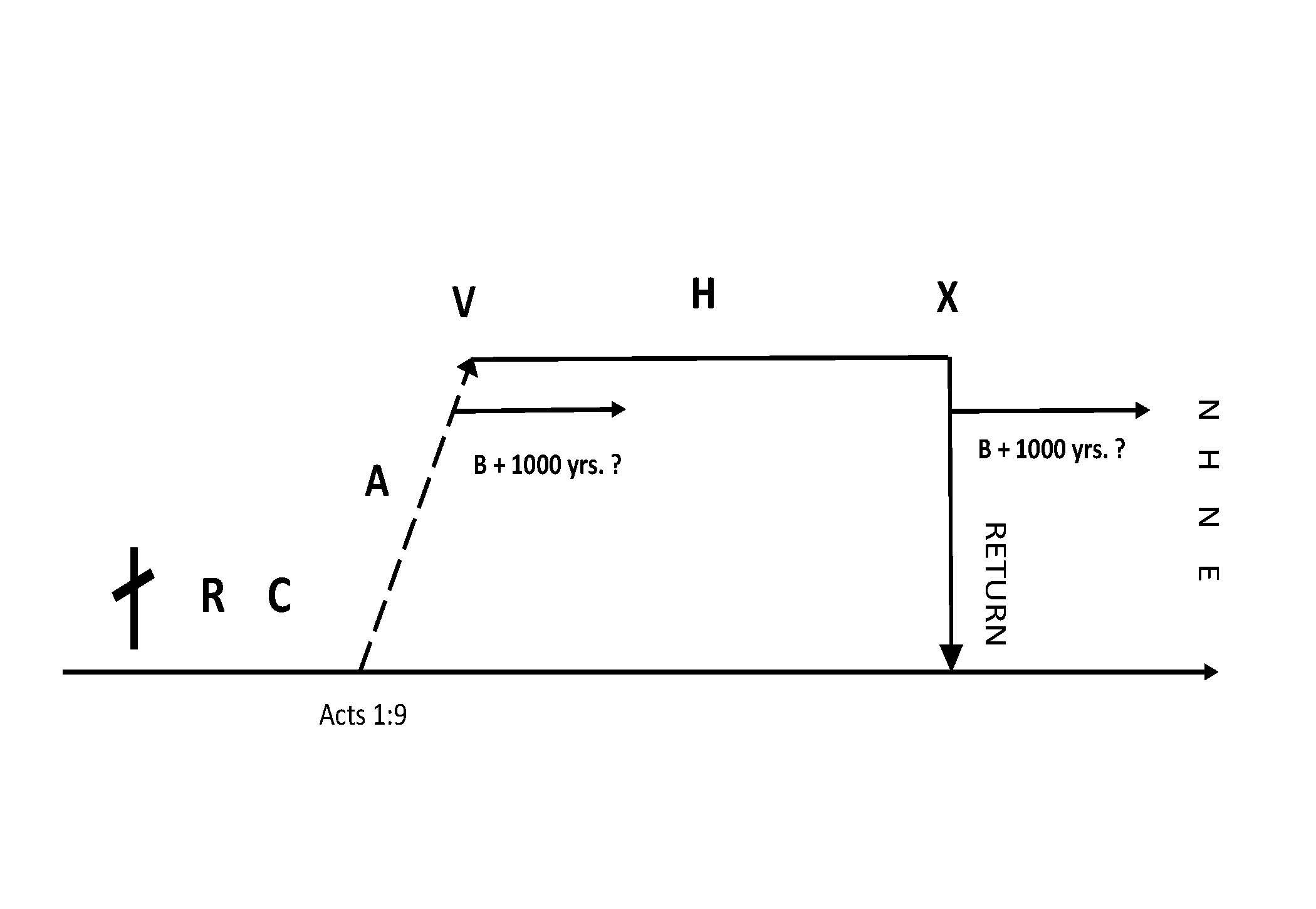
Our first two studies left us here, knowing that the binding of Satan (B) and the MILL that follows must be located in one of these two places. (See post #669 for how we reached this conclusion.) The question is, “How do we decide between these two possibilities?” Answering that question will be the subject of this study. 

OUR APPROACH. Our approach for deciding between these two options is pretty simple, at least in concept. We have two alternative scenarios, but only one of them is correct. If we can eliminate one of the alternatives or show, by the Scriptures, that one of them is not possible, then we would be left with the correct one. So, we are going to seek to show from Scriptures that one of these two options is not possible.

STEP ONE. Referring to our chart above, we will focus on the coming (“the return”) of Jesus and ask another crucial question: “WHEN does the coming (παρουσία) of Jesus take place?” For this portion of our study, we will once again leave Revelation and explore 1 Thess. 4:15-17.

As we read 1 Thess. 4:15, it is obvious that we are reading a passage about the coming (παρουσία) of the Lord. The next verse, 4:16, removes all ambiguity when Paul writes, “For the Lord Himself will descend from heaven with a shout.” It is certain that these verses describe Jesus coming to earth.

But also notice what is going on at the same time. While Christ is descending from heaven, “the dead in Christ will rise” (4:16) and then “we who are alive and remain will be caught up together with them to meet the Lord in the air” (4:17). Paul is writing about the resurrection when all those who are in Christ, whether living or dead, will receive their glorified bodies. It is the same topic that Paul teaches in 1 Cor. 15:52: “In a moment, in the twinkling of an eye, at the last trumpet; for the trumpet will sound, and the dead will be raised imperishable, and we will be changed.” Again, we see that all the saints, whether living or dead, will receive their resurrection bodies at the same time. And the resurrection will occur when Christ returns, for 1 Cor. 15:22-23 says, “For as in Adam all die, so also in Christ shall all be made alive. But each in his own order: Christ the first fruits, after that those who are Christ’s at His coming.” Thus, the Scriptures declare that all those who are Christ’s will be resurrected (glorified) at the time of His coming.

  • Our conclusion is that the coming (παρουσία) of Jesus and the resurrection of the saints occur at the same time.

We will now add the resurrection (“S”) to our chart. (See below.)

STEP TWO. Now we ask another crucial question: “WHEN does the resurrection of the saints take place?” Because Jesus’ coming and our resurrection occur at the same time, if we can determine from the Scriptures when the resurrection occurs, then we will also know when Christ’s coming takes place.

For this answer, we turn to the gospel of John and listen to the teaching of Jesus. In John 6:39, our Lord says:

“This is the will of Him who sent Me, that of all that He has given Me I lose nothing but raise it up on the last day.”

Here Christ clearly teaches that the resurrection occurs on the last day. But this is not the only time Jesus says this.

John 6:40: “I Myself will raise him up on the last day.”

John 6:44: “I will raise him up on the last day.”

John 6:54: “I will raise him up on the last day.”

Four times from the lips of Jesus we are told that the resurrection occurs on the last day. There is another instance of this in John 11:24 when Martha said to Jesus, “I know that he (Lazarus) will rise again in the resurrection on the last day.” Martha knows that the resurrection will occur on the last day. Also, notice that Jesus does not correct her, but rather affirms her theology with the words. “I am the resurrection and the life; he who believes in Me will live even if he dies” (11:25). The point is that five times in the gospel of John the Scriptures declare that the resurrection occurs on the last day.

  • Therefore, we must conclude that the resurrection of the saints occurs on the last day.

So now we will add “the last day” to our chart. (See below.) (Note that the last day is followed immediately by the new heaven and the new earth.)

STEP THREE. Previously we demonstrated that the resurrection of the saints and Christ’s coming (παρουσία) occur at the same time, so we must conclude that Christ’s coming also occurs on the last day.

  • Christ’s coming (παρουσία) occurs on the last day.

STEP FOUR. Now we will make a very interesting observation. Since Christ’s coming occurs on the last day, it is not possible for Christ to inaugurate “the thousand years” by binding Satan in the abyss after His coming. In other words, “the thousand years” cannot occur after Jesus’ coming for the simple reason that Jesus’ coming is on the last day. Here, then, is our conclusion:

  • “The thousand years” cannot occur after Jesus’ coming for the simple reason that Jesus’ coming is on the last day.

Thus, by examining the Scriptures carefully, we have shown that this scenario (or any scenario) that includes “the thousand years” occurring after Christ’s return is not possible and must be rejected. Therefore, we will remove that possibility from our chart.

This leads to another conclusion and to the answer to our original question.

  • We conclude that Christ bound Satan in the abyss (Rev. 20:2-3) and thus began “the thousand years” in about AD 30 when He was ascending to heaven (A).
  • Our answer to the original question, “When does the ‘thousand years’ (MILL) occur?” is that “the thousand years” began ca. AD 30 when Jesus bound Satan in the abyss and will continue for a very long time until “the thousand years” are completed. Then Satan “must be released for a short time” (Rev. 20:3).

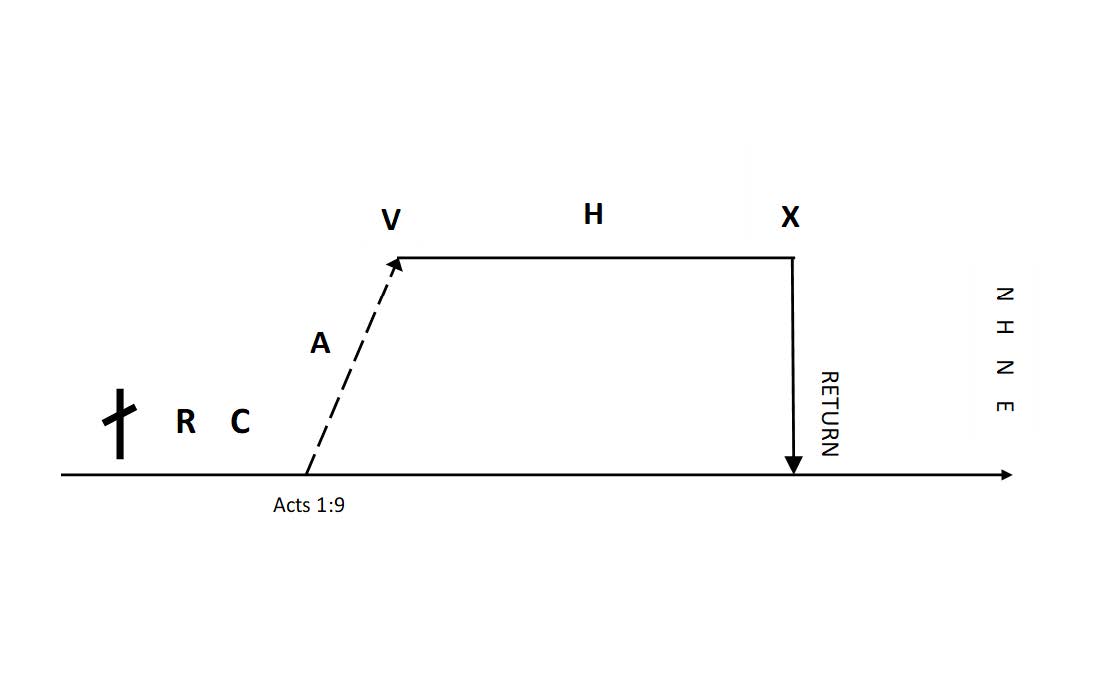
Our final chart is shown below.

               BASIC TIMELINE: CHRIST TO NEW HEAVENS NEW EARTH                                                                                                                                                                                   

  • R = resurrection of Christ
  • C = Christ commissions His church (Matt. 28:18-20)
  • A = Christ’s ascension from earth (Acts 1:9)
  • B = binding of Satan (the dragon) in the abyss (Rev. 20:2-3)
  • V = Christ’s arrival in heaven (Rev. 5:6)
  • H = Christ’s reign at the Father’s right hand (Psalm 110:1; Heb. 10:12-13)
  • X = Christ’s coming (παρουσία) (1 Thess. 4:15-17; Rev. 19:11-21)
  • S = resurrection of the saints (1 Th. 4:15-17; 1 Cor. 15:23, 52)
  • NHNE = new heaven and new earth (Rev. 21-22)

CONCLUSION

QUESTION: When does “the thousand years” occur?

ANSWER: “The thousand years” began ca. AD 30 when Jesus bound Satan in the abyss and will continue until Satan is released for a short time.

Soli Deo gloria            rmb                 9/12/2023                   #670

The thousand years: Part 2 – When does Jesus bind Satan?

POST OVERVIEW. The second in a series of studies of Revelation 20:1-3 seeking to determine when “the thousand years” occur. This specific study attempts to determine when Jesus binds Satan in the abyss (Rev. 20:2-3). (See also post #668, 9/10/2023.)

REVIEW

This article is the second in a series of studies focused on Revelation 20:1-3 whose objective is to determine when, in human history, “the thousand years” (“the MILL”) occurs. In our first study (Post #668, 9/10/2023), we discovered the following:

  • “The dragon” represents Satan (20:2). (Thus, whenever we encounter “the dragon” in Revelation, we know that we have encountered Satan.)
  • “The angel” (20:1) represents the Lord Jesus.
  • The MILL begins when the Lord Jesus binds Satan and throws him into the abyss.
  • At the end of the MILL, Satan is released from the abyss for a short time.

This second study is intended to begin to answer the crucial question, “WHEN does Jesus bind Satan in the abyss?”

As we consider this question and review the passage in Revelation 20:1-3, it may at first appear that we have reached a cul-de-sac. It may seem that there is no way to figure out when Jesus binds Satan in the abyss at the beginning of the MILL. Where do we go from here?

JESUS BINDS SATAN. First, there is significance in the fact that it is Jesus who binds Satan in the abyss. Jesus is King of kings and Lord of lords and He reigns over heaven and earth, but He, as the God-Man, can only be in one place at a time. This fact will help us as we explore the question of when Jesus binds Satan.

Thinking broadly, one thing we can say for certain is that Jesus’ binding of Satan takes place after His resurrection and subsequent ascension to heaven (Acts 1:9) and before the inauguration of the new heaven and the new earth (Rev. 21:1). We also know with certainty that, at some point in time, Jesus is coming from heaven to judge the earth. Those realities are illustrated in the figure below.

  BASIC TIMELINE: CHRIST TO NEW HEAVENS NEW EARTH

  • R = resurrection of Christ
  • C = Christ commissions His church (Matt. 28:18-20)
  • A = Christ’s ascension (Acts 1:9)
  • V = Christ’s arrival in heaven (Revelation 5:6)
  • X = Christ’s coming (παρουσία) (Revelation 19:11-21)
  • NHNE = new heavens and the new earth (Rev. 21-22)

Next, recalling that Jesus as God-Man can only be in one place at a time (see above), we will refine our crucial question and ask, “WHEN could Jesus bind Satan in the abyss?” Our study of the Scriptures will reveal that there are only two times when it is possible for Jesus to bind Satan in the abyss.

As we prepare to expand our study to the books outside of Revelation, it is appropriate to remind ourselves of the nature of this amazing Bible that we hold in our hands.

THE POWER AND BEAUTY OF THE SCRIPTURES

The beauty of the Bible is that each of its 66 books has been inspired by the same Author, the Holy Spirit. Because all Scripture is God-breathed (2 Tim. 3:16), the Bible is both interconnected and consistent.

It is interconnected in that each book of the Bible fits together with the other books to form a cohesive whole. Just as each piece of a jigsaw puzzle is necessary to complete the whole puzzle, so the books of the Bible connect with each other to form the whole message of God to man. Because this is the case, we can allow Scripture to interpret Scripture as one portion of the Word illumines and informs another portion.

And the Bible is consistent in that there is no contradiction between the individual books, but instead there is a God-breathed harmony. Despite including writings of poetry and prophecy, narrative history and Mosaic Law, gospels and epistles and apocalypse, the themes and doctrines pictured throughout the Bible do not contradict or conflict with one another but rather reinforce and complement one another. This means that the better we know our Bibles, the more confident we become about its power to guide us into all truth.

In 2 Tim. 2:15, Paul exhorts Timothy, “Be diligent to present yourself approved to God as a workman who does not need to be ashamed, accurately handling the word of truth.” Confident of the power of the Scriptures, we are now going to accurately handle the word of truth and go to other Scriptures outside of Revelation to answer these crucial questions.

FROM REVELATION 20 TO PSALM 110

For this part of our study we will leave Revelation 20 and turn to Psalm 110. This psalm is both Messianic and eschatological and will teach us about Christ’s reign after His ascension to heaven. We will focus our attention on Psalm 110:1.

The Lord says to my Lord:
“Sit at My right hand
Until I make Your enemies a footstool for Your feet.” – Psalm 110:1

Here in Psalm 110:1 we see one Person of the Godhead (the LORD) speaking to another Person of the Godhead (the Lord). The conversation is between God the Father and God the Son, and the nature of the conversation reveals the occasion of this verse. This verse takes place after Jesus has accomplished His work of atonement on the cross (John 19:30, etc.), has been raised from the dead, and has ascended back to heaven. Now (ca. AD 30) the Father welcomes the victorious Son back to heaven and seats Jesus in the place of honor at the Father’s right hand until the time comes for Jesus to return to earth for the Judgment (“make Your enemies a footstool”). So, according to Psalm 110:1, from the time of Jesus’ return to heaven until His coming to earth in judgment, He is seated at the Father’s right hand in heaven.

Other verses in Scripture confirm this reality. In Ephesians 1:20, Paul tells us that “the Father raised Him (Jesus) from the dead and seated Him at His right hand in the heavenly places.” Hebrews 1:3 says, “When He had made purification of sins (the cross), He sat down at the right hand of the Majesty on high.” The same point is made in Hebrews 8:1 and 12:2, but the clearest expression of this is in Hebrews 10:12-13:

12 but He, having offered one sacrifice for sins for all time, sat down at the right hand of God, 13 waiting from that time onward until His enemies be made a footstool for His feet.

The time when “His enemies (will) be made a footstool for His feet” refers to the time when Christ will rise from His seat at the Father’s right hand and will come back to earth to judge the unrighteous. These Scriptures teach us that:

  • Jesus is seated at the Father’s right hand from the time He ascended to heaven (ca. AD 30) until He returns to earth for the Judgment.

We are going to add this new discovery to our chart. (See below.)

BASIC TIMELINE: CHRIST TO NEW HEAVENS NEW EARTH

  • R = resurrection of Christ
  • C = Christ commissions His church (Matt. 28:18-20)
  • A = Christ’s ascension (Acts 1:9)
  • V = Christ’s arrival in heaven (Revelation 5:6)
  • H = Christ’s reign at Father’s right hand (Ps. 110:1; Heb. 10:12-13)
  • X = Christ’s coming (παρουσία) (Rev. 19:11-21)
  • NHNE = new heavens and the new earth (Rev. 21-22)

Thus we can logically say that, while Jesus is seated at the Father’s right hand (H) in heaven, He cannot at the same time bind Satan in the abyss. In other words, the event of Jesus binding Satan in the abyss cannot take place between the time of Jesus’ arrival in heaven (V – Rev. 5:6) and His coming to earth as Judge (X – Rev. 19:11-21; etc.) because He is seated at the Father’s right hand.

Since that is the case, we can see from our chart that there are only two times when Jesus could bind Satan in the abyss. The first possibility would be after His return (His παρουσία), and the second possibility would be for Him to bind Satan while He is ascending to heaven between Acts 1:9 and Rev. 5:6ff. And this is the answer to the crucial question we asked above about WHEN Jesus could bind Satan in the abyss. These possibilities are illustrated in the figure below. (“B” stands for “binding.”)

The question is, “How do we decide between these two possibilities?” That will be the subject of our next study.

Soli Deo gloria            rmb                 9/11/2023                   #669

When does “the thousand years” occur? Part 1 – Who is the angel?

POST OVERVIEW. The first in a series of studies of Revelation 20:1-3 seeking to determine when “the thousand years” occur. This specific study seeks to determine the identity of the angel in Revelation 20:1.

INTRODUCTION

Some of the most controversial questions concerning the book of Revelation revolve around the subject of “the thousand years” in Rev. 20:1-7. The purpose of this series of studies is to determine when “the thousand years” occurs in human history. The outcome that we seek is a graphical representation of where “the thousand years” fits on the timeline between the crucifixion and resurrection of Jesus Christ (ca. AD 30) on the one end and the inauguration of the new heaven and the new earth (Rev. 21:1) on the other.

PRELIMINARIES

PASSAGE FOR STUDY. Despite the immense attention and emphasis that accrues to “the thousand years,” the only explicit mention of this time period in the Bible is in the six verses of Rev. 20:2-7. But because we are seeking the answer to a very specific question (“When do the thousand years occur?”), we will further limit the focus of these studies to Revelation 20:1-3 when the angel throws the dragon into the abyss for “the thousand years.”

In any of these studies in Revelation 5-20, it is assumed that the reader has previously read my article, “Basic interpretive principles for Rev. 5-20.” [APOLOGIES: As of the publishing of this blog post, this article was still in progress.] This article explains the basis for the two key interpretive principles for Rev. 5-20 and also presents two crucial questions which are very useful for understanding these difficult passages.

TWO KEY PRINCIPLES AND TWO CRUCIAL QUESTIONS. Stated briefly, the two key principles are 1) Rev. 5-20 is not written in chronological order, and 2) our default assumption is that the characters and events of Rev. 5-20 are to be understood figuratively or symbolically, not literally. Since Revelation is not written chronologically, we must persistently ask the crucial question, “WHEN does this event occur?” And because Revelation is characterized by symbolism, we must often ask the crucial question, “WHO OR WHAT does this symbol represent?” As we progress through this study in Revelation 20, we will see the power and the usefulness of skillfully asking and answering these two crucial questions.

DEFINITION OF THE “THOUSAND YEARS.” In these studies, we are treating “the thousand years” as a label for a long period of time rather than as a literal thousand years. In the book of Revelation, certain numbers have symbolic meaning. “One thousand” is one of those symbolic numbers. When John wrote Revelation, “one thousand” simply meant a very large number, and so “a thousand years” should be understood simply as a very long period of time.

SUBSTITUTE “THE MILL” FOR “THE THOUSAND YEARS.” Since we are treating “the thousand years” as a single block of time, I am inventing the singular noun “the MILL” to represent “the thousand years.” This substitution is done to avoid confusion about whether “the thousand years” is singular or plural.

Finally, unless otherwise noted, my text is the New American Standard Bible (1995).

THE STUDY: WHEN DOES ‘THE THOUSAND YEARS’ OCCUR?

Part 1: Who is the angel in Rev. 20:1?

Then I saw an angel coming down from heaven, holding the key of the abyss and a great chain in his hand. And he laid hold of the dragon, the serpent of old, who is the devil and Satan, and bound him for a thousand years; and he threw him into the abyss, and shut it and sealed it over him, so that he would not deceive the nations any longer, until the thousand years were completed; after these things he must be released for a short time. – Revelation 20:1-3

While the overall objective of this series of studies is to determine from the Scriptures when “the MILL” occurs on the timeline of end-times events, this first study is aimed at determining the identity of the angel mentioned in this passage.

We will begin by surveying the text to see what information these verses provide. First, we see two characters, an angel and the dragon. The dragon is clearly identified as Satan (20:2). Then we see the angel “laid hold of the dragon (Satan) and bound him for a MILL; and he threw him into the abyss and shut it and sealed it over him until the MILL was completed; after these things he (Satan) must be released for a short time.” From this we can say that the MILL begins when an angel grabs Satan and throws him into the abyss for the duration of the MILL. We also see that, at the end of the MILL, Satan must be released for a short time. So far, we know that:

  • The dragon represents Satan. (Thus, whenever we encounter “the dragon” in Revelation, we know that we have encountered Satan.)
  • The MILL begins when an angel binds Satan and throws him into the abyss.
  • At the end of the MILL, Satan is released from the abyss for a short time.

So now we know who the dragon represents, but we do not yet know who the angel represents. Therefore, we ask a crucial question. “WHO does this angel represent?”

THE ANGEL. Let’s examine what we know about this angel.

The angel is “coming down from heaven.” This is the identical phrase that we read in Rev. 10:1 (“another angel coming down out of heaven”) and “the angel” of Rev. 10 is certainly the glorious Lord Jesus. Thus, this may be a clue that this angel is also Jesus.

We also read that this “angel” has the key of the abyss in his hand. In Revelation, the one who controls all the keys is Jesus, for we read in Rev. 1:18, “I (Jesus) have the keys of death and Hades.” Just so, Jesus is the one who controls the key of the abyss. And here this “angel” has the key of the abyss. Another clue!

Thirdly, we see that the angel “laid hold of Satan and threw him into the abyss” (20:2-3). This cannot be an ordinary angel, because Satan is “the anointed cherub” of Ezekiel 28:14 and is the most powerful of all the angels. In Jude 9, even Michael the archangel did not dare pronounce a judgment against the devil, but said, “The Lord rebuke you.” But if Satan is more powerful than even archangels, we must ask the question, “Who, then, is this ‘angel’ who grabs Satan like a ragdoll and then throws him and shuts him and seals him in the abyss?” The answer is obvious: The “angel” of Rev. 20:1-3 can only be the glorious Lord Jesus Himself. He is the One who descends from heaven to deal with Satan and He is the One who holds the key to the abyss and He is the only one with the authority to completely overwhelm and subdue Satan. We conclude, then, that “the angel” of Rev. 20:1-3 is a symbol for the Lord Jesus.

  • The “angel” of Rev. 20:1-3 is Jesus and the event that begins the MILL is when Jesus binds Satan in the abyss for the duration of the MILL.

CONCLUSION. In this first study of Rev. 20:1-3, we have gathered these facts.

  • “The dragon” represents Satan. (Thus, whenever we encounter “the dragon” in Revelation, we know that we have encountered Satan.)
  • “The angel” in verse 1 represents the Lord Jesus.
  • The MILL begins when the Lord Jesus binds Satan and throws him into the abyss.
  • At the end of the MILL, Satan is released from the abyss for a short time.

Knowing that the MILL begins with Jesus binding Satan in the abyss, our next study will attempt to answer another crucial question, “WHEN does Jesus bind Satan in the abyss?”

Soli Deo gloria            rmb                 9/10/2023                   #668

There is only one “beast” in Revelation

POST OVERVIEW. An article for my upcoming book on Revelation that demonstrates that, despite the various appearances of “the beast” in the latter half of Revelation, there is only one beast. Everywhere that “the beast” appears, he is the same beast.

ONLY ONE BEAST IN REVELATION

One of the most intriguing characters in the book of Revelation is “the beast,” who plays a major role in the unfolding events of the 42 months at the very end of the age. “The beast” is the final and most vivid of the seven manifestations of the antichrist in the Bible and, because many people have studied Revelation, “the beast” is also the best-known. My upcoming book on Revelation will contain several different articles and studies touching on “the beast,” but this article has only one aim: namely, to demonstrate that, despite the various appearances of “the beast” in the latter half of Revelation, there is only one beast. Everywhere that “the beast” appears, he is the same beast. The following notes make this case.

  • In Rev. 11:7, we encounter “the beast” warring with “the two witnesses.” “The beast that comes up out of the abyss will make war with them (i.e., ‘the two witnesses’) and overcome them and kill them.” The “two witnesses” are symbolic of the faithful church, which courageously “finishes their testimony” (Rev. 11:7). (Note that there are many verses in the New Testament that speak of the church’s duty to witness of Jesus, like Acts 1:8; John 15:27).
  • As Revelation 12 is focused on “the dragon,” so Revelation 13:1-10 is focused on “the beast” and gives us insight into his character, his ambitions, and his activity.
  • In fact, we see displayed in Rev. 12-13 the entire “unholy trinity” of “the dragon” (Satan), “the beast,” and “the false prophet,” who is called “another beast” in Rev. 13:11-17. (This “unholy trinity” appears again in Rev. 16:13-16, 19:19-20, and 20:10.)
  • A comparison of Rev. 13:7 with Rev. 11:7 makes it apparent that these two verses are describing the same “beast.” (See “only one beast” above.)
  • IMPORTANT INTERPRETIVE NOTE: Not only is it apparent that “the beast” of Rev. 11:7 is the same beast of Rev. 13:7, but it is also logical to conclude that these two verses are describing the same events and, therefore, must be occurring at the same time. That these events take place at the same time is further supported by the fact that the events of Rev. 11:3-10 happen during the 42 months (“twelve hundred and sixty days” in Rev. 11:3) and the events of Rev. 13:5-10 also happen during the 42 months (“forty-two months” in Rev. 13:5).
  • Since Rev. 11:7 is describing the same events as Rev. 13:7, and since in both verses “the beast” is the one who is “making war with and overcoming” his adversaries, we conclude that “the two witnesses” of Rev. 11:7 must also be “the saints” of Rev. 13:7. This supports our earlier statement that “the two witnesses” represent the faithful church under persecution.
  • This means that the events surrounding “the beast’s” persecution of the faithful church in Rev. 11:3-10 are essentially the same events that occur in Rev. 13:5-10, but from a different perspective.
  • The next time “the beast” appears, he is with “the dragon” and “the false prophet” preparing to gather the kings of the earth for Armageddon (Rev. 16:13-16). This is obviously the same beast that we saw in Rev. 13.
  • When we meet “the scarlet beast” in Rev. 17:3, it may initially seem that we have met a new character, but a careful reading of the text of Rev. 17 will reveal that this, too, is “the same beast” we have encountered before.
  • Here are the clues that tell us that “the beast” here is the same beast.
    • He is “full of blasphemous names, having seven heads and ten horns” (17:3). In Rev. 13:1, “the beast” has “ten horns and seven heads, and on his heads were blasphemous names.” This exact agreement between the two descriptions of “the beast” is strong evidence that this is the same beast, but there are more clues.
    • In Rev. 17:8, “the beast” “is about to come up out of the abyss,” but in Rev. 11:7 we read of “‘the beast’ that comes out of the abyss.” Again, the agreement between the two texts removes any doubt that they are the same character. But the clues go on.
    • Still in Rev. 17:8, we read “those who dwell on the earth” (“all who dwell on the earth” 13:8), “whose name has not been written in the book of life from the foundation of the world” (“whose name has not been written from the foundation of the world in the book of life” 13:8). Again we observe intentional repetition of the exact phrases in order to alert the reader to the connection.
    • Finally, we read in Rev. 17:8 that “those who dwell on the earth will wonder” (θαυμασθήσονται, from θαυμάζω (Greek) meaning “wonder” or “be amazed” or “marvel”) “when they see the beast.” But in the parallel verse in Rev. 13:3 we read, “the whole earth was amazed“ (ἐθαυμάσθη, from θαυμάζω (Greek) meaning “wonder” or “be amazed” or “marvel”) “and followed after the beast.” [NOTE: The NASB chooses a different English verb for Rev. 17:8 and Rev. 13:3, but the underlying original Greek uses the same Greek verb to make sure the observant reader sees the connection.]
    • By carefully examining the words and phrases that are used, we are making the point that “the scarlet beast” that we meet in Revelation 17 is “the same beast” that we have already encountered in Revelation 11, 13, and 16. Again, in Revelation, there is only one beast.
  • The last time that we see “the beast” is in Rev. 19:19-20 when he has “assembled the kings of the earth and their armies to make war against Him who sat on the horse and against His army.” This scene takes place during what I call the second half of Armageddon, when the glorified Lord Jesus has returned “with all His (glorified) saints” (1 Thess. 3:13) “to judge the living and the dead” (2 Tim. 4:1) and “to tread the wine press of the fierce wrath of God, the Almighty” (Rev. 19:15). In this hopeless mismatch, the Lord throws “the beast” “into the lake of fire” (19:20).

SUMMARY. By carefully examining the passages where “the beast” appears in Revelation and by comparing the passages with one another we have seen that each appearance of the beast reveals the same personality. The author of Revelation has intentionally placed clues in the text to ensure that his readers connect the clues and see that there is only one beast in Revelation.

Soli Deo gloria            rmb                 8/11/2023                   #667

Purpose flows from Identity for the disciple of Jesus

POST OVERVIEW. Developing the idea that Purpose is downstream from Identity. That is, Identity is primary and Purpose is derived from a clear Identity. These concepts of Identity and Purpose and how they operate in discipleship are topics in my upcoming book on the subject of discipleship and of discipling others.

Because man is made in the image of God, he has an inherent need for both Identity and Purpose. These ideas have been the subjects of many works of philosophy and psychology as people have tried to unlock the key to a life of meaning, because without a clear Identity and an invigorating Purpose, we seem to be adrift without a rudder. Also, as followers of Jesus we want to know how these ideas work in the life of a believer.

First, we need to understand that Identity must precede Purpose. This is true, by the way, for all people, not just for the disciple of the Lord Jesus. A clear personal Identity is necessary for anyone to have a compelling Purpose, and since very few people have such an Identity, the vast majority of people in the world have no compelling Purpose for their existence.

In stark contrast to the world, when a person initially trusts in Christ for salvation, he immediately obtains the Identity of “Disciple of the Lord Jesus.” And from this spectacular Identity flows an entire life of Purpose. The primary Purpose of the “Disciple of the Lord Jesus” is to conform their life to the description of a disciple given in the pages of Scripture. In other words, the disciple is to grow and to change so that their inward and outward selves are in accord with the characteristics of the disciple of Jesus given in the Bible. Having been made righteous in God’s sight by his faith in Jesus, the disciple of the Lord Jesus is to grow in sanctification so that his practical righteousness is progressively conformed to his positional righteousness. The disciple of Jesus has been wrapped in a robe of righteousness (Isaiah 61:10), and now his Purpose is to conform what is wrapped with the robe of the wrapping.

The raising of Lazarus in John 11 pictures this for us. Jesus’ friend had been dead four days, so he was extremely dead. But when Jesus called Lazarus by name, “the man who had died came forth, bound hand and foot with wrappings” (John 11:44). After Jesus called him, Lazarus was as alive as he would ever be, but he was also bound with the grave wrappings and had his face wrapped with a cloth. He was alive, but he was also encumbered with wrappings and was effectively blind. So Jesus commanded the people, “Unbind him, and let him go” (11:44). Lazarus was fully alive, but for him to function as a living person, he needed someone to remove the wrappings so he could walk and see.

In a similar way, we were “dead in transgressions and sins” (Ephesians 2:1-3). But when the Holy Spirit called us through the gospel and we responded with repentance and faith, at that moment we were both as justified as we would ever be and as unholy as we would ever be. We were wrapped in God’s robe of righteousness (Isaiah 61:10) and, at the same time, wrapped in all the grave clothes of our former life of sin, righteous by position but unrighteous by practice. In this state, our Purpose becomes apparent. We are to make every effort to remove the “grave clothes” of our former life and put on every one of the “clothes” of the disciple of Jesus that we see modeled or commanded in the Scriptures (Ephesians 4:22-24).

We see another example of this in the Great Commission in Matthew 28:19-20. The risen Lord Jesus Christ gives His church her mission for the remainder of this age when He says, “Go, therefore, make disciples of all the nations, baptizing them in the name of the Father and of the Son and of the Holy Spirit, (and) teaching them to observe all that I commanded you. And behold, I am with you always, (even) to the end of the age.” Although this passage has immense importance for the mission of the church, we also see here a clear prescription for how the disciple grows. “Go, make disciples,” in this context means, “Preach the gospel and gather those who believe in Jesus.” Now, those who profess faith in Jesus are to be identified as disciples by being baptized as a public profession of their faith. Therefore, water baptism gives the disciple his Identity as a disciple of the Lord Jesus. What flows from this Identity? Those who have identified as disciples of the Lord Jesus have the Purpose of observing (i.e., doing) all that Jesus commanded His disciples to do, and the church has the mission of teaching these disciples to obey. Once again, we see that Identity as a disciple of Jesus leads to the Purpose of growing in obedience and holiness.

SUMMARY. What we are saying is that, once a person has committed to the Identity of “a disciple of the Lord Jesus,” the discovery of Purpose is not complicated. In fact, the disciple of Jesus can immediately embark into their Purpose of becoming who they already are. The disciple’s Purpose does not need to be invented or created, but rather is discovered discipline by discipline and repentance by repentance as he becomes more conformed to the biblical description of a disciple of Jesus.

Soli Deo gloria            rmb                 8/7/2023                     #666

The Lord answers a prayer for usefulness

This morning was a little cool, with perhaps a hint of fall already in the air. My wife and I had traveled to Pennsylvania to visit our grandchildren and their parents, and I was out for an early trot-walk around the small town and the college campus to talk to the Lord and to review some of my Scripture memory.

My first thoughts had been of man’s urgent need for something of eternal importance in his life. While the things of this earth may give satisfaction and fascination for a time, sooner or later a person needs to have something of permanence on which they can stand. At some point in life, the question arises in your head, “Is this all there is?” Is this job, this indulgence, this activity, this hobby, this relationship, this family, this ambition, this bucket-list, this vacation, this travel, this goal, this dream, this fill in the blank – Is this a life that justifies my existence? Surely this is the question that God places inside each of us. And at that moment I simultaneously praised God for allowing me to know Jesus Christ and was saddened by all the myriads of people who do not know Jesus and who are thus perishing. Only the life that knows and loves the Lord Jesus Christ has any connection with eternity and any permanence and significance.

The next thought that I had was amazement at the way my very unremarkable and unimpressive life has unfolded. The Lord has truly hidden me in the shadow of His hand (Isaiah 49:2), making sure that there was very little noteworthy about my accomplishments so that I could continue to function under the radar. Perhaps the most prominent example of this is my professional “career.” I began my career as an engineer with IBM, which at the time (1982) was Forbes’ most respected company in the world. Within five years I had squandered that auspicious start and was working for a failing software company. A few years past as I moved from one job to another. Finally, in 1996, just when it looked like I was in a position to stay long-term in a dead-end job, I resigned in order to go to post-Soviet Russia for three years as a “missionary.” (1 Samuel 17:48; Jeremiah 40:1-4) When I returned from Russia, the Lord eventually gave me a position as a Buyer at a company that printed lottery tickets (Jonah 1:1). After several rounds of surviving layoffs and employee cutbacks, I again resigned so that me and my new family could move to Charlotte to complete my seminary degree (2007). When graduation from RTS yielded no direction and no open positions (it was the disastrous year of 2008), the Lord opened up a door at Wikoff Color Corporation, where I stayed till the end of my career in January of 2020. My career reveals no success and no happiness. I disliked virtually every position that I held and was unsuccessful at them all. I never grossed more than $65K in any calendar year and frequently made a lot less. There were many times of unemployment and I twice resigned from my job to pursue a Kingdom opportunity, which meant that during my working “career,” I spent six full years engaged in or recovering from those two resignations. I began my work lifetime as a degreed engineer who had turned down offers at Exxon, Harris Corporation, and a third company to work at IBM, then the most admired company in the world. Thirty-eight years later, I finished my work lifetime as a “Purchasing Manager” at Wikoff Color, a dying ink company in Fort Mill, SC, and very possibly the worst run company in the world. The Lord had ordained that I went from best to worst in my working career!

Nevertheless, despite my personal failures in my working career, the Lord has also ordained that Lisa and I are basically financially independent at this stage in our life. We are “amply supplied” (Phil. 4:18). What this means is that I can devote my time to my discipleship activities and my writing projects. The Lord has given me so many opportunities to pour out my life for others and has given me the desires of my heart (Psalm 37:4). What an amazing God! The things impossible for people are possible for God (Luke 18:27).

All of these thoughts were flooding my brain as I walked past the college campus with the result that I was almost giddy with joy. As I praised the Lord for all that He had done, I offered up a prayer and asked that He would make me more useful. “Lord, glorify Yourself by making me more useful to You.” And so I walked on and crossed Main Street and headed for home.

As I strolled down the sidewalk, I was glancing to my left at the houses and at any people I might see in them. One house stood on a hill above the sidewalk and on the front porch of the house there sat a middle-aged lady. Because of the porch rail, I could only see from her shoulders upward, but that was enough for me to notice that her head was bent forward as if she was reading or possibly writing. I walked a few paces past the house, then stopped and looked back, for it occurred to me that she might be reading her Bible or journaling and, if she was doing that, then maybe I could encourage her. So I turned back and walked to where I was just below the porch and called to her.

“Excuse me, but are you reading or journaling or what?”

“I am actually doing both.” “What are you reading?” “Well, actually I am reading my Bible.” “Oh, that’s great! Where in the Bible are you reading?” “I am reading Ezekiel.” “Wow! I love Ezekiel! I am reading in Ezekiel now, too. Where are you in Ezekiel?” “I am reading in chapter 34 where the Lord tells how He will shepherd His people.”

“That is really good. I especially love Ezekiel 33. Do you remember verses 1-9 of chapter 33 where the prophet talks about the watchman? Do you know who the watchman is?”

“No, who is the watchman?”

“The watchman is you and me. We are the watchmen. Do you know why? We are the watchman because there is a sword coming upon the land and we need to warn the people that the sword is coming and they must escape. So, we must warn them of the coming sword of judgment. Well, enjoy your reading.” And with that I waved my hand and continued my walk.

Then it hit me. The Lord had answered my prayer for usefulness! Not five minutes before I had asked Him to make me more useful and He had answered my request by putting that woman on the porch and then testing me to see if I would take the opportunity to actually be useful. He was asking me if I was I alert to His answer to my prayer. Was I willing to be useful? Praise God, He not only tested me, but He also allowed me to pass the test. I had prayed to be more useful and, five minutes later, He had allowed me to be useful. I had encouraged my sister in Christ and had (possibly) spurred her on to love and good deeds. I had helped her see more from Ezekiel than she probably had seen before. I had been useful! Praise the Lord!

Soli Deo gloria            rmb                 8/2/2023                     #665

Psalm 110 The return of the Lord in judgment – Part 1

POST OVERVIEW. A series of posts considering the biblical connections within Psalm 110 and how this psalm gives a foretaste of the return of Jesus in judgment on the last day. Part 1, #664, 7/24/2023.

It is amazing to me how the Scriptures so perfectly fit together. It is not uncommon for passages from the Law written by Moses to mesh with David’s words in the psalms and then to see these Old Testament verses fulfilled in the New Testament. God’s divine inspiration of His Word is everywhere evident.

Recently I was again meditating on Psalm 110, a psalm written by David about a thousand years before Jesus lived and at least three thousand years before His Second Coming. I marveled at all the connections this psalm makes with other Scripture and so felt compelled to capture these ideas.

PSALM 110:1. YHWH SPEAKS TO ADONAI.

The LORD said to my Lord, “Sit at My right hand until I make Your enemies a footstool for Your feet.”

A MYSTERY OR A RIDDLE. This first verse of the psalm seems to present us with a riddle or a mystery as we try to understand what the verse means. These questions come to mind.

  • When does this conversation between the LORD and the Lord take place?
  • What is the meaning of this concept, “until Your (Adonai’s) enemies be made a footstool for Your feet”?

We will use ordinary reasoning and the Scriptures to answer these questions.

IDENTITY OF CHARACTERS. We observe that this verse presents two distinct members of the Godhead having a conversation with one another. The LORD (YHWH in Hebrew) speaks to my Lord (Adonai in Hebrew). Our theology requires that this be God the Father speaking to God the Son, who we know to be Jesus the Messiah. The Father tells Jesus to sit at His right hand until He (the Father) makes Jesus’ enemies a footstool for Jesus’ feet. Having identified the characters in the verse, we now turn to our questions.

WHEN DID THIS CONVERSATION TAKE PLACE? Knowing that this conversation is between God the Father and God the Son helps us to locate this dialog in history. When in history would it have been possible for God the Father to tell God the Son to sit at His right hand? Logically, if the Father is telling the Son (Jesus) to sit at His right hand, it must mean that the Son is currently NOT sitting at His right hand. Now, when in history was there a time that Jesus was not sitting at the Father’s right hand? During His incarnation, of course. For approximately thirty-three years Jesus, God the Son, was living on the earth as the Son of Man. During that time, His place at the Father’s right hand was empty as He perfectly completed the work the Father had given Him to do (John 17:4). After a sinless life, an atoning death, and a glorious resurrection, Jesus ascended back to heaven (Acts 1:9) to take His place once again at the Father’s right hand. Knowing these facts brings us to the logical conclusion that this conversation in Psalm 110:1 between “the LORD” and “my Lord” took place when Jesus ascended back to heaven following His resurrection to take His seat at the Father’s right hand.

JESUS IS AT THE FATHER’S RIGHT HAND. We have discovered that, ever since His ascension back to heaven in approximately AD 32, the glorified Lord Jesus has been sitting at the Father’s right hand. There are at least nine (9) other New Testament references which confirm this fact. [Mark 16:19**, Luke 22:69; Acts 7:56*, Romans 8:34, Ephesians 1:20, Colossians 3:1, and Hebrews 1:3, 8:1, and 10:12. Note that Mark 16:19 (**) is in a section of Scripture that is not original, and in Acts 7:56 (*), Jesus is not sitting but is standing.]

Most of these passages only confirm for us that Jesus is seated at the Father’s right hand after His ascension to heaven, but the passage in Hebrews 10:12-13 sheds more light on the expression about enemies being made a footstool.

HEBREWS 10:12-13. GOD THE SON IS CURRENTLY WAITING.

12 but He, having offered one sacrifice for sins for all time, “sat down at the right hand of God,” 13 waiting from that time onward “until His enemies be made a footstool for His feet.”

Hebrews 10:12 again confirms that Jesus sat down at the Father’s right hand after His death on the cross (see also Hebrews 1:3), but 10:13 assures us that His time of waiting at the Father’s right hand will certainly end when the Father “makes His enemies a footstool” (Psalm 110:1).  Let’s discover what this event, “make enemies a footstool,” means.

MAKE YOUR ENEMIES A FOOTSTOOL. This phrase is a figurative expression that says, in essence, “There will come a time when God the Father permits God the Son to rise from His place at the Father’s right hand to destroy His enemies.” In other words, “make Your enemies a footstool” identifies Jesus’ coming in judgment at the end of the age. The Scripture reveals this in several ways.

  1. The very contents of Psalm 110 make this interpretation apparent. Psalm 110:1 sets the stage for the events of the rest of the psalm by foretelling what will mark the beginning of the final judgment. Verse 2 pictures the LORD (God the Father) announcing to the Lord (God the Son) that the time has come for Him to “rule in the midst of His enemies.” That this is on the last day is made clear in verse 3 when His people (resurrected saints) join Him on the last day, and especially in verses 5 and 6 when the Son brings shattering judgment on all those who oppose Him.
  2. The Bible teaches that the Lord Jesus has completed His work of atonement (John 19:30), but there still remains for Him His terrible work of judgment when He will judge all the unrighteous on the last day. He will be at the Father’s right hand until the day of the Lord, when He will come to judge the earth. According to Psalm 96:13 and 98:9, He is coming to judge the earth. According to 2 Timothy 4:1, “Christ Jesus is to judge the living and the dead.” Psalm 2 is explicitly about the Son (2:7, 12) and declares that He “will break (or “rule”) the nations with a rod (or “scepter”) of iron and shatter them like earthenware.” This is describing Jesus’ judgment at the end of the age. This is a small sampling of the Scriptures that foretell the time when His enemies will be made a footstool.
  3. I am treating the book of Revelation separately because of the power and the clarity of its pictures of the returning Lord Jesus when “His enemies are made a footstool.” In Revelation 6:12-17, we see the unfolding of the great day of the wrath of the Lamb, when the unrighteous seek for shelter in caves and under rocks, any shelter from the coming Lamb. Revelation 14:18-20 tells of the gathering of the “grapes” (the unrighteous) of the earth and of their being thrown into “the great wine press of the wrath of God” (see Rev. 19:15). Then, in the most powerful picture in the Bible of the coming of the King of kings in judgment, in Rev. 19:11-21, we see that it is Jesus who “rules the nations with a rod of iron” (Psalm 2) and who “treads the wine press of the fierce wrath of God the Almighty” (both quotes from 19:15). One final reference from Revelation is 16:17-21. Although the Lamb is not mentioned in this passage, it is obvious from its similarity to other passages about the last day, the day of the Lord, that this is describing the return of the Lord Jesus in power and judgment. In other words, all these passages are describing that day when the Father will make Jesus’ enemies a footstool for His feet.

CONCLUSION

We have accomplished two things in this article. First, we have demonstrated that Psalm 110:1 has many connections to other Scriptures and contains many allusions to other passages of Scripture. But second, we have also discovered an interpretation of the first verse of Psalm 110 that positions us for understanding the rest of the psalm. By exegesis and careful reasoning, we have been able to turn what appeared to be an opaque text into a powerful verse of Scripture that clearly reveals the Lord Jesus in His power and glory. In this verse, Jesus is seated at the Father’s right hand awaiting the time when He will come to judge the earth on the last day.

Soli Deo gloria            rmb                 7/24/2023                   #664

AN OVERVIEW OF DISCIPLESHIP

POST OVERVIEW. These are notes from my thinking of 7/19/2023 on a general approach to discipleship. These cover six broad topics that should be part of every disciple’s growth plan. This working document will be incorporated into my discipleship ministry and into my upcoming book on making disciples.

AREAS OF DISCIPLESHIP (“MODULES”)

  • THE WORD – Relate the “Hand Illustration” (from the Navigators) to show how the Word must be grasped tightly. GOAL: Ever-deepening and expanding knowledge of the Word throughout life. MATURE DISCIPLE’S GOAL: To have theological convictions, a Personal Biblical Theology (PBT), grounded in a firm grasp of the Scriptures. This PBT is “personal” in the sense that you OWN this theology. This collection of beliefs, convictions, understandings, and interpretations, and the connections and relationships between them, is constructed over years of pouring over the Scriptures until this theology is yours.
    • READING – “Where are you reading in the Bible?” Spur the disciple to have daily reading in the Bible. Goal1 – Read through the Bible from cover to cover every year. Goal2 – Develop a method of recording your thoughts from your daily reading, like a journal for daily reading notes.
    • STUDY – Teach and employ the ideas of the “Discipleship Bible Study” (DBS) for the systematic study of Scripture. “What are you discovering in your study of Scripture?”
    • MEMORIZE – “What Scripture are you memorizing right now?” Strive to continually expand your memory of Scripture. Review what you have memorized. This puts Scripture firmly into your mind.
    • MEDITATE – During drive-time or what would otherwise be dead time, meditate on the Scriptures that you have memorized to drive them deep into your soul and into your practice of life so they are accessible for help in time of need. Hide the Word deep in your heart (Psalm 119:11).
  • WITNESSING / EVANGELISM – The PURPOSE of this module is to make the disciple aware that the normal life of a disciple includes being vocal about your identification with Jesus. The normal disciple shines his light wherever he goes and he voices his love for Jesus. This is normal for the disciple. The OUTCOME of this module would be for the disciple to have regular, scheduled blocks of time devoted to the specific purpose of witnessing for Jesus to the end that 1) those who do not know Jesus would hear news about the Savior, and 2) that the lost would be brought into the sphere of Oakhurst Baptist Church and be saved. (Assumes an approach to evangelism that sees individual disciples casting the seed and proclaiming the gospel, and then the gathered church worshiping the Lord and welcoming the sinner to come to faith.)
    • “You shall be My witnesses.” (Acts 1:8; John 15:27; in Isaiah, also)
    • “Go, therefore, and make disciples of all nations.” (Matthew 28:19-20)
    • “The sower went out to sow.” (Matthew 13:3)
    • “Therefore, we are ambassadors for Christ.” (2 Cor. 5:20)
    • “Follow Me, and I will make you fishers of men.” (Matthew 4:19)
  • OBEDIENCE / HOLINESS – The disciple of Jesus is to evidence his salvation by a life of increasing obedience to the commands of Scripture and increasing holiness. (The specifics of this component will become clearer as the Word is read and captured. That is, the more familiar the disciple is with the Word, the more apparent will be his sins and disobediences, and the more convicted he will be about the need to actively repent.)
    • AWARENESS OF PERSONAL SIN / FIGHTING PERSONAL SIN. The disciple is growing in his awareness of his personal sins and is actively fighting sin when it appears. Strongly recommended reading: “Mortification of Sin” by John Owen. Owen is a bit too harsh in some places but this book makes the dangers of sin clear. (Read the Puritans, men!)
    • REPENTANCE. Learn how repentance can become a proactive weapon against sin.  Repent before sin brings about your ruin. Required reading: “Doctrine of Repentance” by Thomas Watson. (Go through this book with your discipler.)
    • MOST COMMON SINS FOR MEN. In my experience, the most common sins for men are Anger, Lust/Sexual sins (obviously including pornography, which is a degrading, shameful sin), Greed, and Pride. Other prevalent sins among men include fear of man, laziness, refusing to grow up, and drunkenness / gluttony. The disciple should be alert for these tendencies in his life and repent of them.
    • OTHER HELPFUL IDEAS. “Purify me with hyssop” (Psalm 51:7). “Abstain from fleshly lusts which wage war against the soul” (1 Peter 2:11). Seek to manifest the fruit of the Spirit (Galatians 5:22-23). Hunger and thirst for righteousness (Matt. 5:6). Put sin to death (Col. 3:5).
  • IDENTITY, PURPOSE, VISION/GREAT WORK, ETC. This module is based on the principle that Purpose and Vision and legacy flow from IDENTITY. Identity is primary and the Discipler should take pains to ensure that the disciple is clear on their identity. IDENTITY = Disciple of the Lord Jesus Christ. Make every effort to instill and establish this IDENTITY in the mind of the disciple. With this Identity, the disciple can derive almost all their Purpose from the pages of the New Testament. The disciple’s Purpose is to become what they have professed themselves to be, an obedient and useful disciple who is pleasing to the Master. This module would also include disciplines and practices to further refine the disciple as he assumes various roles in his life (student, employee, unmarried, husband, father, steward of money, personal vision, mentor, legacy, preparing for death).
  • REPRODUCE, SERVE OTHERS, BEAR FRUIT. The disciple’s ultimate target is not simply to overcome overt, besetting sin in their own life, but is to produce a harvest of thirty, sixty, a hundredfold (Matt. 13:8). The disciple is called to love others, encourage others, serve others. While the first mark of maturity for a disciple would be living a holy life before God and man, the real aim is to pour his life out for others, in imitation of the Lord Jesus.
    • “And I will most gladly spend and be expended for your souls” (2 Cor. 12:15). The disciple’s life is to be spent and poured out for others.
    • “The things that you have heard from me in the presence of many witnesses, these entrust to faithful men who will be able to teach others also” (2 Tim. 2:2). The disciple is reproducing his life and his zeal for the Lord by pouring into other like-minded men.
    • “But if I am to live on in the flesh, it will mean fruitful labor for me” (Phil. 1:22). Paul was willing to defer his promotion to heaven because he knew that the Lord had more “fruitful labor” for him to do here on earth. For the disciple of Jesus, there are two future states of being. Now is the time of “fruitful labor” when we can work hard to bear much fruit for the Kingdom (consider John 15), but eventually we will “depart and be with Christ, which will be very much better” (Phil. 1:23).
    • “Now we who are strong are to bear the weaknesses of those without strength and not just please ourselves” (Romans 15:1). The disciple is to press on to maturity (Hebrews 6:1) so that his usefulness increases. He desires to be one of the strong.
    • “Do nothing from selfishness or empty conceit, but with humility of mind regard one another as more important than yourself” (Phil. 2:3-4). Our Lord Jesus was perfectly unselfish, and the goal of the disciple is to continually grow in his unselfishness so that he imitates the Lord.
  • THE NECESSITY OF A GOOD CHURCH. Books have been written about healthy churches, and these are useful books. To maximize his fruitfulness and his speed to maturity, it is important for the disciple to be in a healthy church. But the idea of a “healthy church” is usually written from the pastor’s perspective. That is, the pastor is being challenged to evaluate his church and see if it is healthy according to these metrics or biblical principles. I am suggesting that the disciple of Jesus ask himself further questions when evaluating a church. Specifically, having located a healthy church, the disciple needs to evaluate if this is a church where the disciple will be able to find many and varied opportunities to grow in the areas we have listed in this document. To help the disciple in this regard, I plan to author a book or booklet, “A Disciple’s Guide to a Good Church,” giving the characteristics of a church that will be conducive to a person’s growth as a disciple. It is hard to overstate the importance of a good church for helping a disciple move toward maturity and to being fruitful. The church is where you learn to love others, serve others, submit to others, forgive others and be forgiven by others, encourage others, use your gifts, worship with others, suffer with others, rejoice with others, anticipate heaven with others.

Soli Deo gloria            rmb                 7/23/2023                   #663

Speaking of Melchizedek series overview

POST OVERVIEW. A short post advertising the completion of the six-part study on Melchizedek from Hebrews 5 and 7.

A few days ago I completed the first draft of a series of articles looking at the person of Melchizedek presented to us in Hebrews 5 and Hebrews 7. I am calling this series “Speaking of Melchizedek” and am hoping to gather these articles together into a short book of the same name. My goal in these articles is to make clear the message of the author of Hebrews, that Jesus has always been our great High Priest and that His priesthood of Melchizedek is much better than the Levitical priesthood.

Here is the list of the articles in this series:

  • Part 1, Hebrews 5:5-6, Post #661 (an updated article), 6/19/2023
  • Part 2, Hebrews 7:1-10, Post #575, 9/23/2022
  • Part 3, Hebrews 7:11, Post #576, 9/26/2022
  • Part 4, Hebrews 7:12-17, Post #577, 9/28/2022
  • Part 5, Hebrews 7:18-22, Post #580, 10/10/2022
  • Part 6, Hebrews 7:23-28, Post #584, 11/2/2022

Hopefully this list is helpful for those who are interested in other articles in the series they may have missed when first published.

NOTE: If time permits, I will be reviewing (and editing) Part 2 – Part 6 in the next couple of weeks in preparation for crafting the book.

Soli Deo gloria            rmb                 6/21/2023                   #662

Speaking of Melchizedek (Part 1) Hebrews 5:5-6

POST OVERVIEW. This post is a detailed study of Hebrews 5:5-6 where the author introduces the shadowy biblical figure of Melchizedek. This is the first in a series of posts entitled “Speaking of Melchizedek.” My intention is to self-publish a book of the same name in late summer 2023. [NOTE: This “Part 1” replaces a post done in September 2022 that also addressed these two verses in Hebrews 5.]

The objective of this series of posts is to explore and interpret Hebrews 7, which is devoted almost exclusively to a discussion about how Melchizedek relates to Jesus Christ. We will do a deep dive into that chapter, but before we turn to chapter 7 of Hebrews, I wanted to look at how the author brings Melchizedek and his priesthood into his overall argument. So, this post will focus on Hebrews 5:5-6.

HEBREWS 5:1-6 OVERVIEW

Hebrews 5:1-4 brings the focus of the “sermon” onto the high priests and their function in preparation for a much more detailed study later in the epistle. Then, in 5:5-6, the author takes a crucial turn in his flow of thought and in the direction of his sermon. He quotes two verses from the psalms, one from Psalm 2:7 and the other from Psalm 110:4.

So also Christ did not glorify Himself so as to become a high priest, but He who said to Him,

“You are My Son,
Today I have begotten You;”

just as He says also in another passage,

“You are a priest forever
According to the order of Melchizedek.” – Hebrews 5:5-6

These quotes are not selected at random but are carefully chosen because of how they work together to move the author’s argument forward. Also, the verses are presented back-to-back for additional rhetorical effect. There is in these two verses much Holy Spirit-inspired rhetorical brilliance, so we should take a moment to observe what is taking place.

PSALM 2:7, AS QUOTED IN HEBREWS 5:5

First, let’s consider Psalm 2:7. Psalm 2 was a foundational psalm placed at the beginning of the psalter and was, therefore, a psalm that virtually every Jewish person knew. But not only was Psalm 2 familiar to many, but it was also well-understood. So, when the author of Hebrews states (Hebrews 5:5) that the phrase, “You are My Son, Today I have begotten You,” is the LORD speaking to the Messiah (“Christ”), he is not making a radical new claim that only Jesus-followers would ever believe. Rather, he is simply stating what was generally accepted concerning Psalm 2:7; namely, that here the LORD was speaking to the Messiah and issuing Him an oath. The point here is that the quote in Hebrews 5:5 (from Psalm 2:7) was both familiar to many and its meaning was clear.

Before we look at the next quote from Psalm 110:4, we should note another piece of the author’s rhetorical artillery. Observe that the author has already quoted Psalm 2:7 in this epistle. In his opening teaching about Jesus being superior to angels, in Hebrews 1:5 the author also quoted Psalm 2:7. This repetition of a previous Scripture displays great skill in how to communicate effectively. The author quoted a familiar passage of Scripture early in his message (Hebrews 1:5) so that the readers (or hearers) would be able to understand his point (Jesus is superior to angels) and would understand how he reached that conclusion (a plain deduction from Psalm 2:7, which they know). So the readers are following the teacher. Now, in Hebrews 5:5, he again quotes from Psalm 2:7, but in this instance, he is not reaching a conclusion, but is using his previous conclusion as a launching pad to extend the meaning. So, having gained agreement earlier with his readers that Psalm 2:7 is all about Jesus the Messiah, he is now going to move from agreement on Psalm 2:7 to show that Psalm 110:4 is also all about Jesus, who is the Priest according to the order of Melchizedek.

PSALM 110:4, AS QUOTED IN HEBREWS 5:6

We have seen that the author first quoted from Psalm 2:7 because that passage was familiar to many and because the passage’s meaning was understood. Psalm 110, by contrast, was unfamiliar to most and its meaning was mysterious. The psalm was generally avoided even by scholars because of its difficulties. The author of Hebrews, however, cannot neglect this psalm and its message because this psalm contains the key teaching in all the Old Testament about how Jesus the Messiah is the great High Priest of the new covenant. The author of Hebrews must, therefore, present the truth contained in Psalm 110:4, that Jesus “is a priest forever according to the order of Melchizedek,” so he must get his readers (or hearers) comfortable with considering this Scripture. To accomplish this, the author moves in two steps from a place where Psalm 110 is shrouded in obscurity to the place where Psalm 110:4 is accepted as solving the mysteries of Melchizedek. Let’s look at those two steps.

TWO STEPS TO MELCHIZEDEK

FIRST STEP. The first step involves getting the readers simply to accept Psalm 110 as a text to be considered. Groundwork has already been laid for this since the author has previously introduced a quote from Psalm 110 in chapter 1. To prove Jesus’ superiority to the angels, in 1:13 he quoted from Psalm 110:1.

13 But to which of the angels has He ever said,

“SIT AT MY RIGHT HAND,
UNTIL I MAKE YOUR ENEMIES
A FOOTSTOOL FOR YOUR FEET”?

This quote in Hebrews 1:13 thus serves two purposes. First, it clearly proves that Jesus is “much better than the angels” (1:4), but second, it brings Psalm 110 onto his readers’ radar screen so that another verse from Psalm 110 can be quoted later on. The first step, then, is to bring Psalm 110 out of obscurity and into the readers’ awareness, and this has been done.

SECOND STEP. With Psalm 110 now introduced (the first step), the goal of the second step is to bring the spotlight onto Psalm 110:4, which, as stated above, is the key Old Testament text declaring Jesus to be a priest. To accomplish this second step, in 5:5-6 the author again quotes (see 1:5) the familiar Psalm 2:7 and follows that quote with the quote of Psalm 110:4 and explicitly associates the two verses as being similar (“just as he says also in another passage”). By associating the unclear verse in Psalm 110:4 with the much clearer verse in Psalm 2:7, the writer achieves several teaching points simultaneously. First, it is obvious that “You are My Son” and “You are a priest forever” have the same form. Also, they are both in the form of oaths given by the LORD (YHWH) to the Son in eternity past. Finally, since these two verses are similar to one another, as we have accepted the teaching of the one, so we can accept the teaching of the other. This means that, as Psalm 2:7 presents an oath given by the LORD to the Son in eternity past, so Psalm 110:4 presents an oath given by the LORD to the Son in eternity past, and that oath declares that the Son is “a priest forever according to the order of Melchizedek.”

Consider that, by itself, Psalm 110:4 was too obscure to be discussed, but by placing it on the “coattails” of the “friendly,” well-understood Psalm 2:7, 110:4 is admitted into the discussion. And with Psalm 110:4 admitted into the discussion, Melchizedek has also entered the picture. Thus we see that, by his skillful use of quotes from the psalms, the author has managed to bring Melchizedek into the middle of the conversation. This is necessary because Melchizedek and the priesthood he represents are going to prove crucial in the author’s theological argument about the obsolescence of the Levitical priesthood and the permanence and significance of Christ being a High Priest of the order of Melchizedek.

THE SON IS A PRIEST FOREVER ACCORDING TO THE ORDER OF MELCHIZEDEK

We must also point out that, since Psalm 110:4 has now entered the conversation, it is apparent that Jesus the Son has always been a priest. In eternity past, Jesus became a priest forever according to the order of Melchizedek with the oath of the LORD. Throughout His earthly ministry, He was a priest. In making atonement, He was doing the work of our great High Priest, and now He continues His priesthood in the heavenly tabernacle. These are all ideas that the author of Hebrews will develop as he continues his discourse, but it is crucial that we understand the biblical truth presented by Psalm 110:4, that Jesus has always been a priest according to the order of Melchizedek.

SPEAKING OF MELCHIZEDEK

“Concerning him we have much to say” (Hebrews 5:11). Indeed, the author of Hebrews has much to say about Melchizedek, and in the next few posts we will attempt to understand the teaching of Hebrews 7 about him.

Soli Deo Gloria            rmb                 6/19/2023                   #661